
Ferrari's red legend is half-true: Italy picked it, Enzo kept it
Everyone assumes Enzo Ferrari picked red for his cars, but Italy chose it first
Ask why Ferraris are red and many enthusiasts point to Enzo Ferrari's taste, helped along by a line Ferrari's own magazine attributes to him: ask a child to draw a car and he will draw it red. Ferrari's archive tells it differently. Red was Italy's racing colour before the company existed, works-built Ferraris have raced in yellow and in blue, and our verdict on the legend is half-true.
Italy raced in red decades before the 1947 Ferrari 125 S
Italian racing cars wore red from the early 1900s, under a system that colour-coded cars by nationality: blue for France, green for Britain, white for Germany and yellow for Belgium. Alfa Romeo and Maserati raced in the same red in the early Formula 1 seasons. Enzo Ferrari founded Scuderia Ferrari in Modena on 16 November 1929 to race Alfa Romeos, and the first car bearing his own name, the 125 S, left Maranello on 12 March 1947 in a dark burgundy red.
Ferrari's archive and Formula 1 both call red Italy's official colour
Ferrari's own magazine is the clearest evidence against the legend: it describes the burgundy of the 125 S, and of the 125 F1 that raced at Monaco on 21 May 1950, as the official colour of all Italian racing cars since the beginning of the 20th century. Formula 1's official history calls red Italy's mandated national colour, and says Enzo, a passionate Italian, wanted to show it. Some privateer teams, though, entered their Ferraris in their own national colours.
Olivier Gendebien raced a yellow Ferrari 156 at Spa in 1961
At the 1961 Belgian Grand Prix at Spa-Francorchamps, Olivier Gendebien drove a factory-built Ferrari 156 'sharknose' painted yellow, Belgium's racing colour, as a private entry arranged at the request of the Belgian importer Jacques Swaters. Ferrari describes the drive as a reward, because Gendebien had just won the 24 Hours of Le Mans for the team. Belgian squads such as Ecurie Nationale Belge and Ecurie Francorchamps bought Ferraris in the early 1960s, and yellow Ferraris became far more common in racing as a result.
John Surtees won the 1964 title in a blue-and-white Ferrari 158
In 1964 the FIA refused to homologate the Ferrari 250 LM, and Enzo Ferrari was furious when Italy's governing body, the ACI, did not back him. For the last two Grands Prix of the season, at Watkins Glen and in Mexico, the works cars were entered by Luigi Chinetti's North American Racing Team, in a blue base with a broad white stripe. John Surtees finished second in Mexico and took the drivers' title, and he is still the only man to win world championships on two wheels and on four.
Ferrari kept red after sponsor liveries arrived in 1968
Formula 1 relaxed its rules for the 1968 season to allow sponsor liveries, and Ferrari, by its own account, is the only constructor that kept its single-seaters exclusively in the classic red. The colour moved into the showroom as well: in the early 1990s, 85 per cent of all Ferraris built were red. Nor is there one Ferrari red. Rosso Corsa is the reference, Rosso Scuderia is a lighter shade used by the F1 team, Rosso Dino was the launch colour of the Dino 206 GT, and the 2020 cars at Ferrari's 1000th Grand Prix returned to the burgundy of 1950.
AutoNext Take
Half-true is the fair verdict. Red was Italy's before it was Ferrari's, and the factory raced in blue and white as a protest and let a Belgian importer run a yellow car, yet Enzo kept red in 1968 once nothing obliged him to. The legend sticks because Ferrari outlasted the national-colour system: when the national colours disappeared, the one team still in red came to own it, and a country's colour became a brand's.
Scuderia Ferrari turns 100 on 16 November 2029, and we think that anniversary brings the next tribute livery: burgundy, like the cars of 1950 and 2020, never yellow or blue. For Belgian fans the yellow 156 of 1961 remains the better lesson, because it shows that the colour of a Ferrari once announced where its team came from, and that today's red is a decision Maranello renews every season.
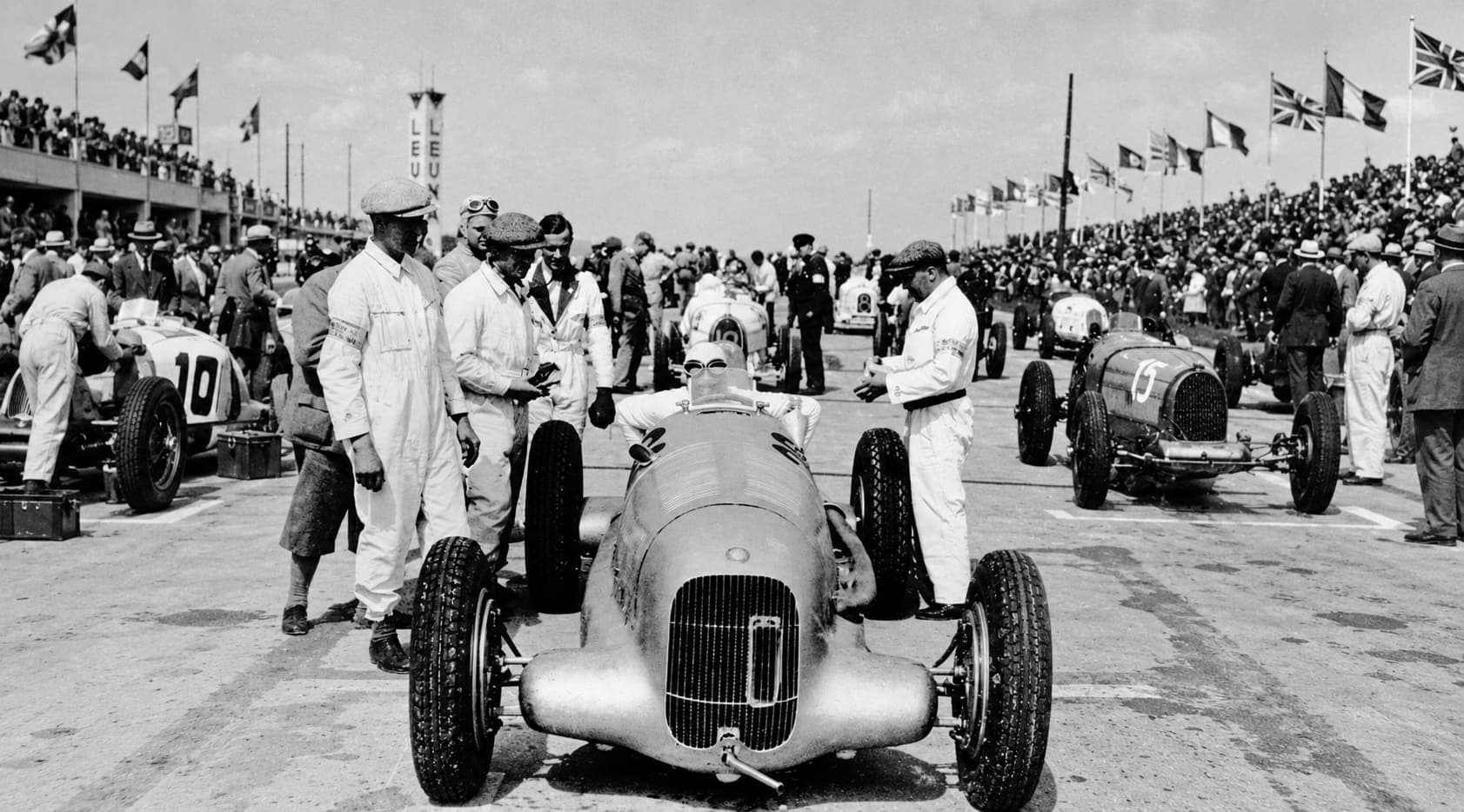
The Mercedes Silver Arrows paint legend was invented 24 years later
The legend says Mercedes stripped the white paint off its overweight W25 before the 1934 Eifelrennen and created the Silver Arrows. The race had no weight limit, no photo shows a white W25 that weekend, and a radio reporter had already called a silver Mercedes a silver arrow in 1932. Neubauer only told the story in 1958.

Rolls-Royce's black badge is no mourning tribute: the legend is false
The Rolls-Royce badge did not turn black to mourn Henry Royce, who died in April 1933. Rolls-Royce's own 2004 centenary release dates the red badges to 1904-1930, and an auction catalogue places a black badge on a 1931 Phantom II Continental. Owners' clubs say red simply clashed with coachbuilders' paint.
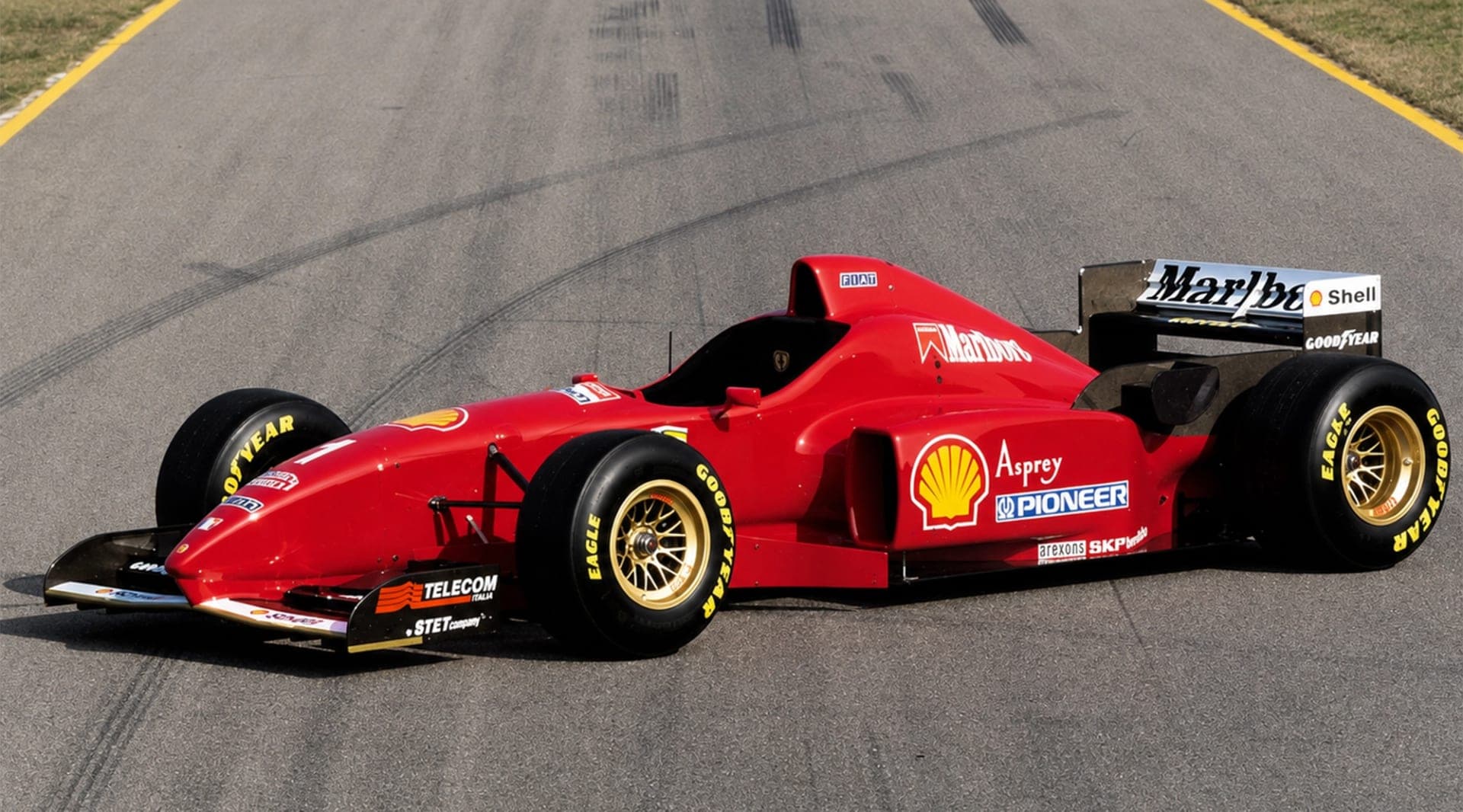
Ferrari is putting Schumacher's colours on Hamilton's car at Monza
Ferrari will run a special Michael Schumacher tribute livery on both SF-26s at the Italian Grand Prix at Monza from 4 to 6 September. The design is expected to draw on the 1996 F310, marking thirty years since Schumacher's first Ferrari win and twenty since his last, with Lewis Hamilton and Charles Leclerc carrying the colours.
