
Fiat's new boss says buyers no longer understand Euro NCAP stars
A Panda dropped from four stars to zero without changing, and Fiat noticed
Fiat chief executive Arnaud Belloni uses the Paris Motor Show to say out loud that Euro NCAP has lost the public. Buyers, he argues, are confused by ratings that move every two years. He has run Fiat, Abarth and Lancia since 1 September, and Citroën's boss made a similar case in April 2025. Fiat's own range makes the claim hard to dismiss.
Arnaud Belloni says Euro NCAP changes its rules every two years
Arnaud Belloni says Euro NCAP rewrites its rules so often that a five-star car becomes a three-star car, and then a two-star one. Customers "don't get it any more", in his words, and simply trust that any new car on sale is safe because regulation already demands it. He told Autocar that few manufacturers build their strategy around the ranking. Belloni comes to the job from marketing, not engineering: he ran Citroën's global marketing from 2015 to 2020, then Renault Group's from November 2020, and he is also Stellantis' chief marketing officer for Europe.
Fiat Panda went from four stars in 2011 to zero in 2018
The Fiat Panda earned four Euro NCAP stars in 2011 and zero in December 2018, with the same third-generation car on sale both times. What changed was the test. By 2018 Euro NCAP scored driver assistance heavily, and the Panda managed 7 percent for safety assist, 16 percent for child occupants and 45 percent for adults. Euro NCAP also caps every rating at six years, after which newly built cars are listed as unrated. The Panda's zero expired at the end of 2024, so today's Pandina carries no rating at all, which is exactly the moving target Belloni describes.
The unrated Fiat Pandina still took 6.7 percent of Italy's market
Fiat registered 71,312 Pandas in Italy between January and July 2026, 6.7 percent of the national market, for a car with no valid safety rating. The Pandina outsells its own replacement in Italy by close to three to one. Euro NCAP's website lists no assessment at all for the Grande Panda, revealed in 2024 and now the centre of Fiat's range. The most recent Fiat it lists is the 500e, tested in 2021, which earned four stars.
Leapmotor, Geely and GAC chase the five stars Fiat no longer collects
Leapmotor's B05, the Geely E2 and GAC's Aion UT all earned five Euro NCAP stars as standard in September 2026, under the new four-stage protocol that scores safe driving, crash avoidance, crash protection and post-crash safety. For brands that most European buyers barely know, the rating works as a trust signal, and the number of Chinese cars Euro NCAP assesses has risen nearly tenfold since 2021. European brands still sell on stars too: Cupra headlined the Raval's five-star result with its optional Safety Pack, and left the four-star standard rating out of its release.
Fiat's planned E-Car would trade assistance systems for a lower price
Fiat is developing an entry-level electric car for the EU's proposed M1E class, which covers battery cars no longer than 4.2 metres and built inside the EU. Each one would count as 1.3 cars towards a maker's CO2 target from 2030 to 2034, although the text is still being negotiated. Keeping such a car cheap could mean fewer driver-assistance systems, and under the 2026 protocol that costs stars directly. Citroën chief executive Thierry Koskas argued in April 2025 that legal minimums were already strict enough, and Euro NCAP has already accused Stellantis of a lack of ambition over the three-star Jeep Avenger.
AutoNext Take
The confusion Belloni describes is real, but walking away from the stars will not cure it. A Panda that fell from four stars to zero without changing is a fair complaint about a moving scoreboard, but no Fiat has earned a new rating since 2021, and buyers who cannot read the stars are precisely the ones a clear result would reassure. The brands taking share fastest in Europe, from Leapmotor to Geely, are buying credibility with the same rating Fiat now calls irrelevant.
Italy will keep proving Belloni half right: an unrated Pandina already takes one registration in fifteen there, and a cheap Fiat E-Car will sell on price whatever its score. The other half plays out across the rest of Europe, where the Grande Panda already outsells the old Panda two to one, and where its first Euro NCAP result, which we expect before the end of 2027, will move more orders than anything Fiat's chief executive says in Paris.
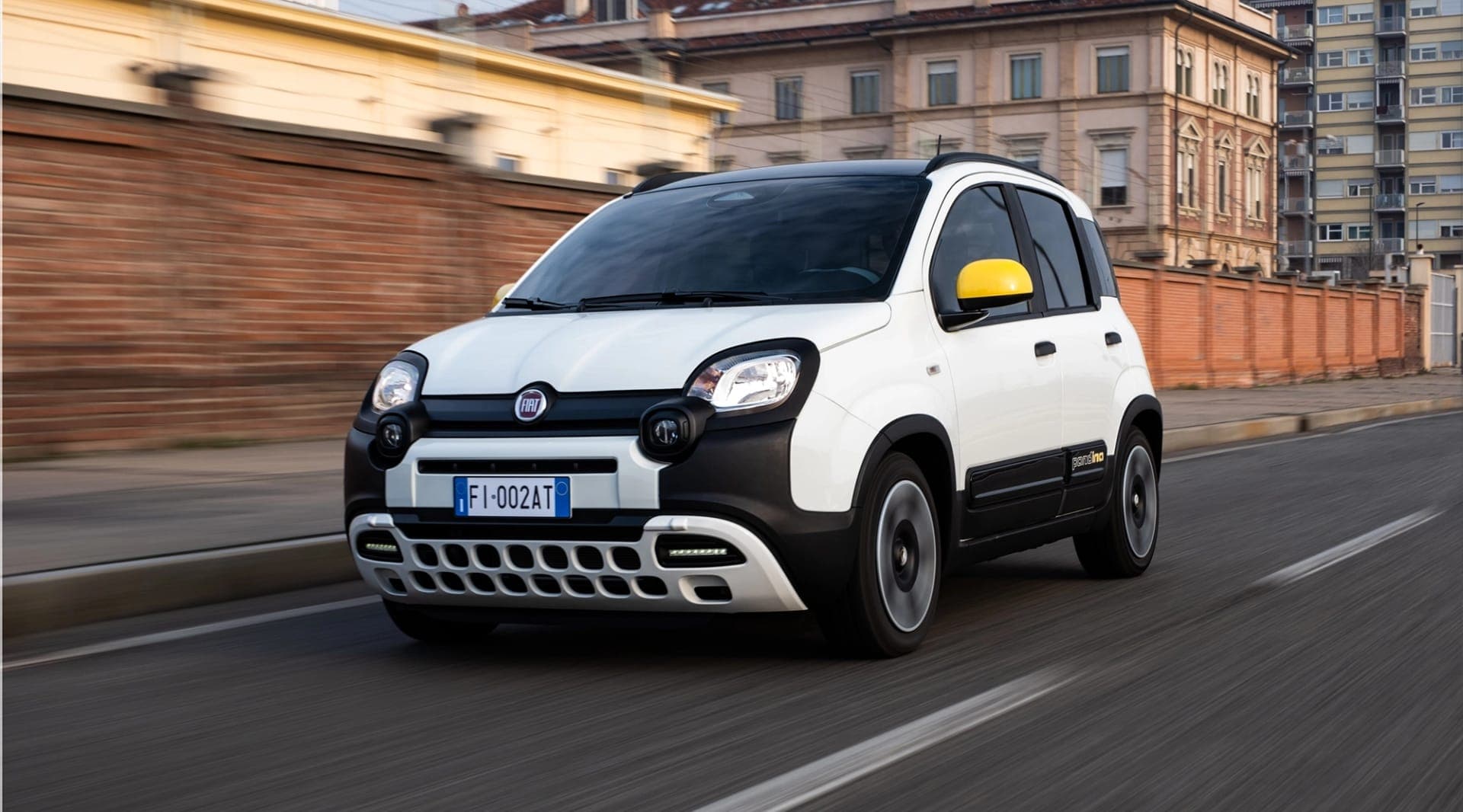
Fiat's 2012 Panda outsells the Grande Panda, but only in Italy
Fiat now sells two Pandas side by side, and the 2012 car is still the bigger seller: 81,638 European registrations to the end of July against the Grande Panda's 46,687. Almost all of that gap is Italian. Remove Italy from both totals and the newer, Serbian-built Grande Panda outsells the Pandina by two to one across the rest of Europe.
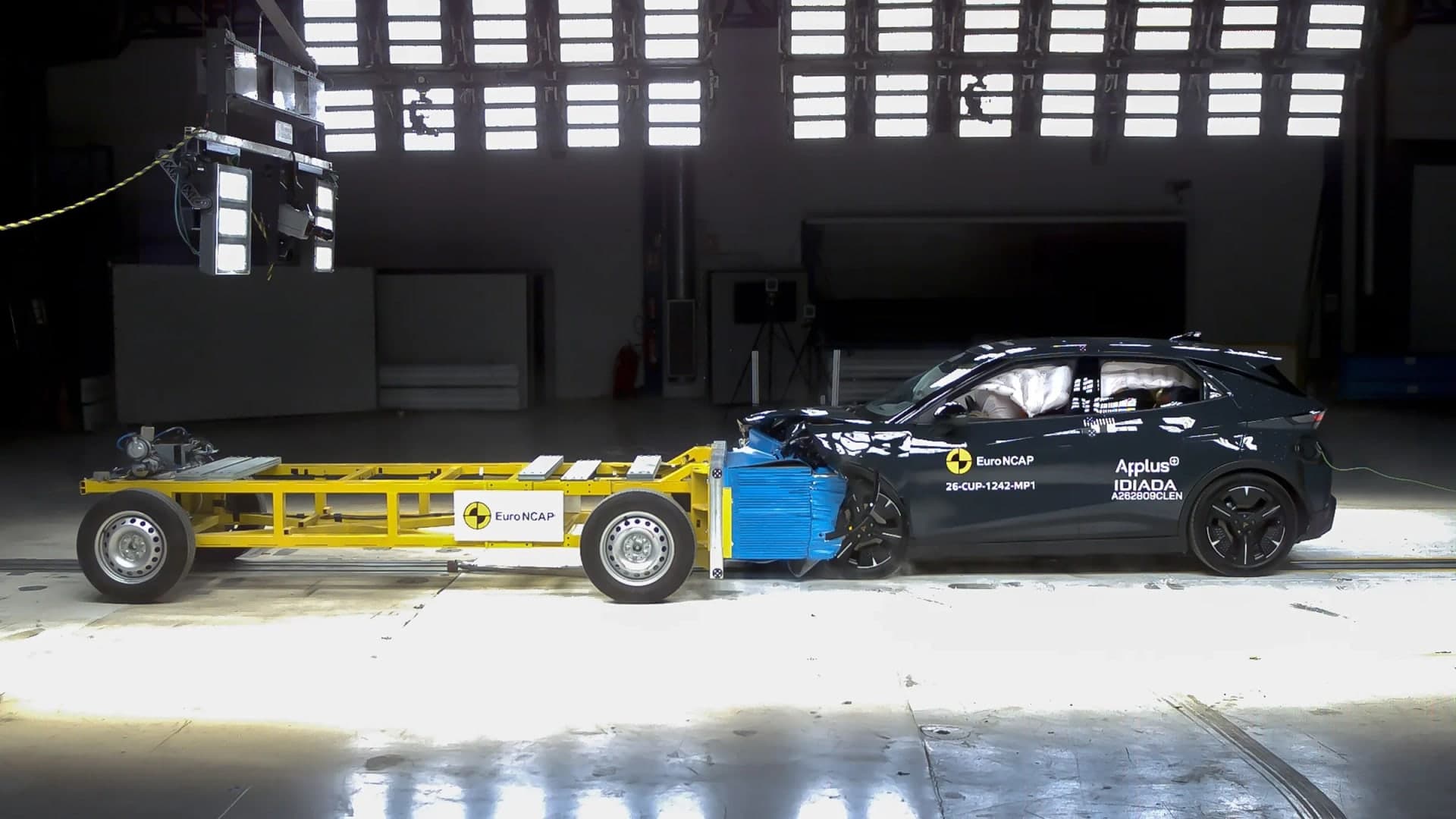
Cupra's Raval gets four Euro NCAP stars until you tick one option
Euro NCAP published four results under its 2026 protocol on 2 September. The AION UT, Geely E2 and Leapmotor B05 all scored five stars on standard equipment. The Cupra Raval managed four, rising to five only with an optional Safety Pack that adds predictive adaptive cruise control and front cross traffic alert. Its crash protection and post-crash scores were among the best in the group.
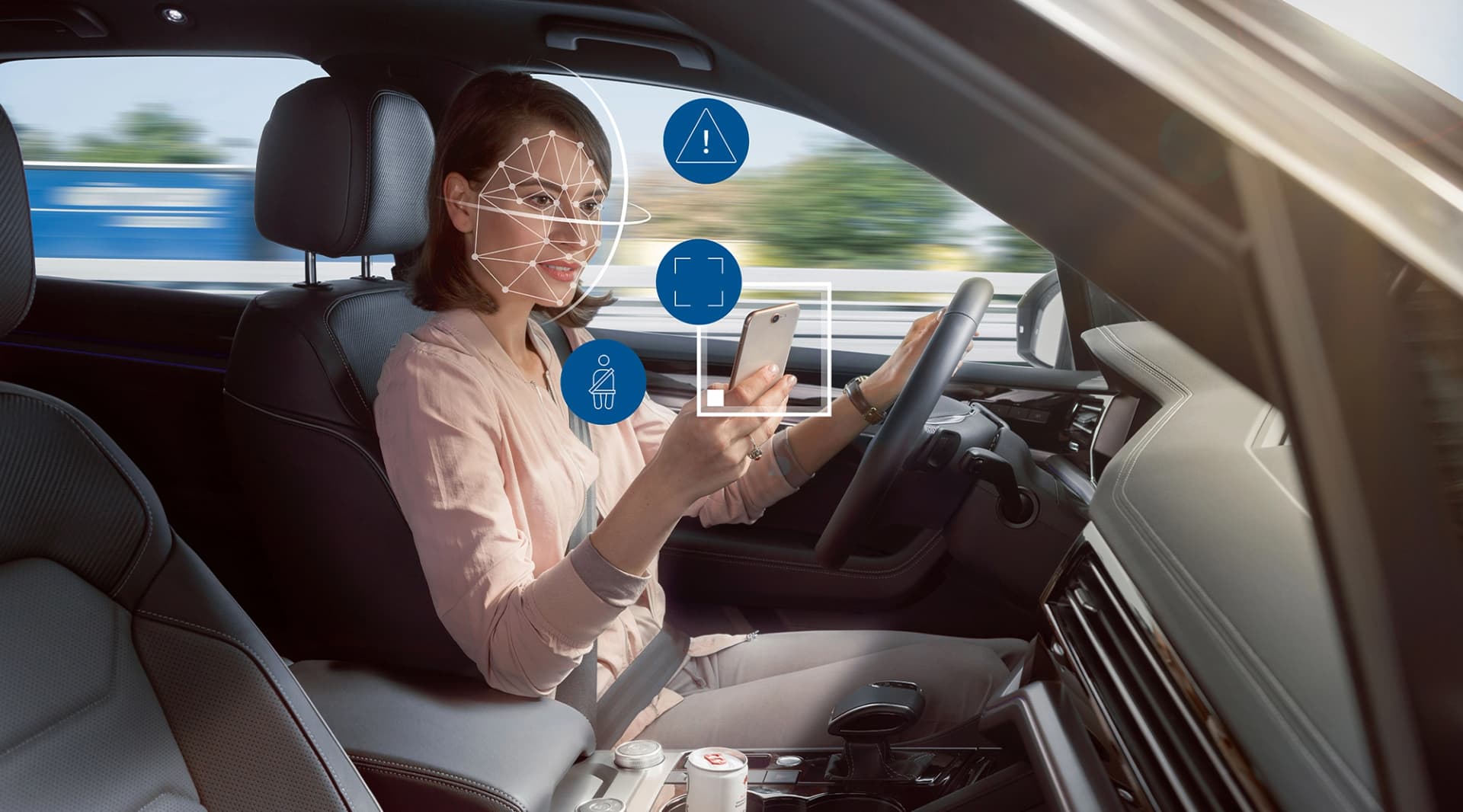
New EU safety tech is mandatory in every new car from today, and we've mixed feelings
From 7 July 2026, a fresh set of safety features is mandatory on all new passenger cars and vans registered in the EU, under the General Safety Regulation. They include advanced emergency braking that detects cyclists and pedestrians, infrared driver-distraction monitoring that watches your eyes and yawning, improved forward visibility, new worn-tyre testing and expanded safety glass. The rules are not retroactive, so existing cars are unaffected, but they have drawn criticism over cost and surveillance.
