
Germany may retire 17,000 autobahn SOS phones as 2G eCall winds down
Germany's orange autobahn phones have lost almost nine in ten of their callers
Germany's Autobahn GmbH is examining whether to switch off the roughly 17,000 orange emergency phones that stand about every two kilometres along the country's motorways. The federal transport ministry told the Bundestag in a written answer that calls through the system are falling steeply, and the state-owned operator wants to cut its costs. No decision has been taken, and the ADAC and road-safety groups are already setting conditions.
Autobahn emergency calls fell from 255,000 in 2007 to about 30,000
Help requests through the autobahn phones fell from more than 255,000 in 2007 to 33,500 in 2021 and about 30,000 in 2023, a drop of almost 90 percent. Running the network, its maintenance and the emergency centre behind it cost the Autobahn GmbH around €4.5 million in 2025, down from €8.2 million the year before. Bosch Service Solutions has operated the system on its behalf since 2024. The operator gives two reasons for the decline: nearly every driver carries a mobile phone, and every car type approved since 31 March 2018 must have eCall, which dials 112 by itself after a serious crash.
First-generation eCall needs a 2G network Germany switches off from 2028
The eCall that the switch-off case leans on was built for 2G and 3G networks, and both are going. Deutsche Telekom will close its 2G network by the end of June 2028 and Vodafone by the end of September 2028, although Vodafone keeps a reduced service for critical machine connections until the end of 2030. The TÜV-Verband estimates that about 5.5 million cars and vans in Germany carry the 2G version; the ADAC puts the number far higher, at around 16 million. Europe saw the problem coming: new types have needed 4G-based NG eCall since 1 January 2026, and every newly registered car will from 1 January 2027.
eCall dials 112 after a crash, not after a breakdown on the hard shoulder
eCall fires automatically when a car detects a serious impact, which is why Siegfried Brockmann of the Björn Steiger Stiftung, a German foundation that campaigns for better rescue services, argues it does nothing for the stranded driver. A car stopped on the hard shoulder is a danger to following traffic, he says, and breakdowns are reported by phone far less often than crashes. Most are mundane: ADAC patrols went out almost 3.7 million times in 2025, and a flat 12-volt battery caused 45.4 percent of those call-outs. Brockmann also points to transit traffic, up to 6,000 foreign lorries a day, whose drivers often have no local breakdown app and no German.
The Netherlands switched off 3,300 praatpalen on 1 July 2017
The Netherlands switched off all 3,300 of its yellow praatpalen on 1 July 2017, and Rijkswaterstaat told drivers to carry a charged phone instead. Its reasoning went beyond cost: a stranded driver is safer waiting behind the crash barrier than walking along the hard shoulder to reach a pole. France still places a roadside call box every 2 km on its autoroutes. Each country writes its own rules for the motorway, which is why Spain's version of Germany's emergency corridor only took effect this month.
The ADAC wants full mobile coverage first, and the tunnel phones kept
The ADAC calls a switch-off understandable given the age of the technology, but only once the remaining gaps in mobile coverage along the autobahn are closed, and it wants the emergency stations in tunnels kept for the long term. It reminds drivers that 112 works without credit and on any available network. Part of the decline is already built in: new stretches of motorway get no new phones and spare parts for faulty ones are no longer made, Brockmann says, so the network is shrinking on its own. His foundation wants modernised columns that warn of crashes, wrong-way drivers and roadworks, a job that connected cars are starting to share between themselves.
AutoNext Take
Switching off a phone that now takes one call in eight of what it took in 2007 is a reasonable decision, and the Netherlands has run its motorways without them for nine years. The weak point is the timing. The Autobahn GmbH's case rests on eCall, yet the 2G version in millions of German cars stops working in the same window, and Germany has not decided what a dead eCall means at a car's next inspection.
The first columns on open motorway will go dark after Deutsche Telekom's 2G network does at the end of June 2028, not before, and the tunnel stations will outlive both. Retiring both safety nets in the same two years would leave the drivers the phones still serve, stranded foreigners and owners of older cars, with nothing.
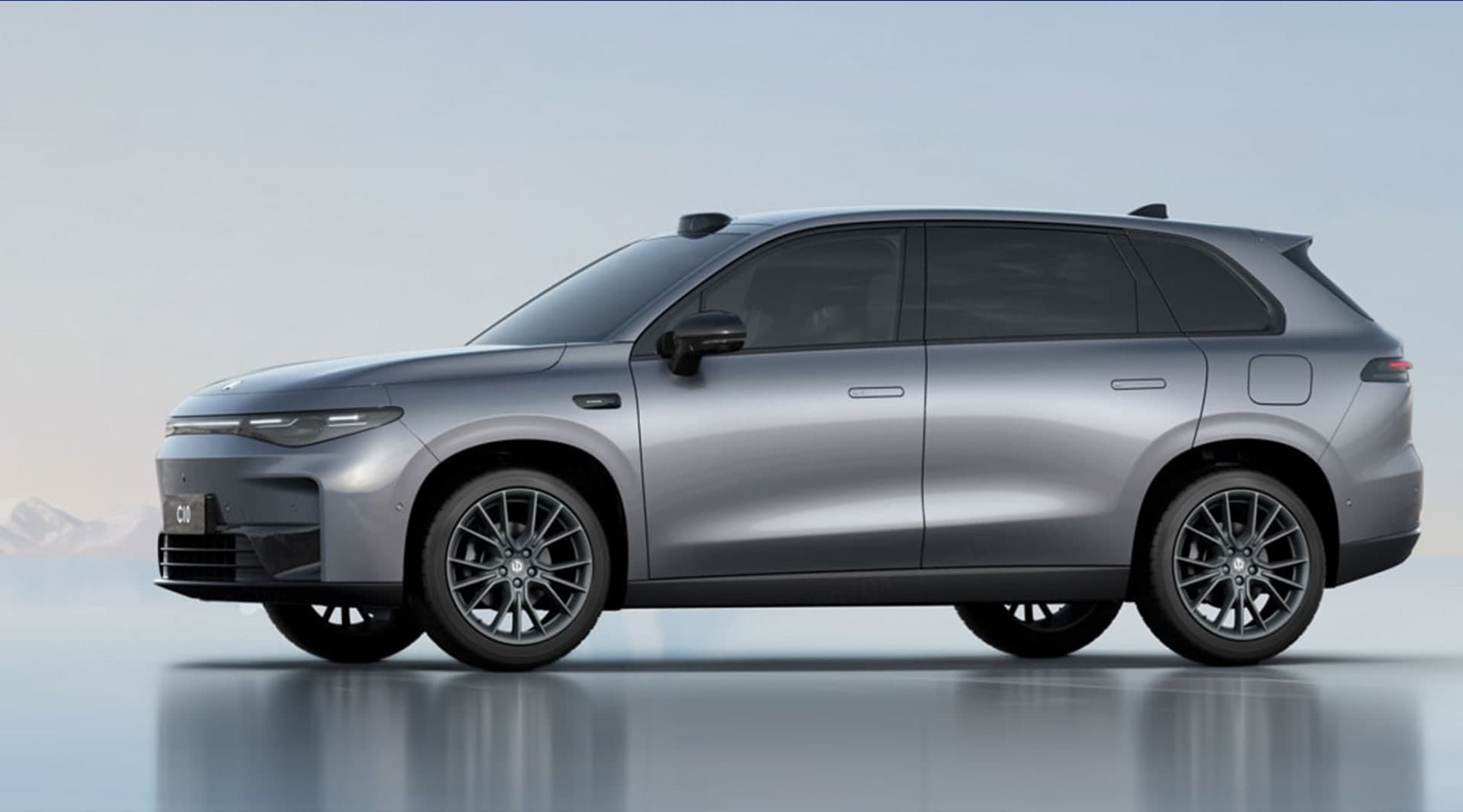
Leapmotor deletes the 12V battery, the part behind 45% of breakdowns
Leapmotor used its Tech Day in Huzhou to unveil the CTC 3.0 High-Low Fusion battery, which supplies the 12-volt network from the traction cells and removes the lead-acid battery, the cause of nearly half of ADAC's 3.7 million callouts last year. It sits inside the new LEAP 5.0 architecture with 48-volt distribution. First cars arrive in 2027, in China. Europe's current Leapmotors keep their lead battery.
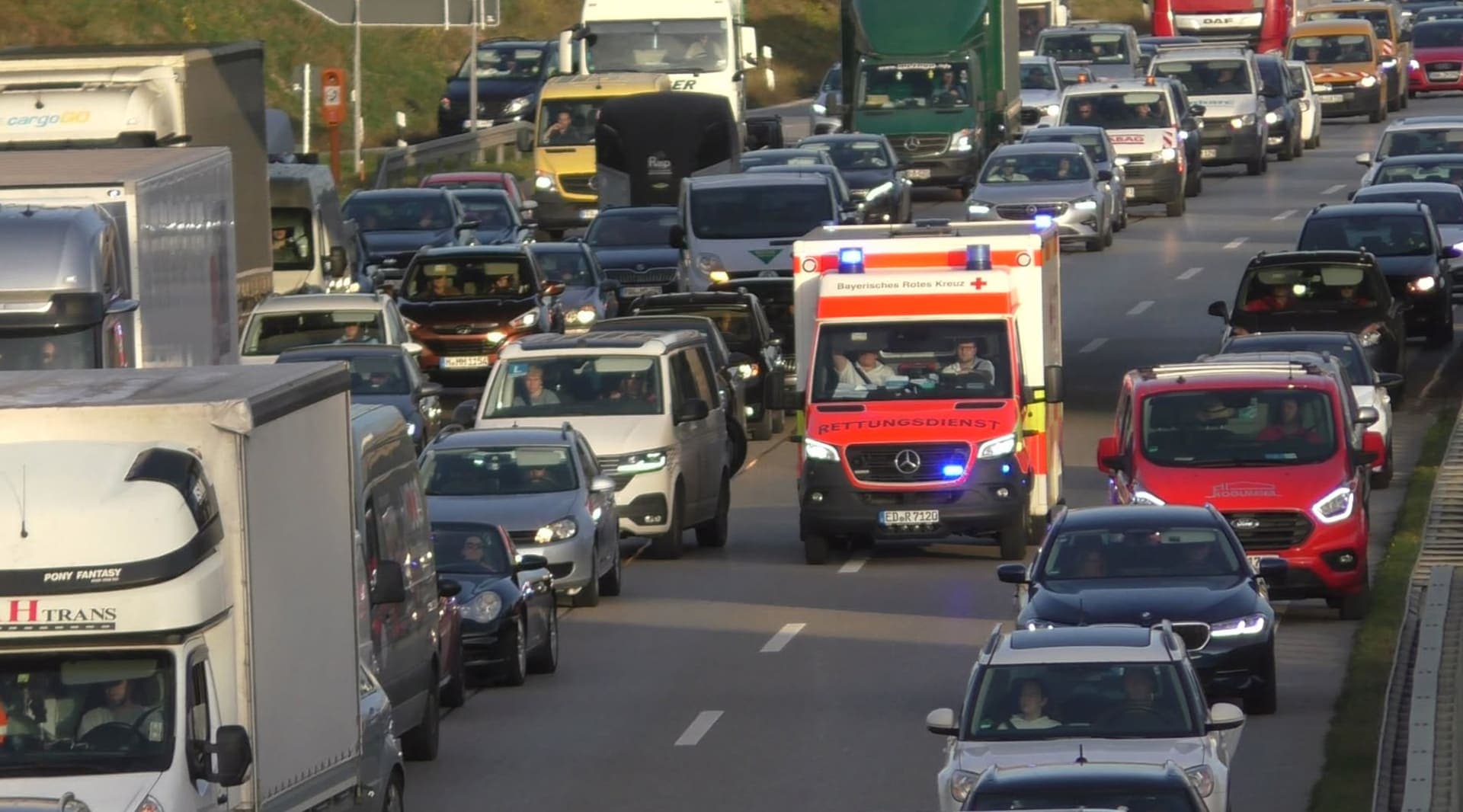
Spain adopts Germany's emergency corridor on 1 October, minus the driving ban
From 1 October, drivers in Spain must open a corridor for emergency vehicles the moment a jam on a motorway slows traffic to walking pace. The geometry copies Germany's Rettungsgasse lane for lane. The penalty does not: Spain asks €200, halved for prompt payment, where Germany adds two licence points and a month off the road.

Volvo just turned a million cars into one shared hazard network
A free over-the-air update gives the Volvo EX60, EX90 and ES90 four new cloud-based hazard alerts, covering large animals, pedestrians and cyclists, roadworks and crashes ahead. The warnings are shared beyond Volvo through the European Data for Road Safety framework, so other brands and traffic authorities can read them too.
