
Henry Ford invented the assembly line? Half-true, by his own account
Ford's 1913 moving line had more fathers than the man whose name it carries
The story is taught as a single stroke of genius: Henry Ford invented the assembly line, and the modern car followed. Ford's company did put the first moving line for a complete car into service, at Highland Park in Michigan, in 1913. Henry Ford invented neither the car, which Carl Benz patented in 1886, nor the idea of moving work past workers. Our verdict: half-true.
Henry Ford's 1922 book credits Chicago's meatpackers with the idea
Henry Ford's 1922 autobiography, My Life and Work, written with the journalist Samuel Crowther, dates his company's first moving line to about 1 April 1913. The same book carries the line about any colour so long as it is black. Ford wrote that he believed this was the first moving line ever installed, and in the next sentence he named where the idea came from: "the overhead trolley that the Chicago packers use in dressing beef". The man the legend credits never claimed the idea as his own.
The Henry Ford museum traces the 1913 line to slaughterhouse 'disassembly'
The Henry Ford, the museum in Dearborn, Michigan, says Ford's engineers realised sometime in 1913 that the "disassembly line" of the slaughterhouses could be adapted to build cars. Its collection makes the point with a photograph of Swift & Company's Chicago packing house, taken between 1910 and 1915, where a conveyor carried hog carcasses past meat cutters who removed the pieces. The museum's wording matters: it credits Ford's engineers, plural, and says they borrowed ideas from other industries.
Charles Sorensen, Ford's production chief, called Henry Ford its sponsor in 1956
Charles Sorensen joined Ford as a pattern maker in 1905, rose to run its production and stayed until 1944. In his 1956 memoir, My Forty Years with Ford, he went further than the museum: Henry Ford, he wrote, was generally regarded as the father of mass production, and "He was not. He was the sponsor of it." Sorensen also claimed that he and a few colleagues had towed a chassis past a line of parts at the Piquette Avenue plant in July 1908, five years before Highland Park. That is one insider's account, written twelve years after he left, so our verdict does not rest on it alone.
Highland Park cut a Model T chassis from 12 hours 28 minutes to 93 minutes
Highland Park's first moving line built flywheel magnetos: one worker had needed about 20 minutes per unit, and splitting the job into 29 operations cut that to 13 minutes 10 seconds, and eventually to five minutes. On 7 October 1913 a Model T chassis was hauled across the factory floor by rope and windlass. Ford's book puts the best stationary time at 12 hours 28 minutes; the rope trial brought it to 5 hours 50, and waist-high lines in early 1914 to 1 hour 33 minutes, about an eighth of the old figure. More than 15 million Model Ts had been built by 1927.
Ford's Louisville plant swaps the single line for a three-branch tree in 2027
Ford's Louisville Assembly Plant in Kentucky will build the Fathom electric pickup on an "assembly tree" instead of the single moving line Highland Park started in 1913. Three branches, for the front structure, the rear structure and the structural battery with seats, consoles and carpet, only meet near the end. Ford says the layout cuts net assembly time by 15 percent and the truck uses 20 percent fewer parts. Doug Field, Ford's EV and design chief, presented it as a way to compete with China, and the first prototypes are due from Louisville in the first quarter of 2027.
AutoNext Take
Henry Ford's own book is the best witness against the legend that carries his name: it credits Chicago's meatpackers, and his engineers did the work. By Sorensen's account, Ford encouraged the work and backed unorthodox methods. Sponsor is the fairest word for that, and it is no small title. The half that is true still shapes the layout of most car factories 113 years later, which is why Ford stepping away from it at Louisville stands out.
Highland Park's moving line spread from magnetos to motors and chassis inside a year, and Louisville's tree can travel faster still if its 15 percent holds. Ford will name a second plant for the assembly tree before Fathom production starts in 2027, and the line Henry Ford sponsored in 1913 will have begun its exit from the company that made it famous.
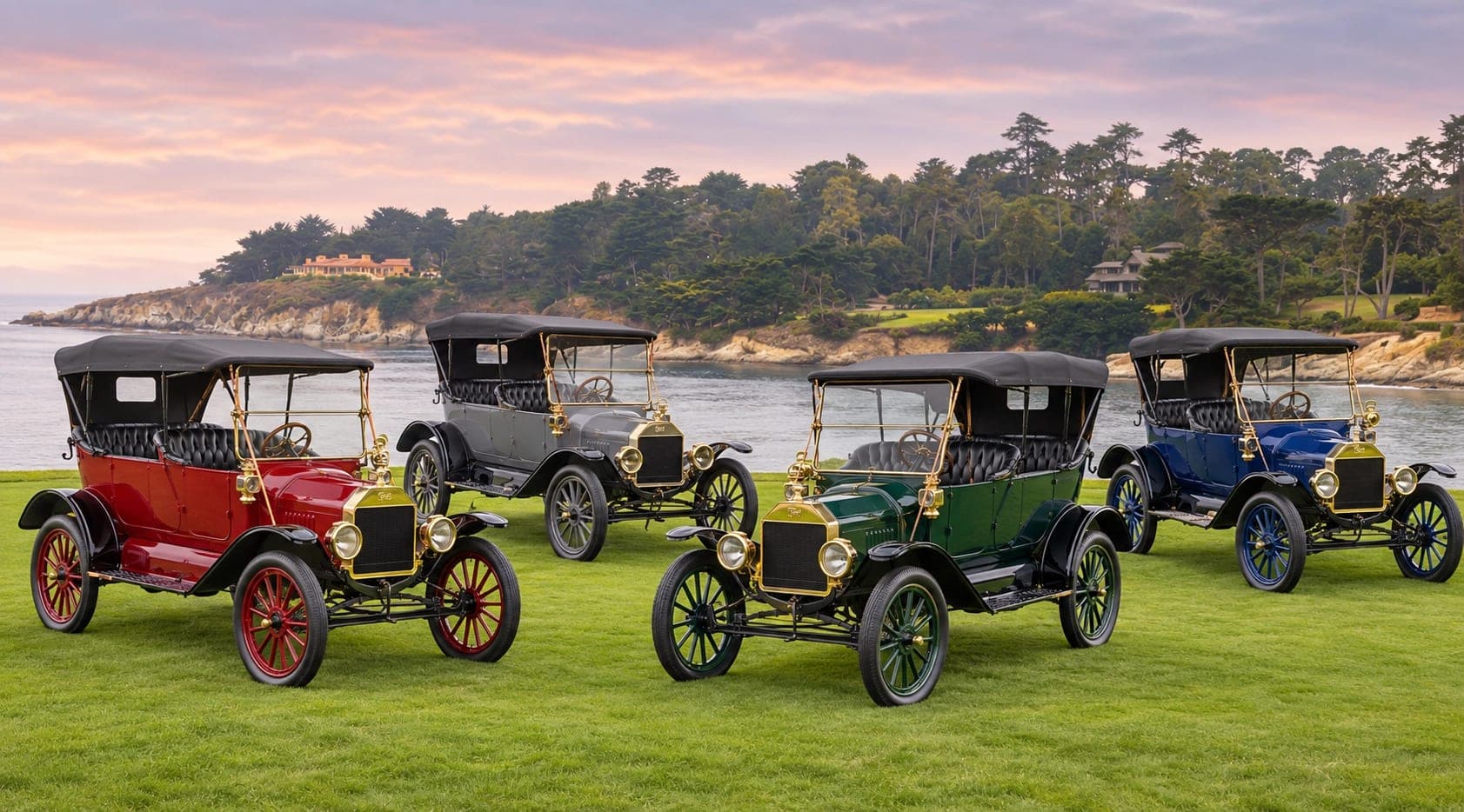
Ford's black Model T first came in red, grey, green and blue
The Ford Model T was not always black. From 1908 to 1913 it was sold in red, grey, green and blue, with the colour tied to the body style. Black-only production ran from 1914 to 1925, and colours returned for 1926. Henry Ford's famous line is genuine, but he only published it in 1922.

Volvo's three-point seatbelt legend is half-true, and Volvo says so
Volvo did not invent the three-point seatbelt. Roger Griswold and Hugh DeHaven patented a shoulder-and-lap harness for aircraft seats in 1955. Volvo engineer Nils Bohlin turned the idea into the V-shaped, one-handed belt fitted as standard to the PV544 and Amazon in 1959, and Volvo says it opened that patent to every carmaker.
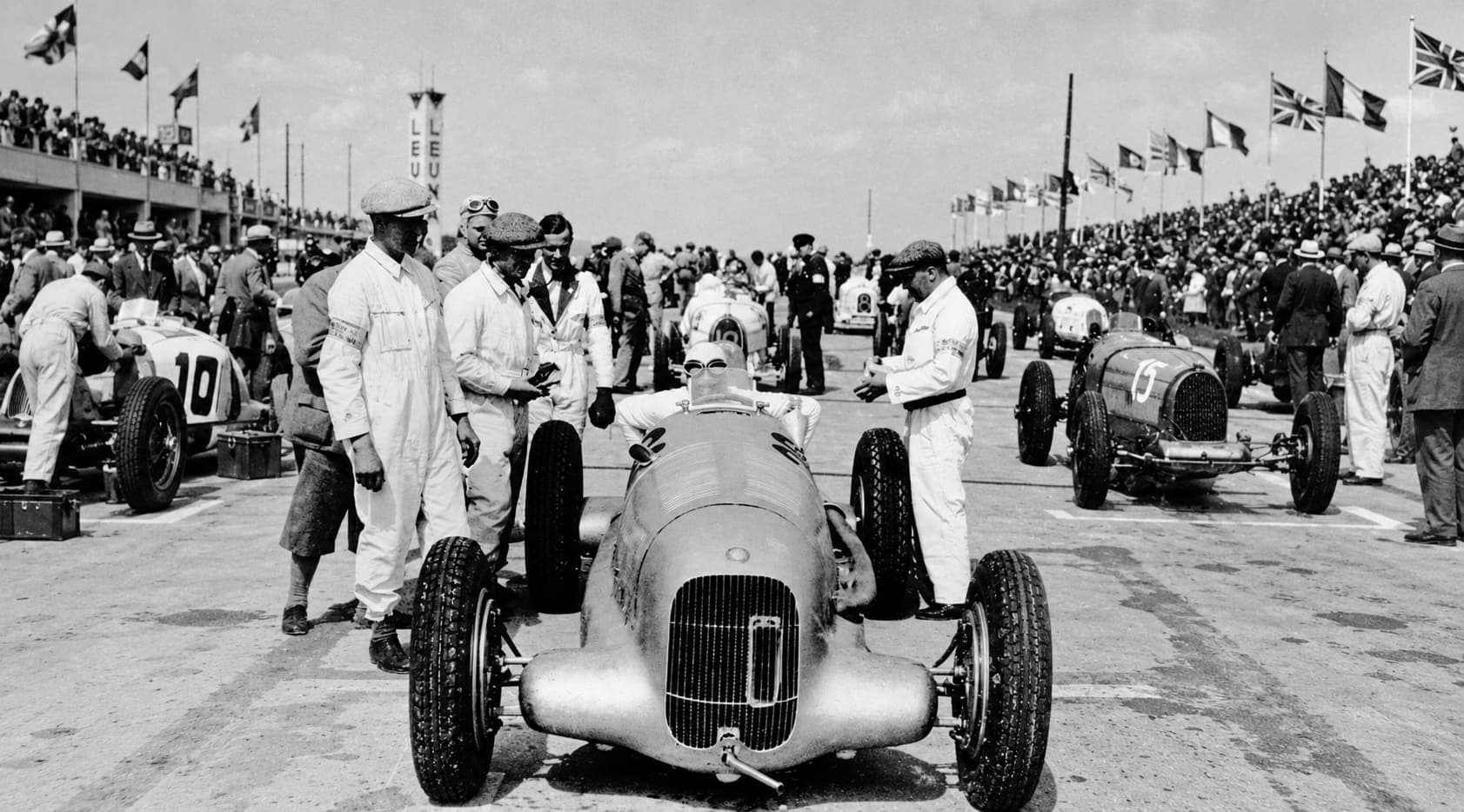
The Mercedes Silver Arrows paint legend was invented 24 years later
The legend says Mercedes stripped the white paint off its overweight W25 before the 1934 Eifelrennen and created the Silver Arrows. The race had no weight limit, no photo shows a white W25 that weekend, and a radio reporter had already called a silver Mercedes a silver arrow in 1932. Neubauer only told the story in 1958.
