
Marcello Gandini drew the Countach, but his biggest hit was a Citroën
The pen behind the Countach also drew the car in your uncle's driveway
Marcello Gandini is remembered for the wedge: the Lamborghini Miura and Countach posters that hung over a generation of bedrooms. Yet the Italian, who died in March 2024 aged 85, spent much of his career on cars people bought on a family budget. Count the output instead of the posters, and his most important car is not a Lamborghini at all, but a Citroën.
Citroën built 2,315,739 BXs, Lamborghini fewer than 2,000 Countaches
Citroën produced 2,315,739 examples of the Gandini-designed BX between 1982 and 1994, more than a thousand for every Countach. Lamborghini built the Countach from 1974 to 1990, and even the sources that disagree on its exact total agree it stayed under 2,000. The BX was a family hatchback with hydropneumatic suspension, a plastic bonnet and a plastic tailgate, and in markets that taxed engine size it came with a 1.1-litre engine. That is the Gandini shape most Europeans actually sat in, drove to work and wore out.
Gandini tried the BX lines on Anadol and Volvo concepts first
Gandini tested the angular BX look at Bertone on two concepts nobody built: the 1977 Anadol FW11 for Turkey and the 1979 Volvo Tundra. Volvo judged the Tundra too modern to sell. Citroën, developing a GSA replacement under the code name XB, accepted the same studio's futuristic proposal and showed the BX at the Paris motor show in September 1982. The Tundra's dipped rear side window, which makes the roof look as if it floats, reappeared on the BX's C-pillar, a trick that only became fashionable in the 2010s.
BMW's first 5 Series and the Fiat X1/9 came off the same Bertone desk
BMW's E12 5 Series of 1972 carried Gandini's hand as well: Paul Bracq led the design, with Gandini of Bertone credited as co-designer of the exterior, and 699,094 were built until 1981. The Fiat X1/9, grown from his 1969 Autobianchi A112 Runabout concept, put a mid-mounted engine within reach of ordinary buyers, and about 160,000 were made. Bertone built its bodies in Grugliasco before Fiat finished the cars at Lingotto. Gandini ran design at Bertone for 14 years, so the supercars and the commuters came from one drawing office.
Renault hired Gandini for the 1984 Supercinq and a truck cab
Gandini left Bertone in July 1979 to set up his own studio, Clama, and Renault became his first big client. His brief for the second-generation Renault 5, launched in October 1984, was the hardest kind: keep the look of a bestseller while changing everything beneath it. The Supercinq sat on a new platform with a transverse engine, yet buyers saw a cleaner, wider version of the car they already loved. He also drew the cab of the Renault AE, later called Magnum, the first modern truck with a completely flat cab floor, named Truck of the Year in 1991.
Politecnico di Torino made Gandini an engineer in January 2024
Politecnico di Torino awarded Gandini an honorary degree in mechanical engineering on 12 January 2024, two months before his death. It suited how he described his own work: architecture, assembly and mechanisms first, styling second. The Countach shows that as clearly as the BX does, with scissor doors he had first tried on the 1968 Alfa Romeo Carabo and a periscope in the roof because the body left almost no view backwards. Bertone hired him at 27, in 1965, to replace Giorgetto Giugiaro.
AutoNext Take
A wedge on a bedroom wall is easy to love; a wedge that survives school runs, a 1.1-litre tax-band engine and 12 years on sale is far harder to draw. Gandini managed both, and the BX, with its plastic panels and a shape Volvo had rejected as too modern, is the stronger proof of his talent. The Countach made his name. The BX, the 5 Series and the Supercinq show he could put the same nerve into cars built by the hundred thousand without frightening the people paying for them.
Lamborghini delivered a record 10,687 cars in 2024. At that pace Sant'Agata would need more than 200 years to match the BX's total, so the Gandini design with the most owners will remain a Citroën for as long as anyone reading this is alive. The BX turns 50 in September 2032, and that birthday will gather more former owners than any Lamborghini anniversary, for the plain reason that there are a thousand times more of them.

BMW's Hofmeister kink began as a steel fix, not a styling flourish
The BMW Hofmeister kink first appeared on the 1961 BMW 1500, where a wider rear pillar base stiffened the roof joint of an all-steel body. BMW named it after design chief Wilhelm Hofmeister years later, although Kaiser had used a similar bend in 1951. The electric iX3 and i3 still carry it, now drawn in the glass.
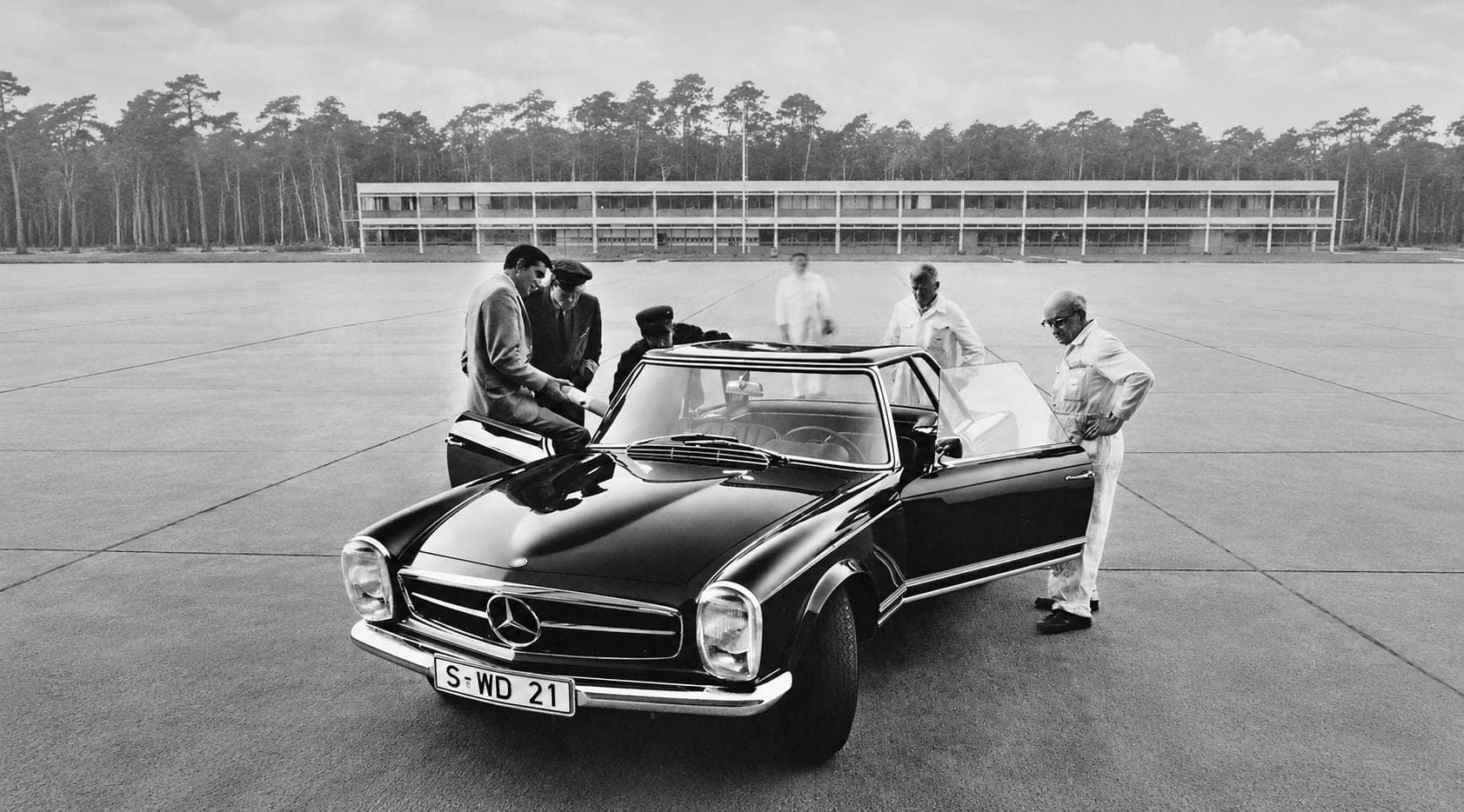
Mercedes Pagoda and BMW sharknose: one Frenchman drew both
Bordeaux-born designer Paul Bracq gave Mercedes-Benz its 230 SL Pagoda in 1963, then moved to BMW in 1970, where he drew the gullwing Turbo concept and the 6 Series sharknose. Between the two he worked on France's TGV 001 prototype train. He ended his career on Peugeot interiors in 1996.
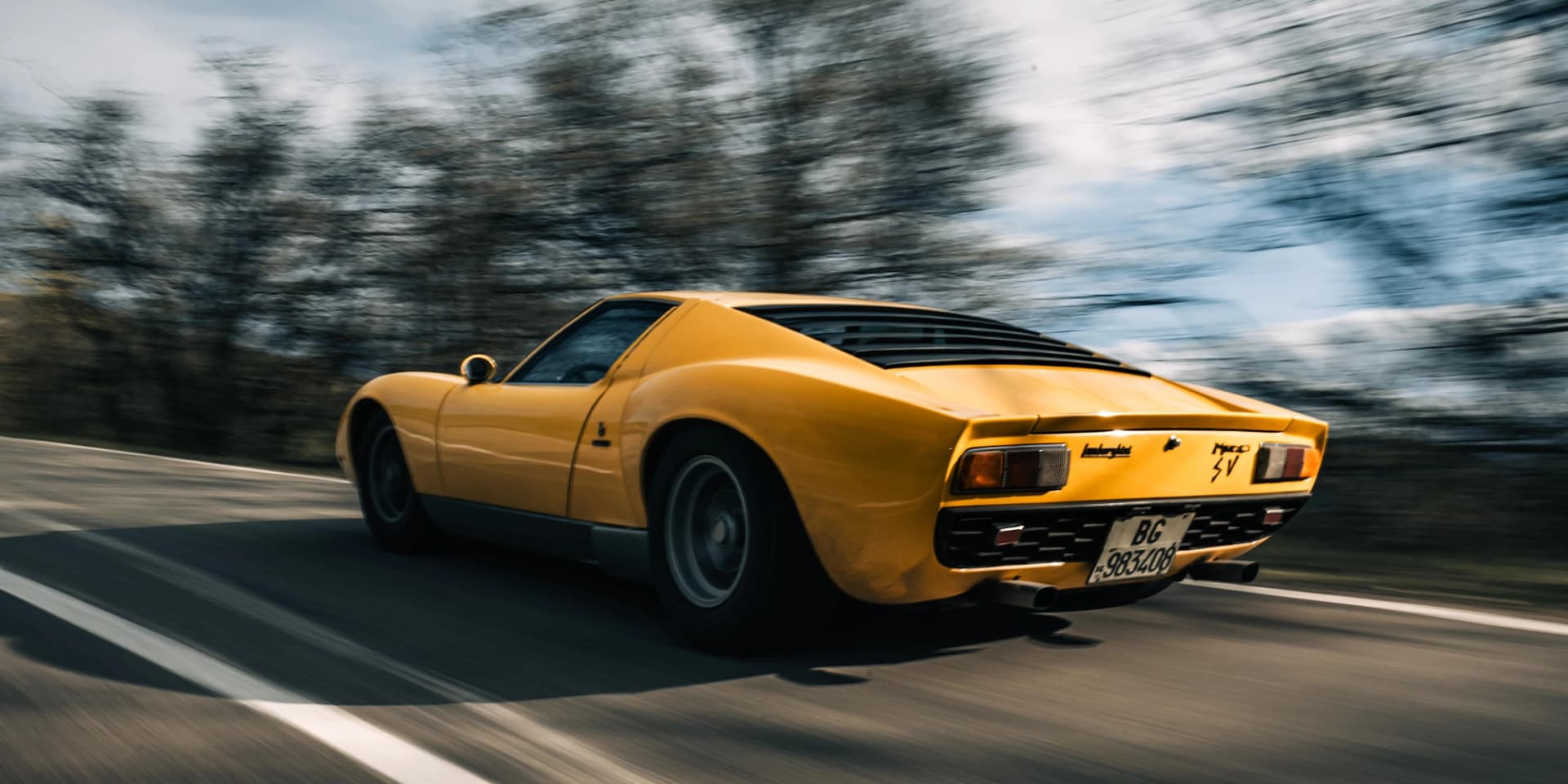
Lamborghini Miura turns 60: the car that invented the supercar
In 2026, Lamborghini celebrates 60 years of the Miura, the car widely regarded as the first true supercar in history. When it made its debut at the Geneva Motor Show on March 10, 1966, the Miura was not just another fast Italian GT. It introduced a completely new idea of what a high-performance road car could be.
