
Peugeot E-T16 claims three flat-out Nordschleife laps on 816 hp
Peugeot's most powerful road car is engineered to hold 816 hp for 60 km
Peugeot unveiled the E-T16 concept in Paris on 11 October, 40 years after the 205 T16 won the second of its two world rally titles. Developed with Peugeot Sport, the electric hatch has three motors, 816 hp and Group B styling cues, and it previews the next-generation E-208. It is on public display at the Paris Motor Show until 18 October.
The E-T16 runs three Nordschleife laps, over 60 km, with no power cut
Peugeot says the E-T16 can drive three laps of the Nürburgring Nordschleife, more than 60 km, in Performance mode without any power limitation. Peugeot Sport says it designed the battery cooling to prevent derating, the power cut that protects a hot battery, and fitted a race-derived Side Cooling system that cools the cells through their side walls rather than through their base. The 85 kWh battery runs on an 800-volt architecture, gives up to 400 km on the WLTP cycle and charges from 10 to 80 percent in under 15 minutes, numbers that would suit an ordinary family EV as much as a track car.
Three motors give the E-T16 816 hp and 0 to 300 km/h in 16 seconds
The E-T16's three electric motors, one on the front axle and two at the rear, produce 816 hp, which makes it the most powerful Peugeot road car ever shown. It reaches 100 km/h in 2.5 seconds and 300 km/h in 16, with under 2 kg per horsepower. Torque vectoring splits drive between the rear wheels and between the axles, and four modes include a Track setting and a fully custom one. Peugeot's only comparison is its own Pikes Peak car: the 208 T16 that Sébastien Loeb drove to a record 8 min 13.878 s in 2013 had 875 hp for 875 kg.
The 205 T16 needed 200 road cars to go rallying in 1984
Group B rules forced Peugeot to build 200 road-going 205 T16s before the rally car was homologated on 1 April 1984, each with roughly 200 hp from a mid-mounted turbo four. The rally version then won the world title in 1985 and 1986. The E-T16 borrows that car's cues: Winchester Matte Grey paint close to the original grey, a backlit red line around the body for the old pinstripe, the charging port in the intake ahead of the rear wheel, and a rear body that tilts open to show the two rear motors and a red roll cage.
Peugeot Sport is building a drivable E-T16 with homologation in mind
Peugeot design director Matthias Hossann says the brand is looking to make the E-T16 if enough people are interested, and that any production version must be usable on the road, not only on track. Peugeot Sport Engineering, the team behind the 9X8 at Le Mans and the new E-208 GTi, is working on a fully drivable prototype with a view to homologating it. Its nearest rival would be another French electric homage, Renault's rear-wheel-drive 5 Turbo 3E with 540 hp, which Hossann says is the same idea at a different level of performance.
The next E-208 inherits the E-T16's light bars and Hypersquare wheel
The next Peugeot E-208, due in 2027 at around 4.1 metres long, takes its silhouette, its horizontal three-claw light bars and its interior from the E-T16, with the concept stretching every proportion. Inside, a 21-inch panoramic display sits above the Hypersquare steering control, whose shape follows the 9X8's wheel. The E-T16's version adds a central screen for speed and lap times where the airbag would normally sit, which Peugeot says its four-point harnesses make unnecessary.
AutoNext Take
Peugeot has built its electric halo around the problem its own engineers put first: keeping its power once the battery is hot. The 816 hp and 2.5 seconds are the headline, but the three uninterrupted Nordschleife laps and the side-cooled cells are the engineering, and they come from the team that runs the 9X8. Add 400 km of range and a sub-15-minute charge, and the E-T16 is the most complete case for an electric hot hatch Peugeot has ever made.
The drivable prototype will settle it before any order book does. If it completes those three laps on independent timing before the next E-208 reaches showrooms in 2027, Hossann's condition of enough interested buyers will take care of itself; if its next appearance is another static stand, the E-T16 will remain a design study for the E-208 rather than the 205 T16's heir.
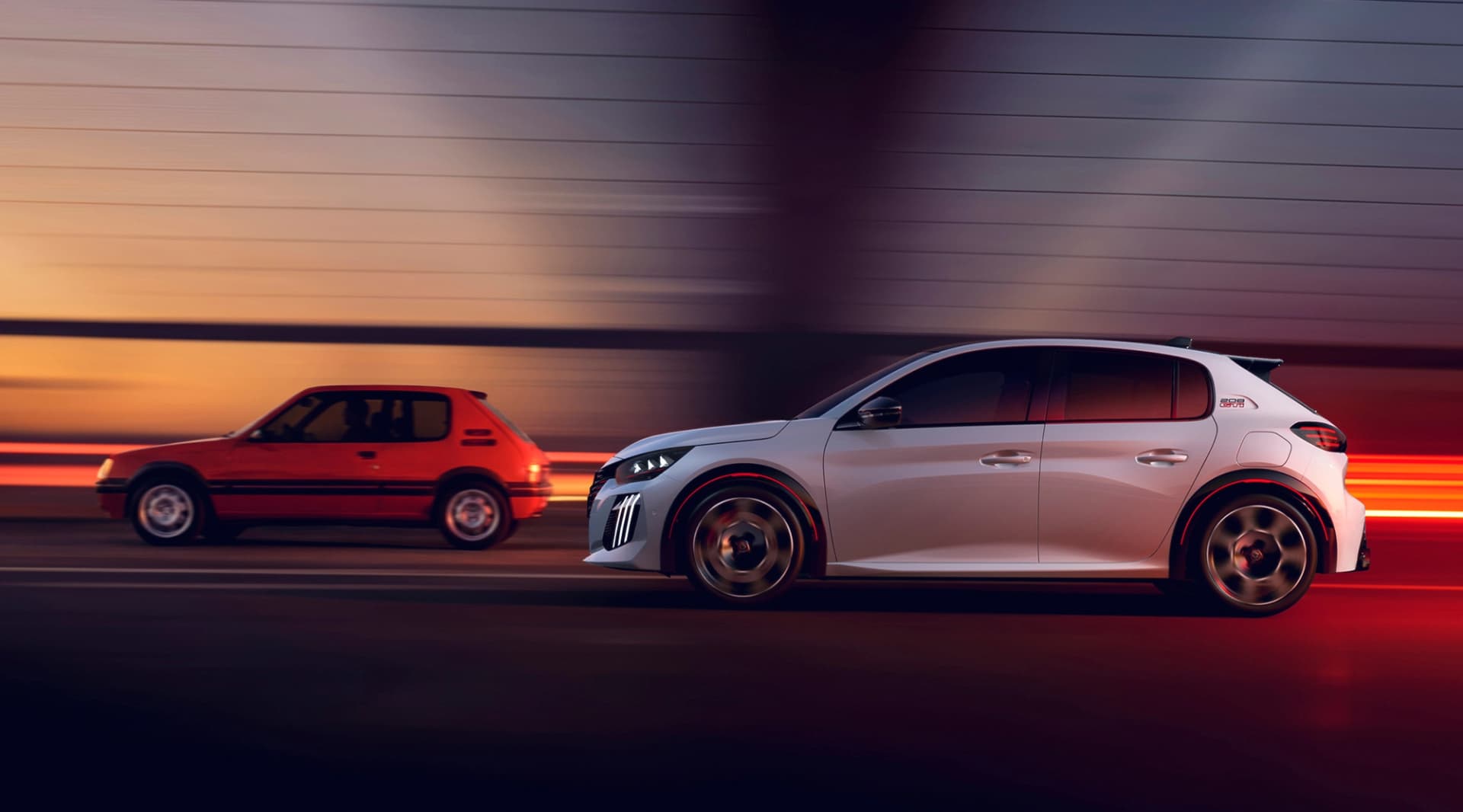
Peugeot's e-208 GTi is the electric hot hatch the badge deserves
Peugeot revealed the e-208 GTi at the 24 Hours of Le Mans on 12 June 2026, the first car to carry the GTi name since the 308 GTi was discontinued in 2021. The electric hot hatch produces 207 kW (281 hp) and 345 Nm from a single front motor, reaches 100 km/h in 5.5 seconds, and offers up to 375 km of WLTP range from a 54 kWh battery. Priced from €42,900 in France, orders opened the same day it was revealed.
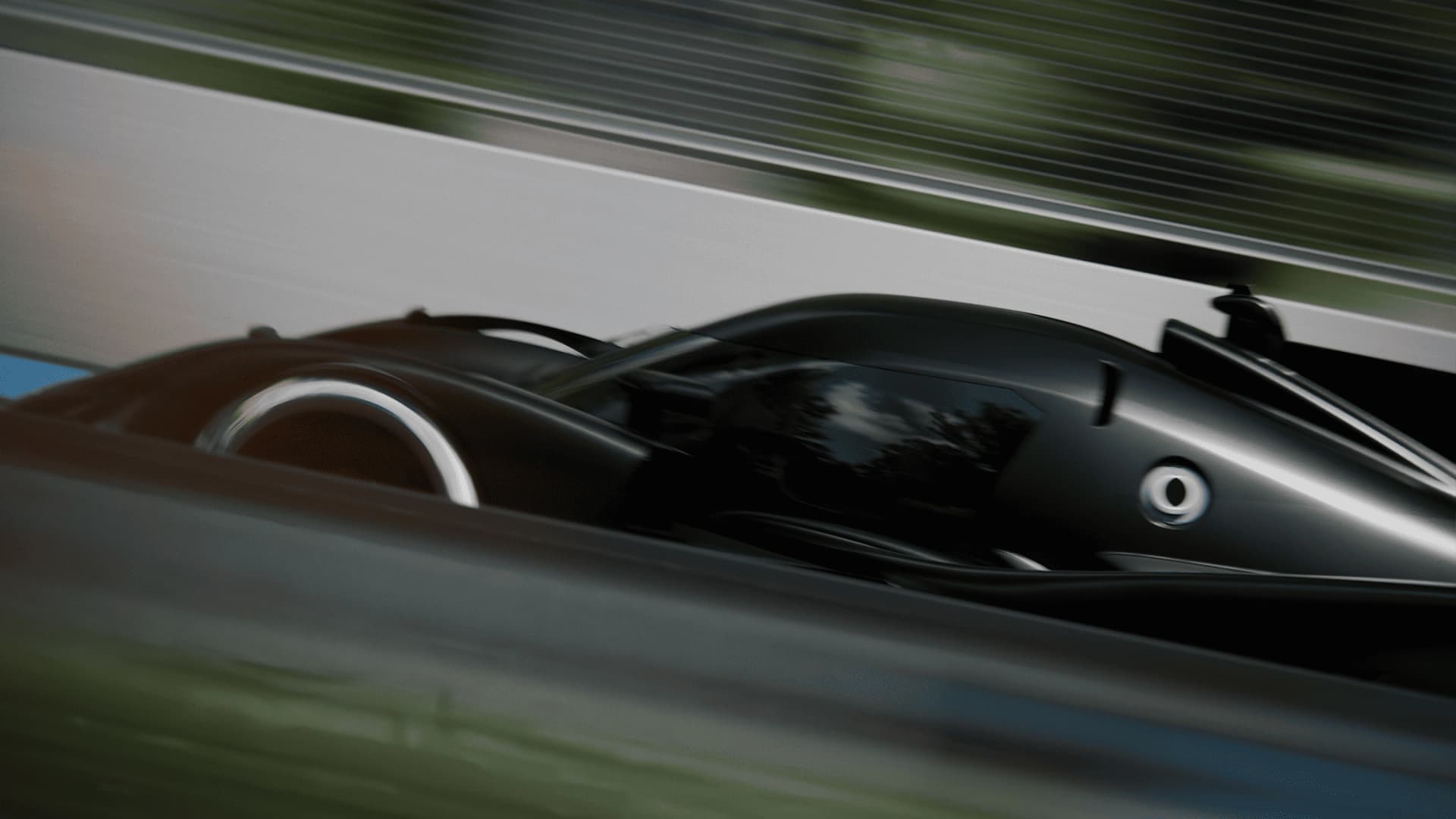
Peugeot is not walking away from Le Mans, it is doubling down for 2027
Peugeot has confirmed that its 9X8 Le Mans Hypercar enters a new development phase, with a revised approach to performance, efficiency and design for the 2027 WEC season. The key message is that Peugeot is continuing rather than withdrawing, despite years of inconsistent results. Team principal Emmanuel Esnault says the goal is to position the 9X8 consistently among the top contenders.
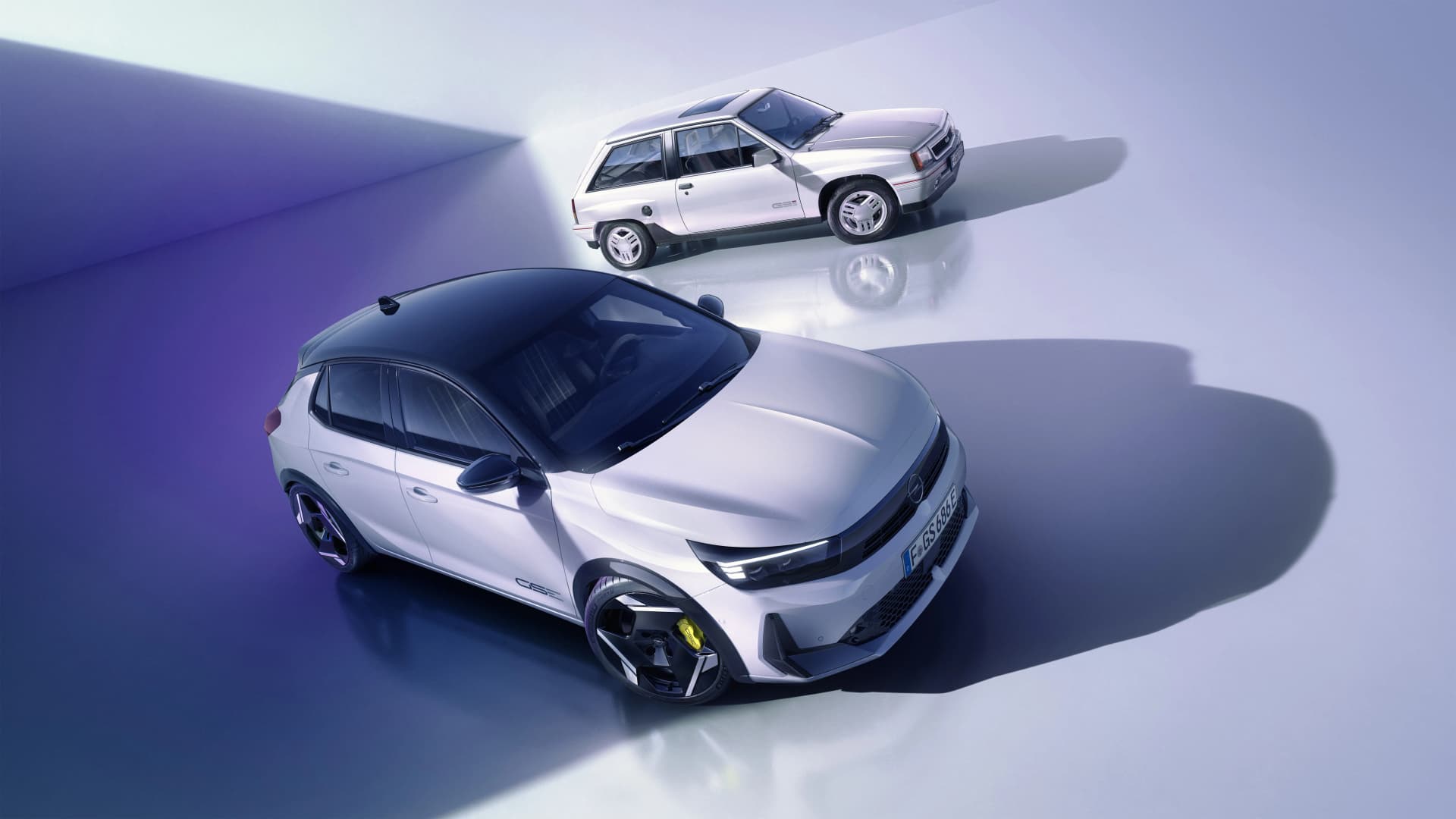
Opel Corsa GSE revealed as 281 hp electric hot hatch
After the Mokka GSE, the Mokka GSE Rally and the wild Corsa GSE Vision Gran Turismo, Opel is now bringing the GSE badge back to the real world with the new Opel Corsa GSE. It is fully electric, front-wheel drive, properly uprated underneath and, most importantly, the most powerful production Corsa ever built.
