
Peugeot RCZ Vision revives the coupé on solid-state Factorial cells
Peugeot's RCZ returns with four real seats and a battery still in road testing
Peugeot unveiled the RCZ Vision concept in Paris on 11 October, the evening before the Paris Motor Show opened, as the heir to the RCZ coupé built from 2010 to 2015. The electric four-seater has 500 hp, up to 600 km of range and a solid-state battery developed with Factorial Energy, and it stays on public display until 18 October.
Factorial's solid-state cells promise a 10-minute charge in the RCZ Vision
Peugeot says the RCZ Vision's solid-state battery, developed with US start-up Factorial Energy and running on a 1,000-volt architecture, charges from 10 to 80 percent in 10 minutes. The pack is only 110 mm thick, which lets the roof sit low, and Peugeot targets 11.5 kWh/100 km on the WLTP cycle, a figure it marks as still to be confirmed. The claim runs ahead of the published test data: when Stellantis validated Factorial's 77 Ah cells in April 2025, they reached 375 Wh/kg and charged from 15 to over 90 percent in 18 minutes. A demonstration fleet of Dodge Charger Daytonas with those cells is due on the road in 2026.
Magna Steyr built 67,916 original RCZ coupés for Peugeot in Graz
Magna Steyr built 67,916 RCZs for Peugeot in Graz between 2010 and 2015, and Peugeot's release now calls the original a collector's car. Design director Matthias Hossann says the new car was deliberately kept realistic in size and packaging so it could reach production if customers ask for it, arguing that almost no mainstream brand still offers a four-seat coupé. That separates it from Peugeot's previous show cars, the 2017 Instinct, the 2018 E-Legend and the 2023 Inception, none of which went on sale.
The RCZ Vision's 4.65-metre body seats four adults on an STLA One base
The RCZ Vision is 4.65 metres long, 1.94 metres wide and 1.35 metres tall, close to the footprint of a BMW 4 Series Coupé, and it seats two adults in the back where the original was a 2+2. Its architecture is based on Stellantis' STLA One platform, the base for the next E-208 and E-308. The glass bubble now runs from bonnet to tail, the double-bubble roof is raised over the rear seats, and an active spoiler stays hidden until the car is moving. The forged wheels measure 21 inches at the front and 22 at the rear.
The next E-208 gets the RCZ Vision's production Hypersquare steering wheel
Peugeot says the RCZ Vision already carries the production version of its Hypersquare steering wheel, which the next-generation E-208 will use. Paired with steer-by-wire, it needs just under one turn from lock to lock instead of the three of a conventional system, with the ratio changing with speed. The concept is also the first Peugeot with brake-by-wire, which replaces the hydraulic link to the pedal, and it offers hands-free L2++ driver assistance in town and on the open road. A transparent MicroLED screen above the wheel shows driving data, and the floating centre screen can switch off and almost disappear from view.
AutoNext Take
Everything on the RCZ Vision except its battery is already on Peugeot's shopping list. The steering wheel is signed off for the E-208, the platform is the one the next E-208 and E-308 will share, and a 4.65-metre four-seat coupé fills a gap the original filled to the tune of almost 68,000 cars. The solid-state pack is the one part still proving itself: the cells Stellantis validated in 2025 took 18 minutes for a charge Peugeot now promises in 10.
A production RCZ, if Peugeot approves one, will reach showrooms on conventional lithium-ion cells first, because Factorial's cells are only now going into a Stellantis demonstration fleet. The 2027 E-208 is the earlier signal: if it arrives with the Hypersquare as promised, the coupé's case will rest on demand alone, which is exactly the condition its designer set in Paris.
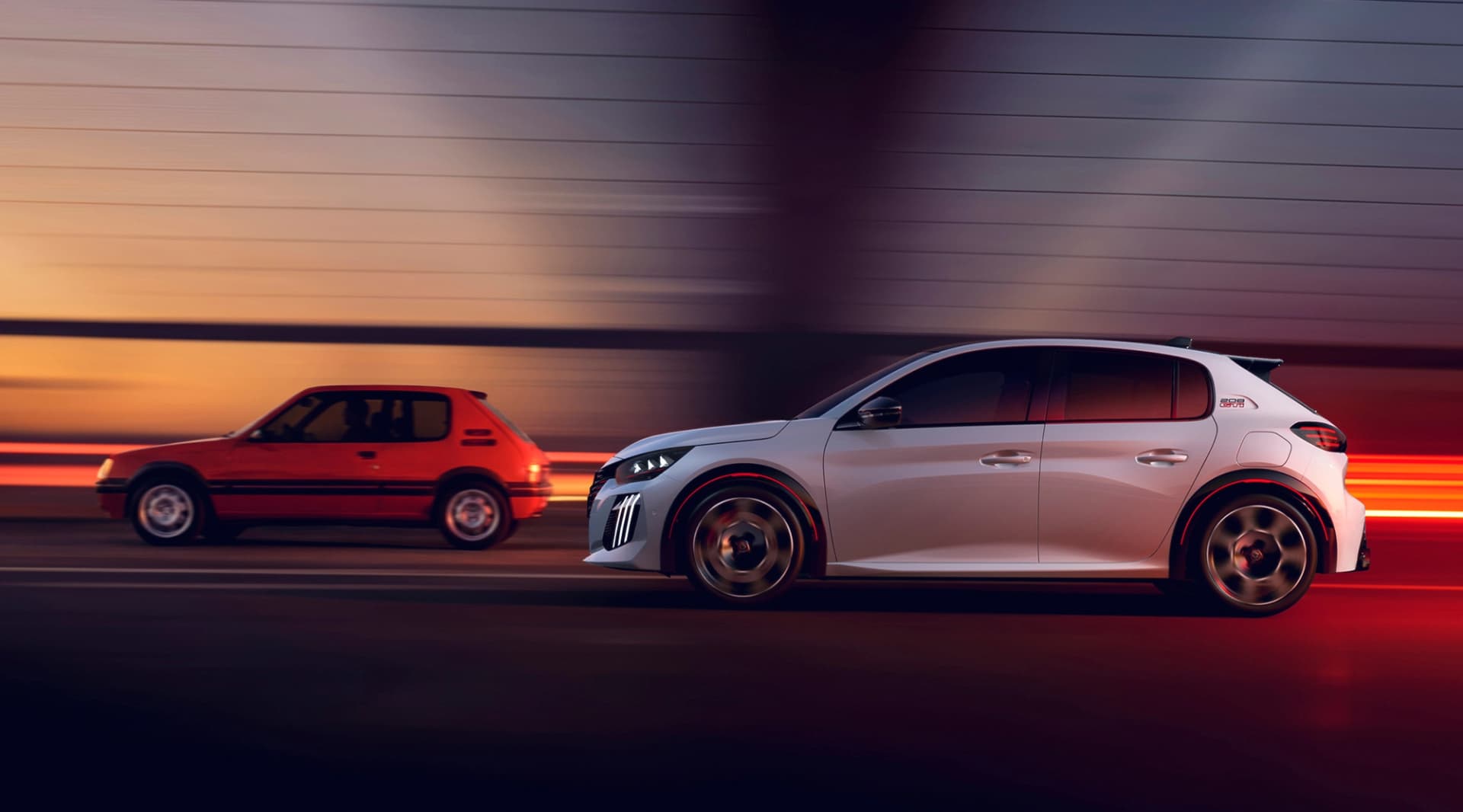
Peugeot's e-208 GTi is the electric hot hatch the badge deserves
Peugeot revealed the e-208 GTi at the 24 Hours of Le Mans on 12 June 2026, the first car to carry the GTi name since the 308 GTi was discontinued in 2021. The electric hot hatch produces 207 kW (281 hp) and 345 Nm from a single front motor, reaches 100 km/h in 5.5 seconds, and offers up to 375 km of WLTP range from a 54 kWh battery. Priced from €42,900 in France, orders opened the same day it was revealed.
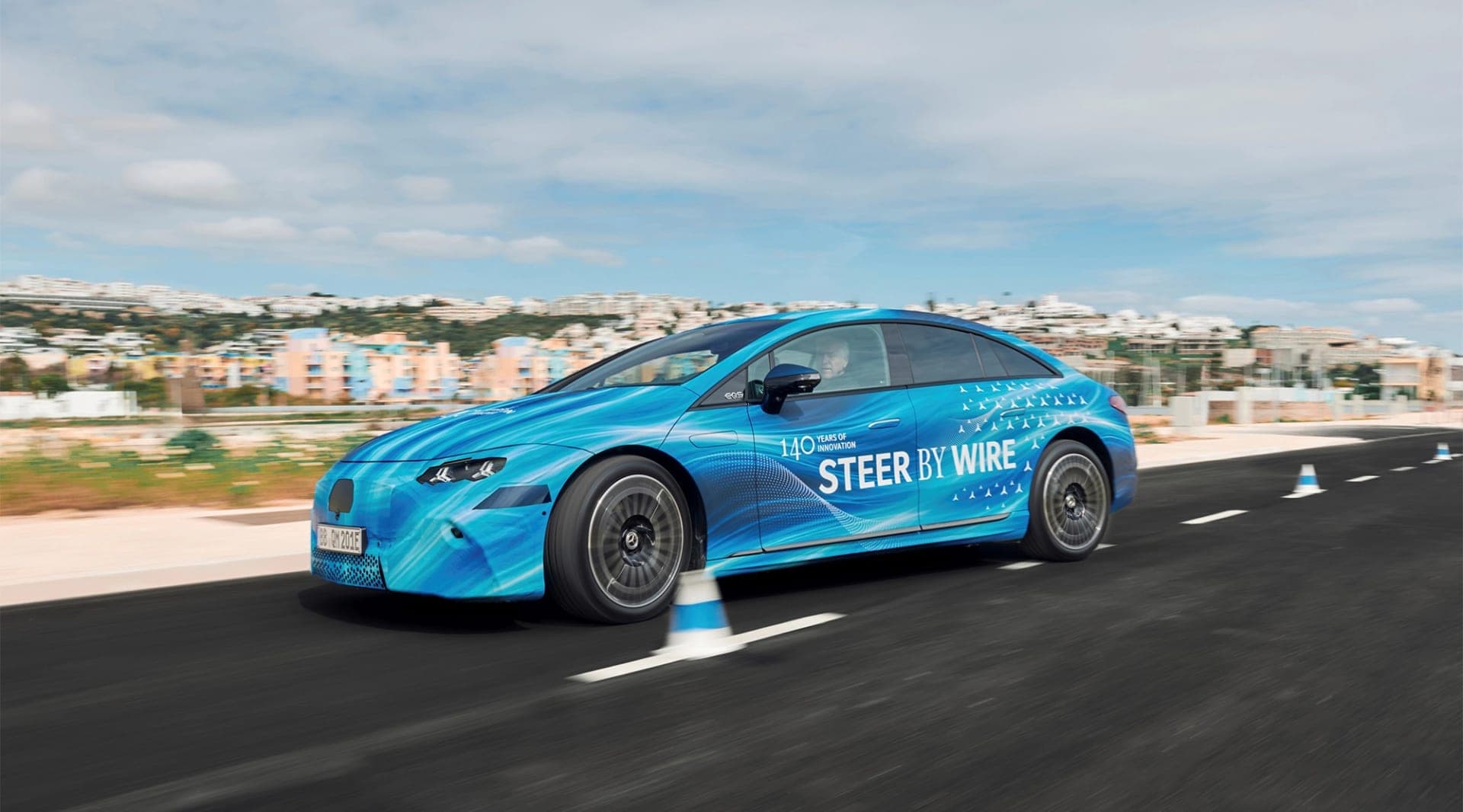
Mercedes EQS steer-by-wire costs €2,975, 30 years after the F200
Mercedes has opened orders for steer-by-wire on the EQS saloon in every market where the car is sold, at €2,975 in Germany and €3,025 in the Netherlands. The option removes the steering column, cuts lock to lock to 170 degrees and adds 10-degree rear-axle steering, three decades after the F200 concept first showed the idea.
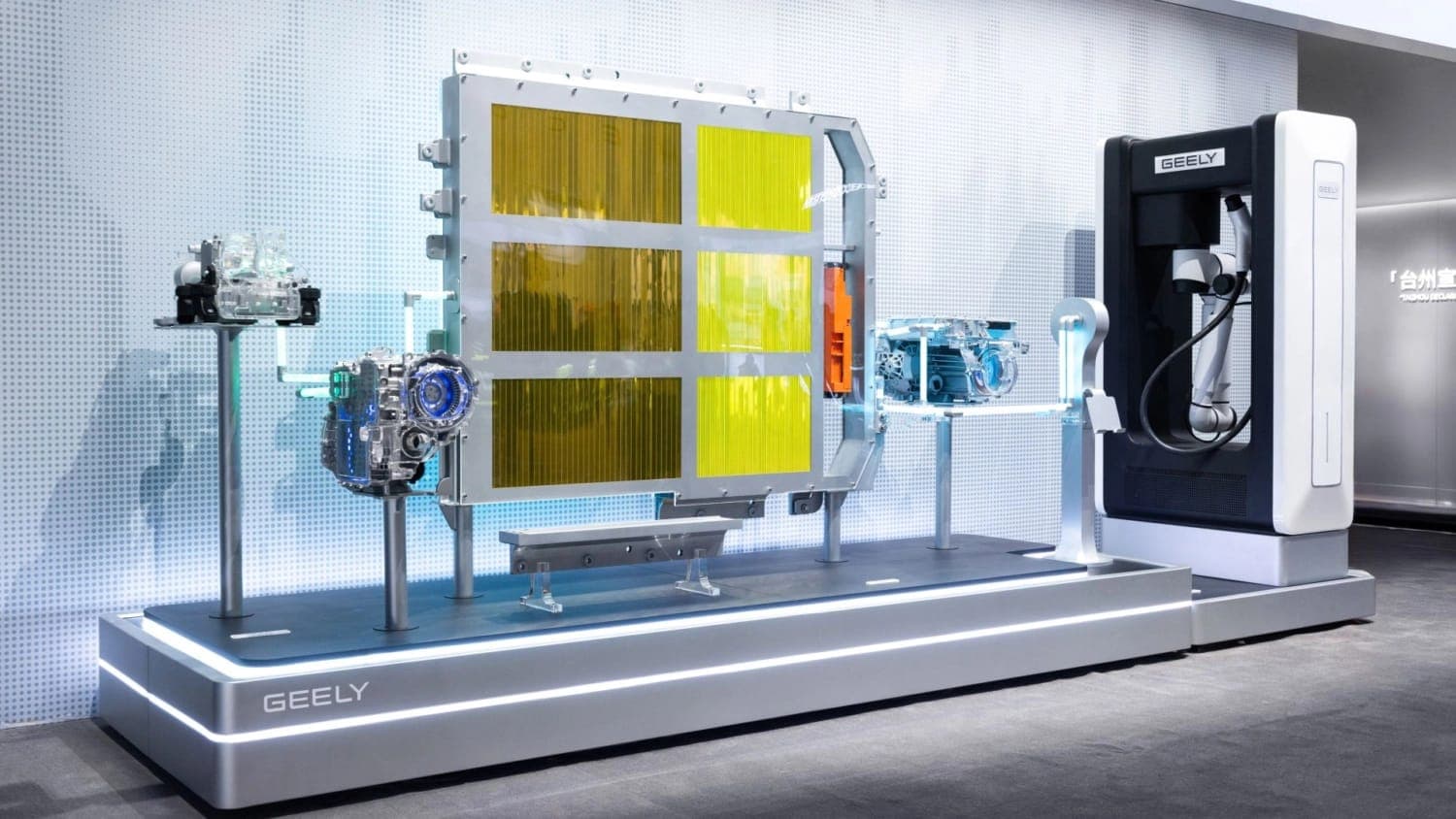
Geely is chasing a five-minute charge, and Europe is nowhere near
Geely is developing a 1,000-volt electrical architecture to push its 10 to 80 percent charging time below five and a half minutes, replacing the 800-volt systems used by Volvo, Polestar, Lotus, Zeekr and Lynk & Co. The group has already installed more than 2,100 charging points rated at up to 1,500 kW, far beyond what any of its cars can currently accept, while Europe's fastest public chargers stop at 350 to 400 kW.
