
Renault pauses retro and wants no more Renault 5 lookalikes
Renault's retro revival won it new buyers, and now it is protecting the look
Renault is pressing pause on retro design for its next generation of family cars. Speaking at the Paris Motor Show this week, Renault Group design chief Laurens van den Acker said the replacements in the C and D segments will not borrow from the past. In the same week, CEO François Provost said partner brands may no longer build near-copies of Renault's own cars.
Renault's next C- and D-segment models will not be retro
Renault's next C- and D-segment models will not get a retro design, Laurens van den Acker told AutoWeek and other reporters at the Paris show. "I think we need to dose it carefully, and take a pause now," he said, adding that the next generation of Renaults will be the replacements in exactly those two segments, home today to the Mégane E-Tech, Scenic, Austral, Espace and Rafale. That makes a retro production version of the six-seat E-Space concept shown in Paris unlikely. Van den Acker called that car important all the same: Renault had already done its small cars, the Twingo, 5 and 4, and wanted to show how far the idea could stretch.
François Provost wants no more Nissan Micra-style twins
François Provost, Renault Group CEO since the end of July 2025, said at the Paris show that Renault "did not request enough differentiation" from its partners in the past. "This is a change compared with my predecessor," he said, meaning Luca de Meo. "I will never do partnerships without enough differentiation." The trigger is the electric Nissan Micra, which Renault builds in Douai alongside the 5: it shares the 5's proportions, glasshouse and roof, and its interior is virtually identical. Confidentiality agreements stop Renault executives from seeing a partner's design before launch. Provost's preferred example is the Dacia Spring, which shares the Twingo's platform and looks nothing like it.
Micra, Pixo, Colt, ASX and Grandis are Renaults with other badges
Five cars in Nissan's and Mitsubishi's European ranges come out of Renault factories, and three of them barely hide it. Mitsubishi's Colt, ASX and Grandis are a Clio, a Captur and a Symbioz with a new grille and lights, and the Grandis even comes from Renault's Valladolid plant in Spain. Nissan's Micra is built in Douai, and the new Nissan Pixo comes off the Twingo line in Novo Mesto, Slovenia. Each deal fills a Renault factory, which is why Renault signed them. Each also puts a car Renault designed into a rival's showroom, where it competes with the original.
Ford's two Renault-built EVs from 2028 must look like Fords
Ford's two electric cars, built by Renault in northern France from 2028, are the first test of the new rule. The partnership, signed in December 2025, puts them on the small-car platform under the 5, 4 and Twingo. Provost said Ford chief executive Jim Farley shares his view: "if he chose to partner with Renault, the car must be a Ford." He also said he prefers fewer, long-term partnerships to one-shot tactical deals, a change from the de Meo years, when Renault offered partners a menu of differentiation that ran up to bespoke body panels.
Why the Renault 5 look became Renault's most valuable asset
The Renault 5 was voted 2025 European Car of the Year, and Renault built its 100,000th example on 1 December 2025. Van den Acker's explanation is that electric cars erase the old differences: "You had eight cylinders, we had four, they had six, they had twelve," and once those go, design carries the brand. People who would not buy a Renault, he says, do buy a 5 or a Twingo, and the Renault 5 Turbo 3E has already sold half its run. Gilles Vidal, Renault's design director from 2020, has led design at Stellantis' European brands since 1 October 2025, and Stellantis brought a Citroën 2CV concept to Paris. Van den Acker's response: "So what? I would do it too."
AutoNext Take
Pausing retro while the 5 still sells is the disciplined move. A heritage look needs a loved original to borrow from: the 5, 4 and Twingo each had one, while the C and D segments have nothing as cherished as the 1972 5. Provost's half matters more. A design that draws people who would never buy a Renault into its showrooms loses its value if the same car waits at the Nissan dealer next door with different lights.
Ford will show the electric car Renault builds for it in northern France by 2028, and its dashboard and roofline will settle whether Provost's rule holds. A Ford that shares the 5's cabin the way the Micra does would turn this week's words into a speech. A Ford that nobody at the kerb could link to the 5 would mean Renault has protected the one asset it cannot engineer twice: a car people choose for the way it looks.
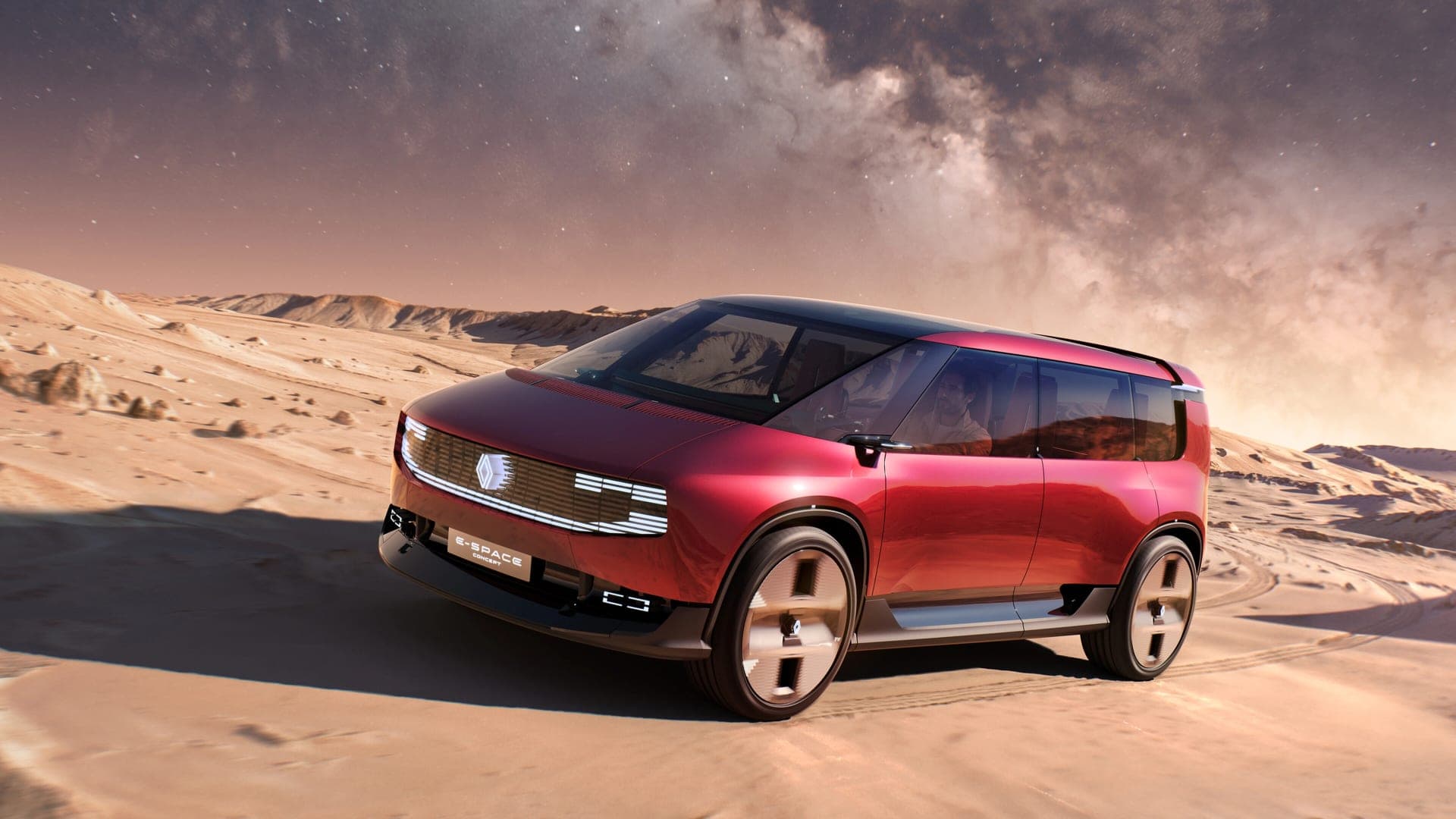
Renault E-Space concept puts six equal seats on one flat floor
Renault has detailed its E-Space concept before its Paris Motor Show premiere on 12 October: a 4.70-metre electric one-box with six identical seats on a completely flat floor, modelled on the 1984 Espace. Its full-width OpenR Panorama screen is headed for future Renault EVs, but the car itself has no production plan.
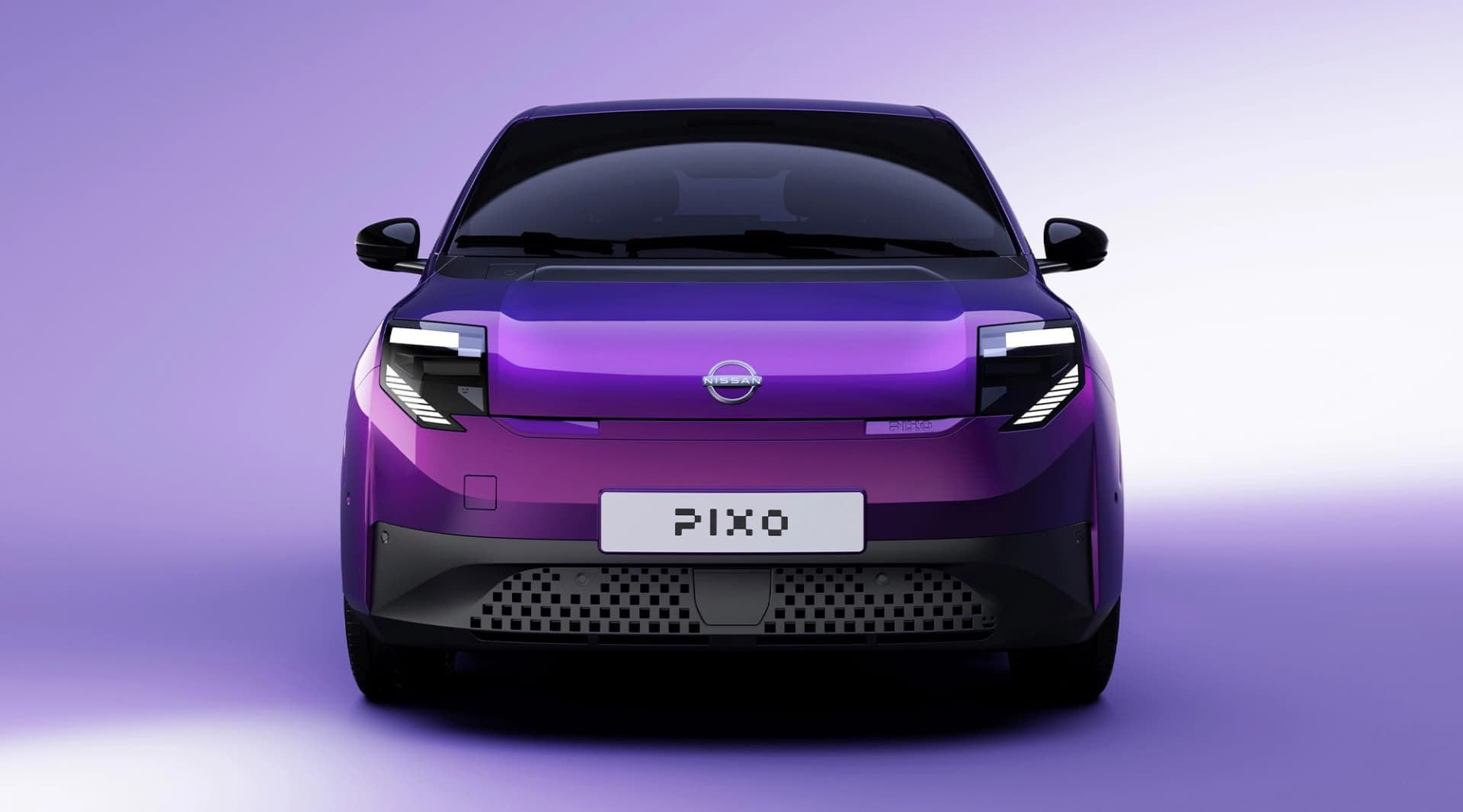
Nissan's electric Pixo weighs 1,285 kg and charges at 50 kW
Nissan has revealed the electric Pixo, a 3,796 mm city car with a 27.5 kWh LFP battery, 259 km of WLTP range and 50 kW DC charging on every grade. It weighs 1,285 kg, seats four adults and reserves 50 of its 356 boot litres for charging cables. Renault builds it in Slovenia and pricing follows in December.

Renault 5 Turbo 3E sells half its run before 2028 deliveries
Renault has reserved more than half of the 1,980 5 Turbo 3E electric hot hatches it plans to build at Alpine's Dieppe plant, at a price now quoted from €160,000. The 555 hp car is still being homologated, so customisation opens in mid-2027 and first deliveries follow in 2028, a year later than first planned.
