
Rimac's car batteries head for AI data centres, starting in Zagreb
A battery line built for BMW's i7 is finding its second customer in computing
Rimac Technology, the supplier half of Mate Rimac's Croatian group, signed a joint development agreement with Ecoblox of Dubai on 7 October. The two will build modular AI data centres around Rimac's UNI battery modules and power electronics, with Ecoblox supplying the computing, cooling and software. The first complete unit will be installed at the Rimac Campus near Zagreb in November 2026.
Rimac's UNI battery modules will back up AI servers at the Zagreb campus
Rimac's UNI battery modules give the Ecoblox data centre its backup power, keeping critical computing hardware running for longer if the supply drops. The battery management system streams its readings straight into Ecoblox's monitoring platform, while power conversion, uninterruptible supply, precision cooling and the servers share one modular footprint. Ecoblox, an Nvidia Preferred Partner, says it can have such units computing at a local power source within six to eight months. Rimac designed the UNI modules to automotive standards for cars, boats, off-highway machines and energy storage, so a server hall is a new application rather than a new product.
70 percent of the Rimac Campus already builds batteries for carmakers
Rimac Technology says 70 percent of the capacity at its 90,000 m² Rimac Campus is committed to battery systems for several carmakers. The largest programme is the BMW i7: series production began in June 2026 on two automated lines covering 15,000 m², combining BMW's Gen6 4695 cylindrical cells with its Gen5 module design, and the finished packs go to Dingolfing. BMW credits the new cells with 20 percent more volumetric energy density than the prismatic Gen5 cells. Mate Rimac calls the BMW work the group's most important project to date.
AI data centres are moving to 800 volts, the voltage of fast-charging EVs
Nvidia, Google and Microsoft are developing an 800-volt direct-current power architecture for AI data centres, and more than 80 equipment makers are building to it. Nvidia's first 800-volt power racks arrive in the second half of 2026, with row-level units handling up to 2 MW following in 2027. That is the operating voltage of the fastest-charging electric cars, which Porsche put into production with the Taycan in 2019. Rimac's own release puts the shift to 400 and 800 volts at the centre of the deal: the components a high-voltage battery supplier already makes are the ones these server halls now need.
Data centres used 415 TWh in 2024, and Europe's will need 115 TWh by 2030
Data centres consumed about 415 TWh of electricity worldwide in 2024, around 1.5 percent of global demand, and the International Energy Agency expects that to more than double to 945 TWh by 2030. Europe's data centres used about 70 TWh in 2024 and are heading for 115 TWh by 2030 on the same estimates, figures the European Commission now cites. Ecoblox's pitch rests on that pressure: it says automotive-grade storage removes grid constraints, letting customers put computing next to whatever power source is available instead of waiting for a bigger connection.
Rimac built 71 Neveras and a supplier business with over 1,000 staff
The Nevera ends production at 71 cars, but the hypercar was always the smaller half of Mate Rimac's operation. Rimac Technology employs more than 1,000 people, builds the battery for BMW's flagship saloon and works with sister company Bugatti Rimac on the V16 Tourbillon. Its Rimac Energy division left cars behind once before, in 2024, when its first SineStack stationary storage system was commissioned for a site in Colchester, England. The founder's own start fits the pattern: he converted a 1984 BMW 3 Series to electric power in his garage at the age of 20.
AutoNext Take
Rimac is not abandoning cars for computing. The Ecoblox deal sells modules, power electronics and engineering that BMW and other carmakers have already paid to industrialise, into a market the International Energy Agency expects to more than double by 2030. For a supplier whose factory is 70 percent committed to car programmes, that is diversification that costs almost nothing in new development.
The Zagreb demonstrator goes live in November, and the order book after it will decide what the deal is worth. If Ecoblox installs Rimac-powered units at a paying customer's site before the end of 2027, Rimac Technology will have a second industry alongside cars; if Zagreb is still the only one by then, the modules will have found a showcase rather than a market.
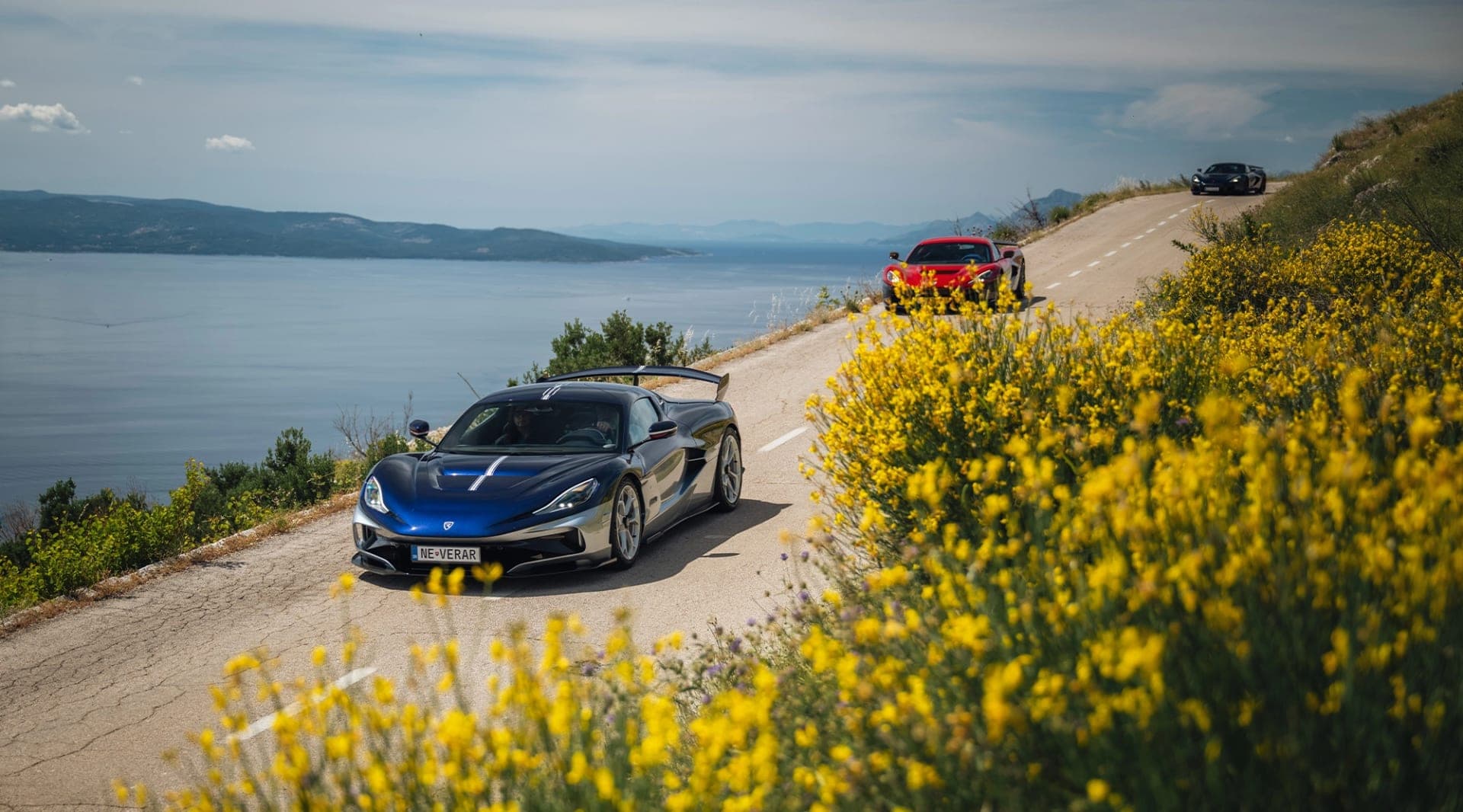
Rimac Nevera production ends at 71 cars, less than half the plan
Rimac will finish Nevera production at 71 cars by the end of 2026, Mate Rimac says in an Instagram video: about 50 Neveras and 20 Nevera R. The original plan was 150 Neveras plus 40 Nevera R. At €2 million and up, the electric hypercar set records but sold at roughly one car every three weeks.
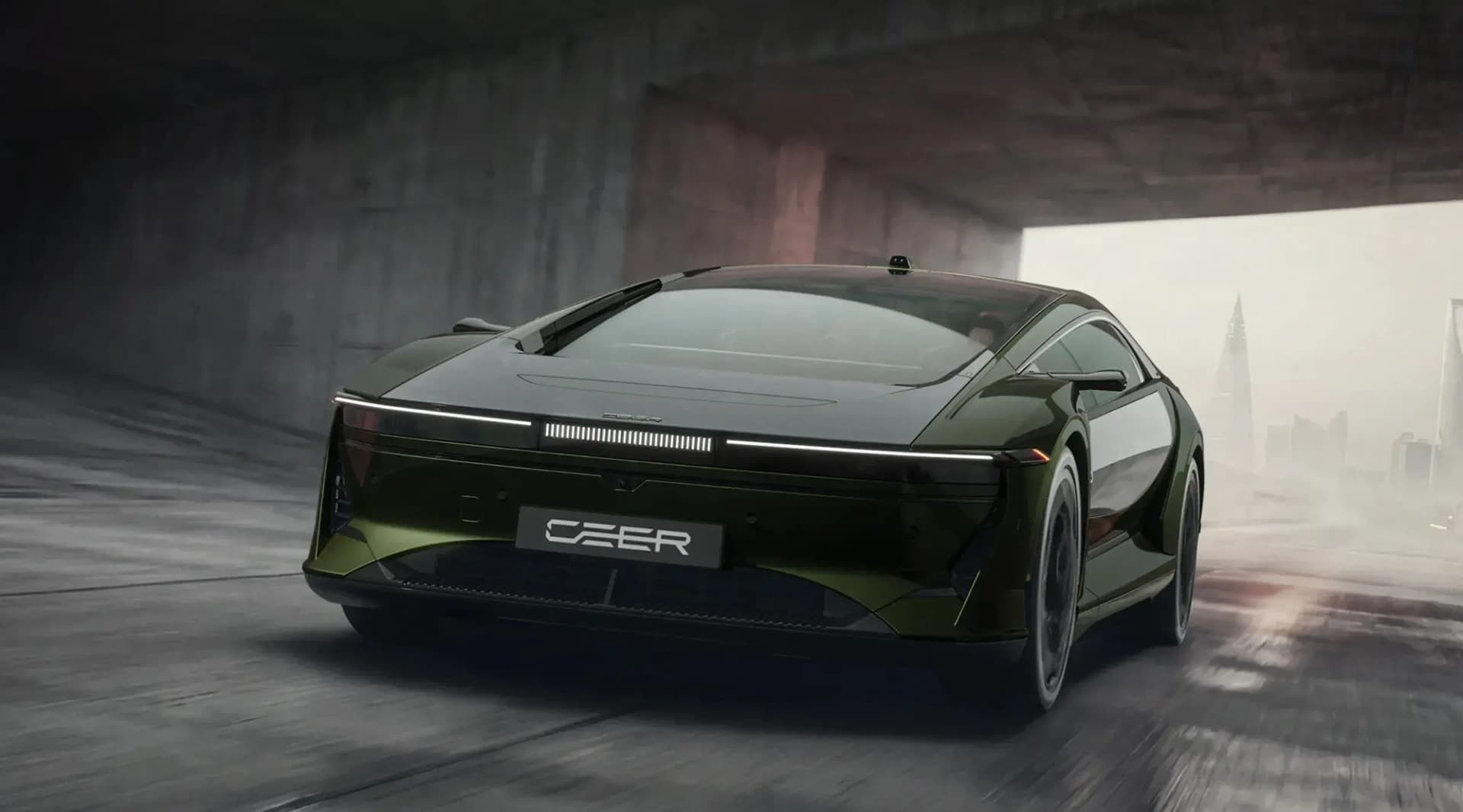
Ceer's 1,100 hp Exobot is Saudi Arabia's first car, two years late
Ceer has revealed the Exobot sedan and SUV, the first cars from Saudi Arabia's PIF and Foxconn joint venture. Top versions claim more than 1,100 hp and 0-100 km/h in 2.1 seconds, with a Rimac rear drive, Hyundai Transys front motors and a BMW technology licence. Production starts in January 2027 and deliveries in March, two years after the date set at the brand's launch.
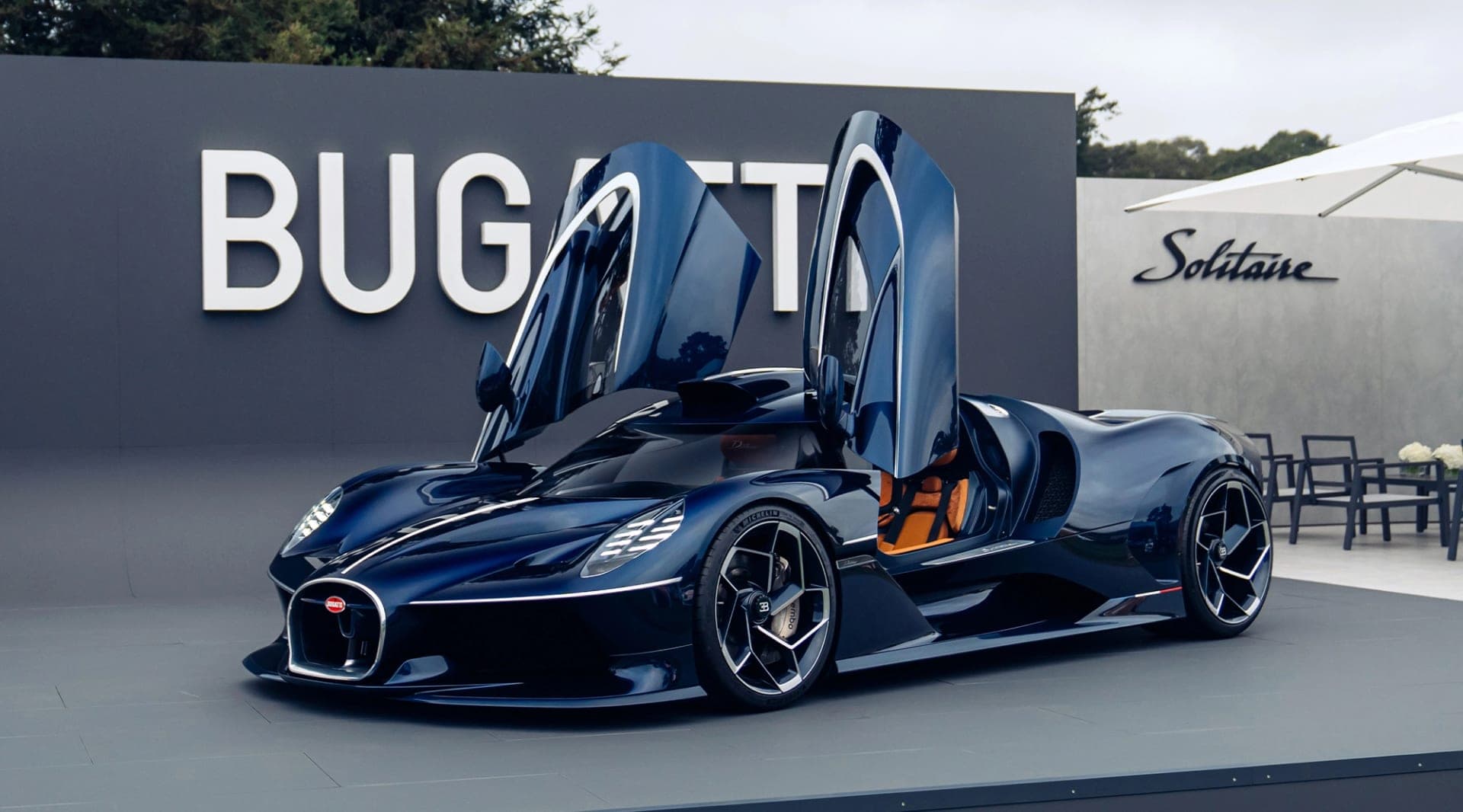
Porsche's Bugatti exit is done, and €250 million goes to pensions
Porsche completed the sale of its stakes in Bugatti Rimac and Rimac Group on 9 September, receiving around one billion euros from a consortium led by HOF Capital. A quarter of that goes straight into pension obligations, and the proceeds alone lift Porsche's 2026 automotive net cash flow margin forecast from 3 to 5 percent up to 5.5 to 7.5 percent. Bugatti Rimac changed its leadership the same day.
