
Tesla Roadster returns as a flying fan car, not 2017's promise
Nine years after the first prototype, the Roadster has become a different machine entirely
Tesla shows its second-generation Roadster at SpaceX's rocket test site in McGregor, Texas, and the prototype opens the show by driving up an inverted ramp, leaving it upside down and rolling itself upright on compressed-air thrusters. It then jumps a row of Tesla models, Semi included. The reveal ran on the evening of 15 October, local time, and production is due in 2028.
Tesla Roadster 2026 against the 2017 prototype: two seats, no range
The 2017 Roadster prototype promised four seats, a 200 kWh battery, 1,000 km of range and 0 to 97 km/h in 1.9 seconds, for $200,000. Thursday's car keeps the name, which goes back to Tesla's first model of 2008, built on Lotus Elise underpinnings, and little of the promise. It is a two-seat coupé with butterfly doors, a steer-by-wire yoke and a structure of magnesium, titanium and carbon fibre. Tesla gave no price, battery size or range. Acceleration has improved to a measured 0.81 seconds, but top speed has gone backwards: more than 370 km/h, against the 400 km/h-plus of 2017.
A 2 g suction fan lets the Tesla Roadster drive upside down
A fan under the Roadster's floor pulls the car onto the road with up to 2 g, which is how the prototype stayed on the inverted ramp. Tesla says the extra grip is what will let the car break track records. The idea has history: the Brabham BT46B fan car won the 1978 Swedish Grand Prix, its only race, before it was withdrawn and the device banned, and the British McMurtry Spéirling drove upside down in April 2025. Tesla's fan has a low-speed traction mode and a high-speed mode, and works with the active rear wing that first appeared in a Tesla patent.
SpaceX thrusters carry 250 kg of air through 10 nozzles
The Roadster's flying trick comes from a cold-gas system developed with SpaceX: two carbon-overwrapped tanks hold about 250 kg of air in 600 litres and feed 10 nozzles. No fuel is involved, and an onboard compressor refills the tanks, so the car recharges its own thrust. Rear-facing thrusters also boost acceleration, which is how the prototype ran 0 to 97 km/h in 0.81 seconds. That time includes a one-foot rollout, an American drag-strip convention that European 0-100 km/h figures do not use. Underneath sits a new drive unit that Tesla says has a third more power than the Model S Plaid's at half the mass.
Tesla Roadster Performance, Thrust and Rocket: three versions, one invite-only
Tesla takes Roadster reservations in three versions, with deposits of $50,000 and $250,000 and an invitation-only flagship. The Performance is the road car, with two seats, the fan, active aerodynamics and 0 to 97 km/h in under 1.6 seconds, and carries a €50,000 deposit in Belgium, £50,000 in Britain and $50,000 in the US: Tesla asks the same figure in every currency. The Thrust adds the rear thrusters, cuts the sprint to under 0.9 seconds and asks a $250,000 deposit, the same sum a 2017 Founders Series buyer paid in full for the whole car. The single-seat Rocket carries the full flight system and claims under 0.59 seconds. It will not be offered in every region and, according to Tesla, is not approved for road use.
Roadster production in 2028 would make it Tesla's last manual car
Musk says Roadster production starts in 2028, "actually, for real", after a 2020 date set in 2017 and later promises of 2024 and 2025. The reveal itself moved six times in 2026 alone. Musk also said the Roadster will, in the long term, be the only Tesla driven by a human, with the rest of the range moving to autonomy. For European buyers the open question is homologation: Musk said he was not sure the car would be legal in all jurisdictions, and Tesla has not explained how a 2 g fan or air thrusters would pass type approval.
AutoNext Take
A fan that holds a road car to the tarmac at 2 g is the part of Thursday's show with a future. The thrusters made the headlines, but they depend on a 250 kg air supply, fly only in an invite-only single-seater and are not approved for the road. The Performance underneath is a serious two-seat supercar with genuinely new engineering, and the missing price and range are its weakness rather than its ambition.
Expect the flying Rocket to remain a demonstration and the fan to be the feature that reaches customers. If the Performance is delivered in 2028 with its 2 g suction working on public roads, Tesla will have put a banned Formula 1 idea into a car people can register, something the 2017 promise never offered. A range figure published before those deliveries will show whether it is also a car people can use.
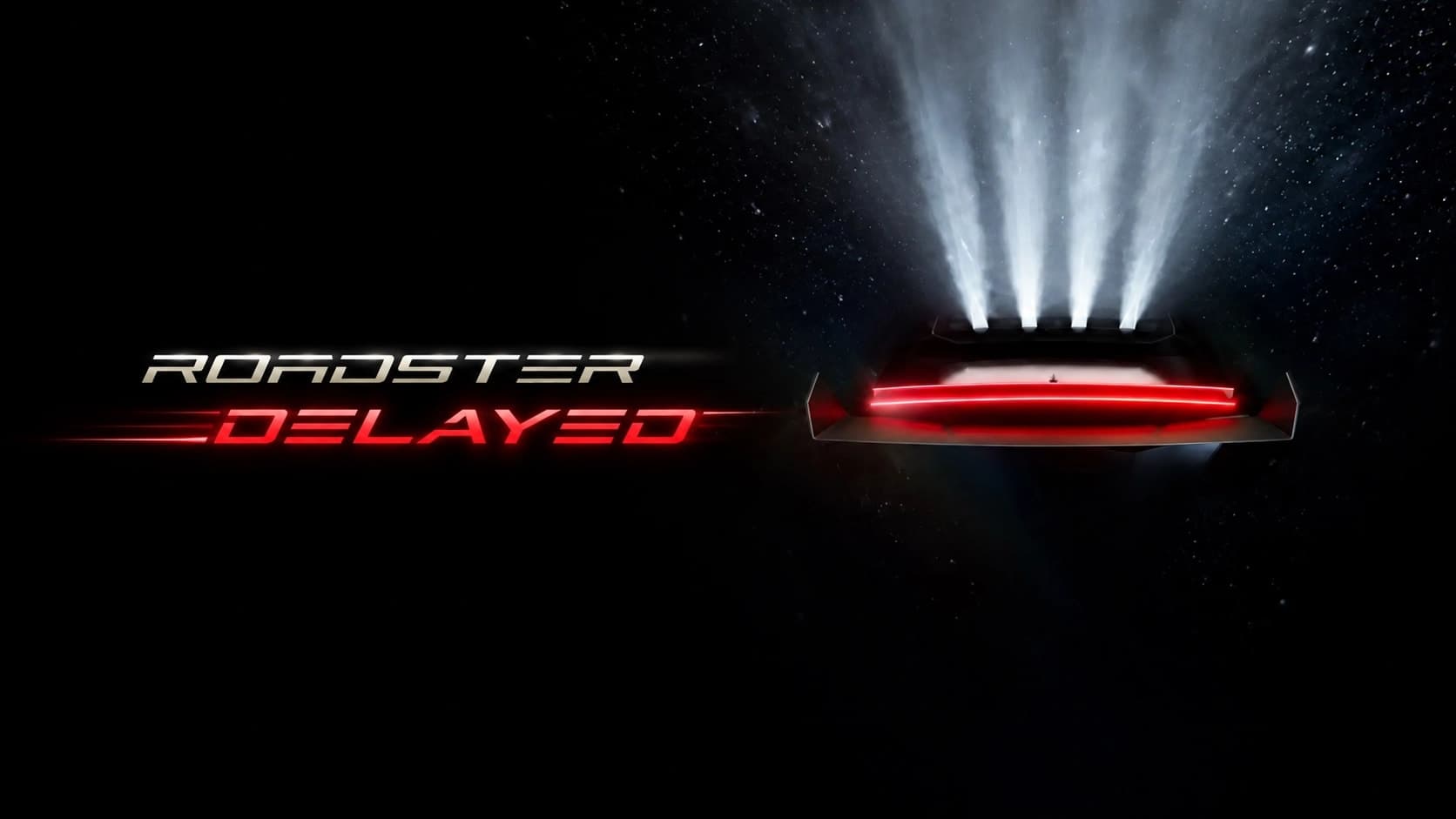
Tesla's Roadster reveal slips to 15 October, its sixth date this year
Tesla has moved the Roadster reveal from 1 to 15 October, saying the event can only be held outdoors and severe weather is forecast near Waco, Texas. It is the sixth date this year for a car first shown in 2017. A patent published on 24 September describes a hidden active rear wing producing up to 700 kg of downforce.
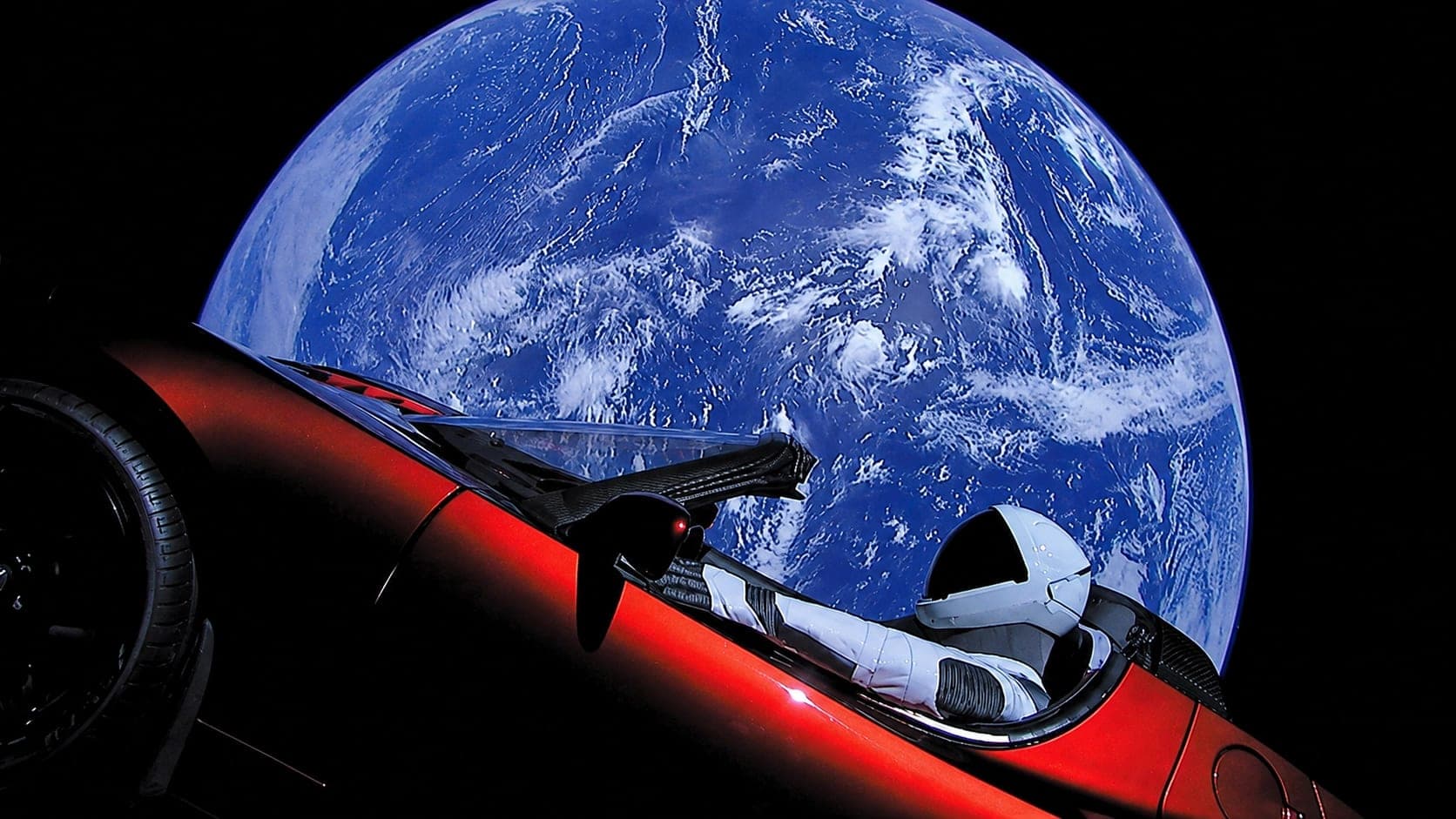
Tesla would rather make the Roadster fly than actually build it
Tesla plans to demonstrate a driverless Roadster hovering off the ground this month at SpaceX's rocket test site in McGregor, Texas, using SpaceX-developed cold gas thrusters. The stunt comes nearly a decade after the Roadster was first promised, following at least eight missed deadlines and several high-profile cancelled reservations.
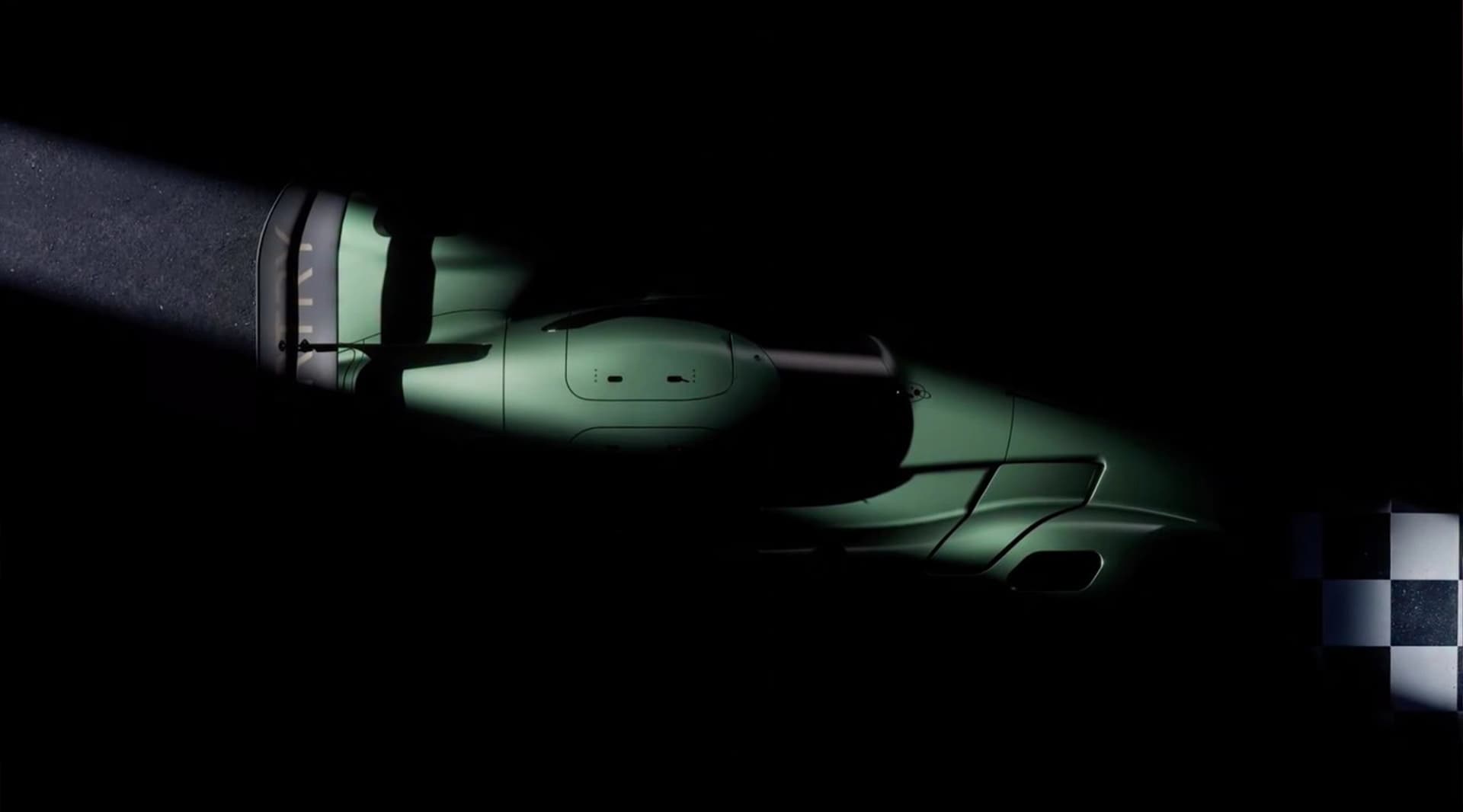
The McMurtry fan car is going into production, and only 100 will exist
McMurtry will fully reveal the production form of its Speirling PURE next week, the electric, fan-powered hyper track car that has set records at the Goodwood Festival of Speed and the Top Gear test track. The production car uses 95 percent new components versus the prototypes, with a focus on usability and ease of ownership. Built in the Cotswolds, it is capped at 100 examples, with first customer deliveries beginning later in 2026.
