
Why a four-year-old Toyota Mirai costs a fifth of a new one
A Toyota Mirai loses value as fast as Europe's hydrogen pumps close
A 2022 Toyota Mirai with under 70,000 km is for sale in the Netherlands at €15,950, while Toyota Netherlands lists a new one from €76,695. In Belgium, a 2020 Mirai with 16,619 km is listed on AutoNext at €13,900, 16% of the €85,990 Toyota Belgium asks. The 182 hp saloon is still sold new in Belgium, the Netherlands and Germany. The network it depends on is shrinking.
H2 Mobility closed 36 German hydrogen car stations in 2025
H2 Mobility, Europe's largest hydrogen station operator, closed 22 small 700-bar car stations in Germany in the first half of 2025 and 14 more on 31 December, including Berlin, Duisburg and Essen. In September 2024 it had run around 70 public stations. The company says its early sites were built for a passenger-car market that never developed, and its new stations are sized for buses and trucks filling at 350 bar. The Mirai fills at 700 bar, so every closure removed a pump its owners could use, and a used buyer prices that distance in before anything else.
AutoNext lists two Toyota Mirais among 36,573 cars
AutoNext's listings, most of them from Gocar.be, held 36,573 cars on 15 October 2026, and two of them were Mirais. One is the 2020 car at €13,900. The other is a 2022 Mirai Executive with 906 km on the clock, listed at €47,000 by a dealer in Wavre after four years of barely moving. A market that thin has no settled price, so what a Mirai is worth depends less on its age or mileage than on how far the buyer lives from a working pump.
A Toyota Mirai holds 5.6 kg of hydrogen for about 650 km
The current Mirai carries 5.6 kg of hydrogen in three tanks, and Toyota quotes around 650 km of range. Its 182 hp motor drives the rear wheels, and the WLTP figure is 0.8 to 0.85 kg per 100 km. At €12 a kilogram, the low end of what Dutch pumps charge, that works out at €9.60 to €10.20 per 100 km; at €20 it reaches €17. The range is generous, but it only helps if the tank can be refilled inside it, and one closed station near home turns a commuter car into a planning exercise.
Hyundai's €69,900 Nexo and Toyota's 2028 Hilux share the same pumps
Hyundai opened orders for the second-generation Nexo in Germany in January 2026 at €69,900, with 6.69 kg of hydrogen and a claimed 826 km, and it lands on the same thinning map. Toyota has moved its own next steps away from the saloon: its third-generation fuel cell goes into a hydrogen Hilux pick-up in 2028, and a fuel-cell Dakar Hilux is being finished in Brussels for the January 2027 rally. Commercial and competition users can plan around a depot or a service truck. Private owners have to plan around whichever public pumps survive.
EU law requires a 700-bar hydrogen station every 200 km by 2030
The EU's Alternative Fuels Infrastructure Regulation obliges member states to have a public hydrogen station at least every 200 km on the TEN-T core network, and one in every urban node, by 31 December 2030. Each corridor station needs 1 tonne a day of capacity and at least one 700-bar dispenser, the pressure the Mirai uses. The Netherlands counts 16 urban nodes with a station built or funded through its SWiM scheme, against a 2030 target of 26. Until that map fills in, closures set the price of a used Mirai.
AutoNext Take
€13,900 buys a 182 hp, rear-wheel-drive Toyota saloon that costs about €10 per 100 km to fuel at the cheaper Dutch pumps, which is a lot of car for the money as long as a 700-bar pump sits on the owner's daily route. The depreciation is a verdict on the station map rather than on the car, and the technology still has backers: BMW is preparing its iX5 Hydrogen around a fuel cell developed with Toyota.
Mirai prices will follow the pumps, not the odometer. As long as H2 Mobility keeps turning its network into 350-bar truck sites, four-year-old Mirais will stay below a quarter of list price through the end of 2028, and a lasting recovery will arrive only once the AFIR corridor stations open ahead of the December 2030 deadline.
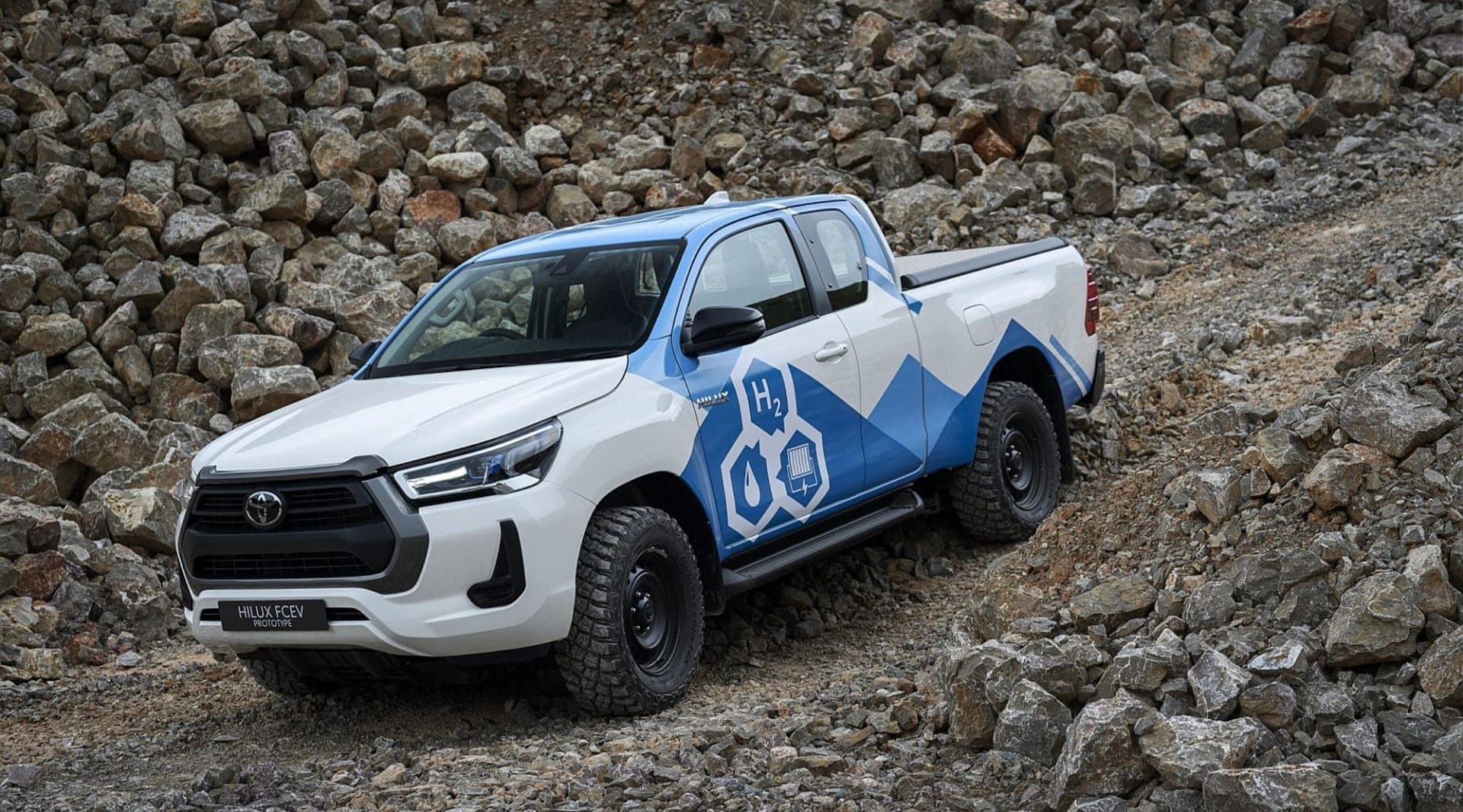
Toyota's 2028 hydrogen Hilux promises 400 km, its prototype did 600
Toyota confirmed at IAA Transportation in Hannover that the Hilux FCEV enters production in 2028 with more than 400 km of WLTP range and 2,500 kg of towing capacity. The ten hydrogen prototypes built at Burnaston in 2023 carried 7.8 kg of hydrogen for a claimed 600 km. Europe had 179 public hydrogen stations in May 2026, 25 of them in the Netherlands and 8 in Belgium.
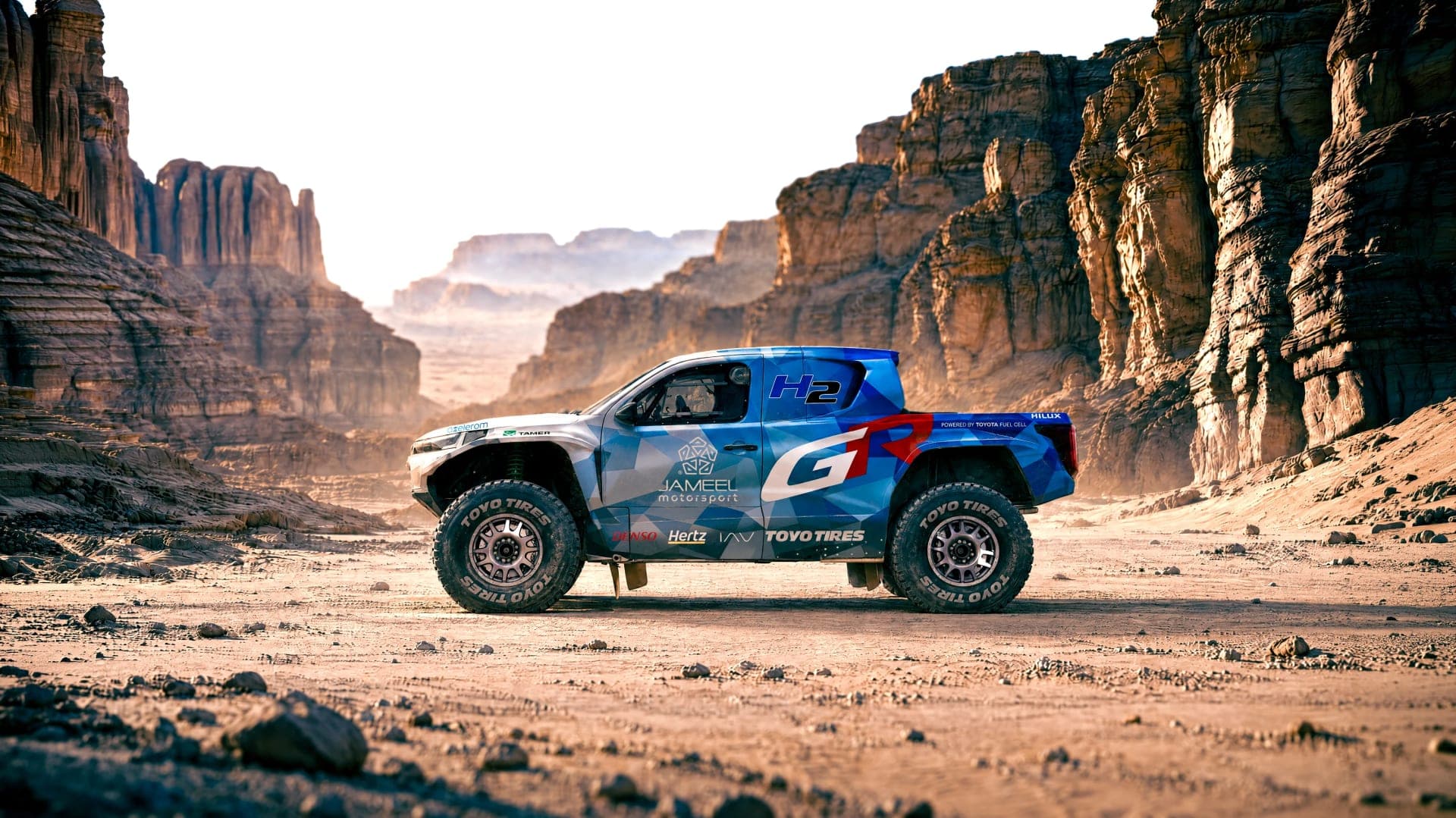
Toyota's hydrogen Dakar Hilux is built in Brussels, with no range yet
Toyota Gazoo Racing shows the DKR GR FC Hilux, a fuel cell version of its Dakar truck, and signs Jameel Motorsport, Denso, Toyo Tires and IAV as partners for the rally on 1 to 15 January 2027. Developed near Brussels and assembled at Toyota's European headquarters, it enters the 1,000 km Mission 1000 class, not the 5,320 km main event. No output, range or tank capacity has been published.
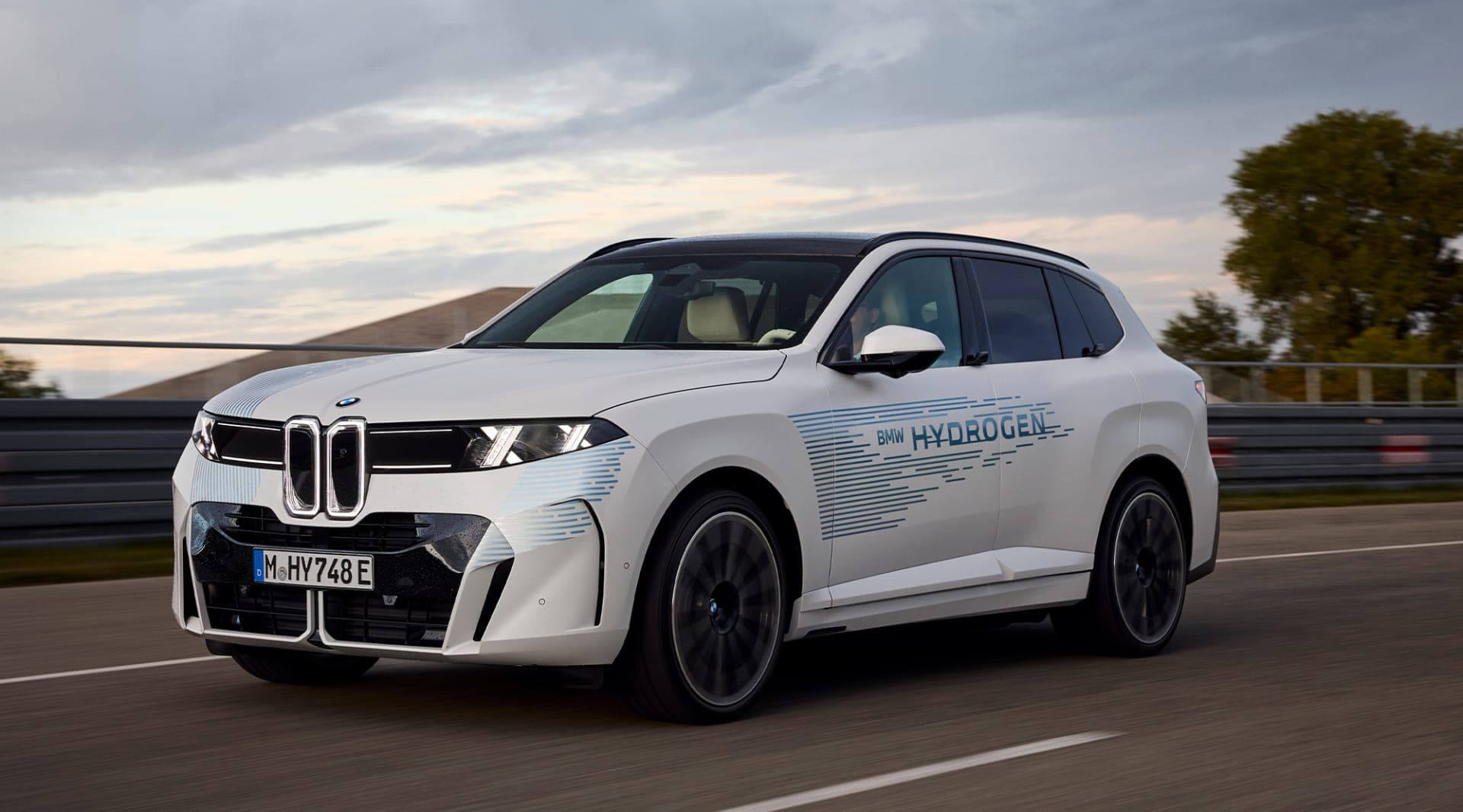
BMW's hydrogen iX5 is nearing production, and it is tooling up already
BMW has moved the iX5 Hydrogen into its next pre-production phase, running prototypes through a full road-testing programme while simultaneously assembling the third-generation fuel cell system in Munich and preparing factories in Steyr, Austria. It will be the first hydrogen-powered BMW production model, targeting up to 750 km of range, sub-five-minute refuelling and 0 to 100 km/h in under five seconds. Testing the car and building the production line at the same time is the clearest sign yet that BMW means it.
