
Vanden Plas began in a Brussels forge and ended on American Jaguars
How a Belgian family name outlived its own workshop by thirty years
Vanden Plas is a coachbuilding name most drivers have seen without knowing where it came from. It began in Brussels in 1870, crossed the Channel on Belgian cars, dressed Bentleys and chauffeur-driven limousines in London, and finished as a chrome script on Metros, Allegros and American Jaguars. The craft stopped in 1979. The name kept selling cars until 2009.
Guillaume van den Plas began with axles in Brussels in 1870
Guillaume van den Plas, a Brussels blacksmith, started the business in 1870 making wheels and axles for horse-drawn carriages with his three sons, Antoine, Henri and Willy. The family moved to Antwerp in 1884 to build complete carriages and opened again in Brussels in 1890. By 1900 it was bodying chassis for De Dion-Bouton, Germain and Packard, and by 1908 Carrosserie Van den Plas employed 400 men turning out 300 special bodies a year. A Paris branch followed and stopped building in 1934, while the Belgian house carried on until 1949.
Belgian Métallurgique cars took the Vanden Plas name to Britain in 1906
The name first reached Britain in 1906 on imported Métallurgique cars, themselves Belgian, wearing Van den Plas coachwork. On 13 March 1913 Vanden Plas (England) Ltd was set up to build bodies under licence from the Belgian firm. The First World War turned it into an aircraft supplier, owned by the Aircraft Manufacturing Company at Hendon, and by 1922 it was in receivership. For a while two Vanden Plas businesses existed side by side: in the early 1920s the Belgian original exhibited at the London Motor Show next to the British company using its name.
Vanden Plas bodied about 700 Bentley chassis between 1924 and 1931
In 1923 the Fox brothers bought the name and goodwill, moved the works from Hendon to Kingsbury in north London and built on the contacts the firm had already made with Bentley. Between 1924 and 1931, when Bentley collapsed, Vanden Plas bodied about 700 of its chassis, including the open four-seat tourers that still define the vintage Bentley shape. The 1930s brought work for Alvis, Lagonda, Daimler and Rolls-Royce, now in small batches rather than one-offs. In 1939 coachbuilding stopped, and Kingsbury spent the war making wooden frames for the de Havilland Mosquito.
Austin's 1946 takeover turned Vanden Plas into a marque by 1960
Austin bought Vanden Plas in 1946 to build a chauffeur-driven Princess on its Sheerline chassis, and in 1960 the Austin name was dropped so the Vanden Plas Princess could stand as a marque of its own. Its biggest seller began as a one-off: a luxury Princess 1100 prototype shown at the 1963 London Motor Show drew enough interest to go into production. By 1974 around 40,000 of the 1100 and 1300 had been sold, and Kingsbury still did no advertising. On 17 September 1974 the Allegro-based Vanden Plas 1500 followed, with walnut, Connolly leather and a round steering wheel in place of the Allegro's square one.
Jaguar sold a Vanden Plas XJ in North America from 1982 to 2009
British Leyland closed the Kingsbury works in 1979, and from then on Vanden Plas was a trim level rather than a workshop. Austin Rover put it on the most expensive Metro, Maestro and Montego in the 1980s, and a stretched Rover 75 was the last British-market car to carry it. Its longest afterlife was in North America, where Jaguar could not use the Daimler name and sold its plushest XJ as a Vanden Plas from 1982. That run ended when the X350 XJ was replaced in late 2009, and the electric Jaguar Type 01 revealed in October 2026 has no such version.
AutoNext Take
Vanden Plas was worth its premium for exactly as long as there was a Kingsbury behind it. Around 40,000 buyers paid extra for a Princess 1100 or 1300 whose grille, walnut and leather were fitted by hand in north London, many of them coming back for another, and the factory never had to advertise to find them. After 1979 the same script on a Maestro or an American XJ described a list of options, pleasant enough, but no longer the work of the people who had earned the name.
Bentley shows the other path. Rolls-Royce, then its owner, bought H.J. Mulliner in 1959, and Mulliner still works as a real coachbuilding and personalisation department at Crewe, which is why the name still sells. No carmaker will put Vanden Plas back on a production car before 2030, because there is no workshop left for the badge to describe. The family's real legacy is the Belgian coachwork built between 1900 and 1949, and those are the Vanden Plas cars worth hunting down.
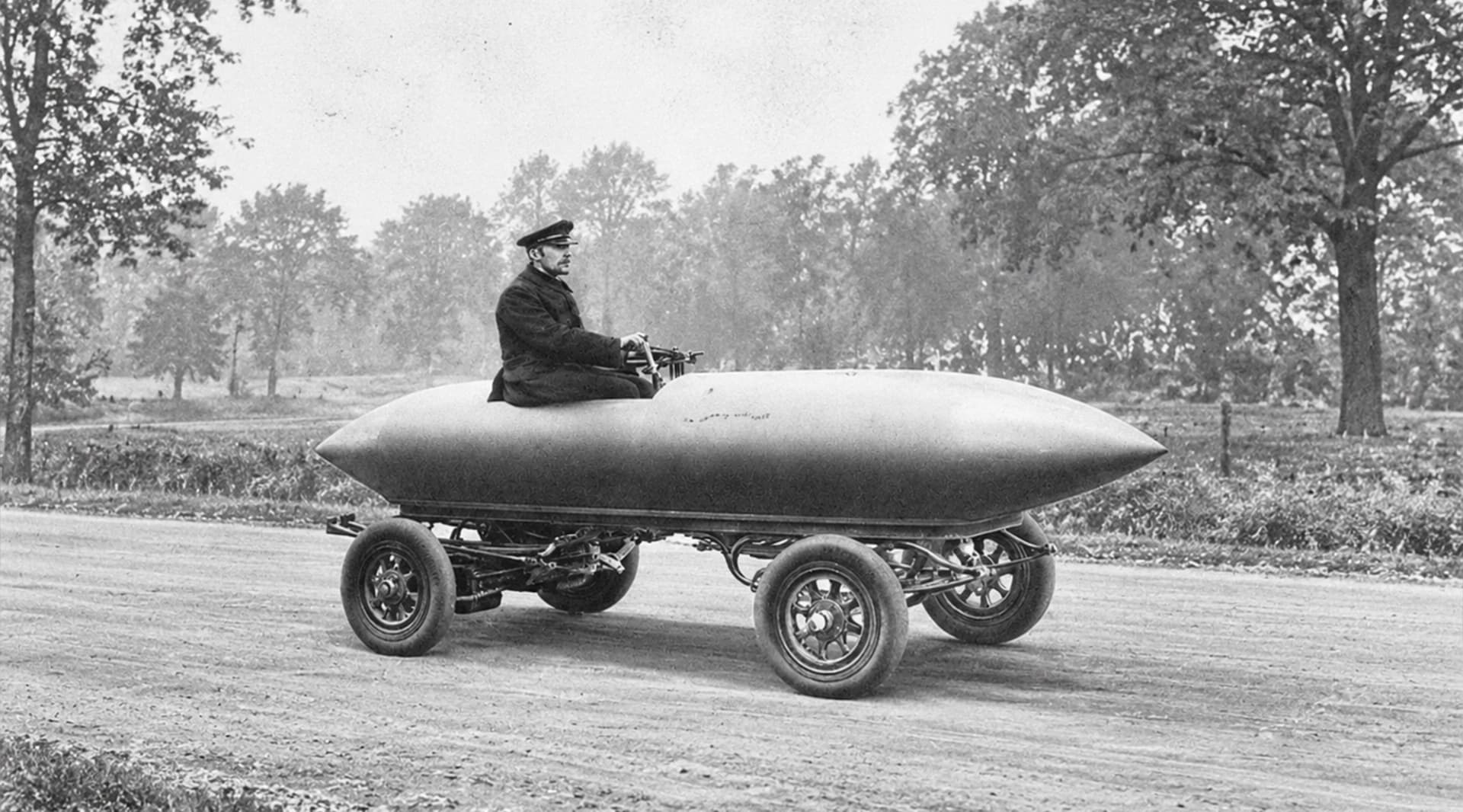
Camille Jenatzy broke 100 km/h in 1899, and his car was electric
Camille Jenatzy drove La Jamais Contente, an electric torpedo of his own design, to 105.88 km/h at Achères on 29 April 1899, the first car past 100 km/h. The record stood almost three years and fell to a steam car before petrol caught up. In 1903 he won the Gordon Bennett Cup for Germany in a customer's Mercedes 60 hp, after a factory fire destroyed the works cars.
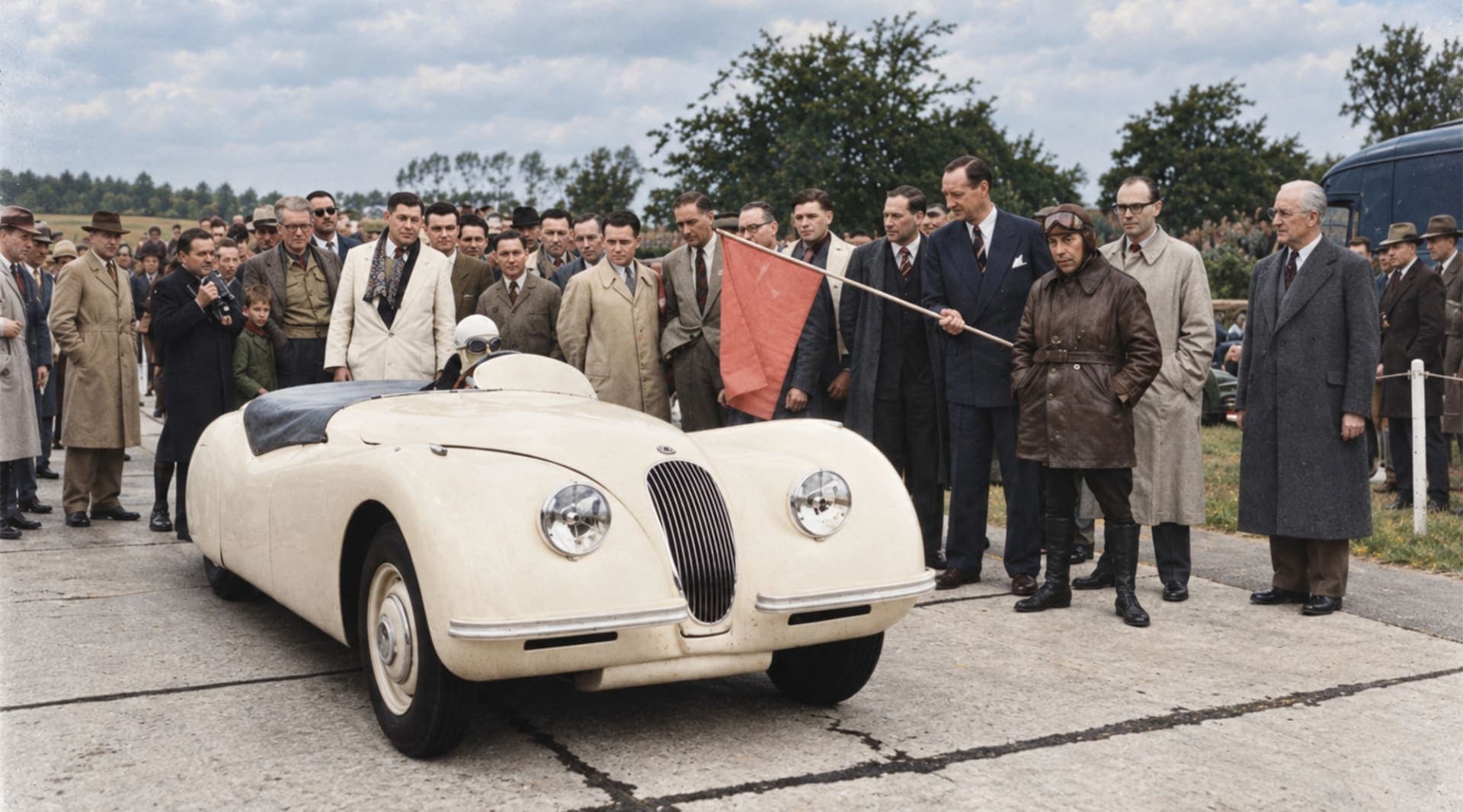
Jaguar XK120 proved its name on a motorway near Bruges in 1949
The Jaguar XK120 was timed at 132.596 mph on the Jabbeke motorway near Bruges on 30 May 1949, proving its 120 mph name. With no motorway at home until 1958, British makers kept coming back: Rover's JET1 set a gas turbine record there in 1952, and Norman Dewis reached 172.412 mph in a bubble-top XK120 in 1953.
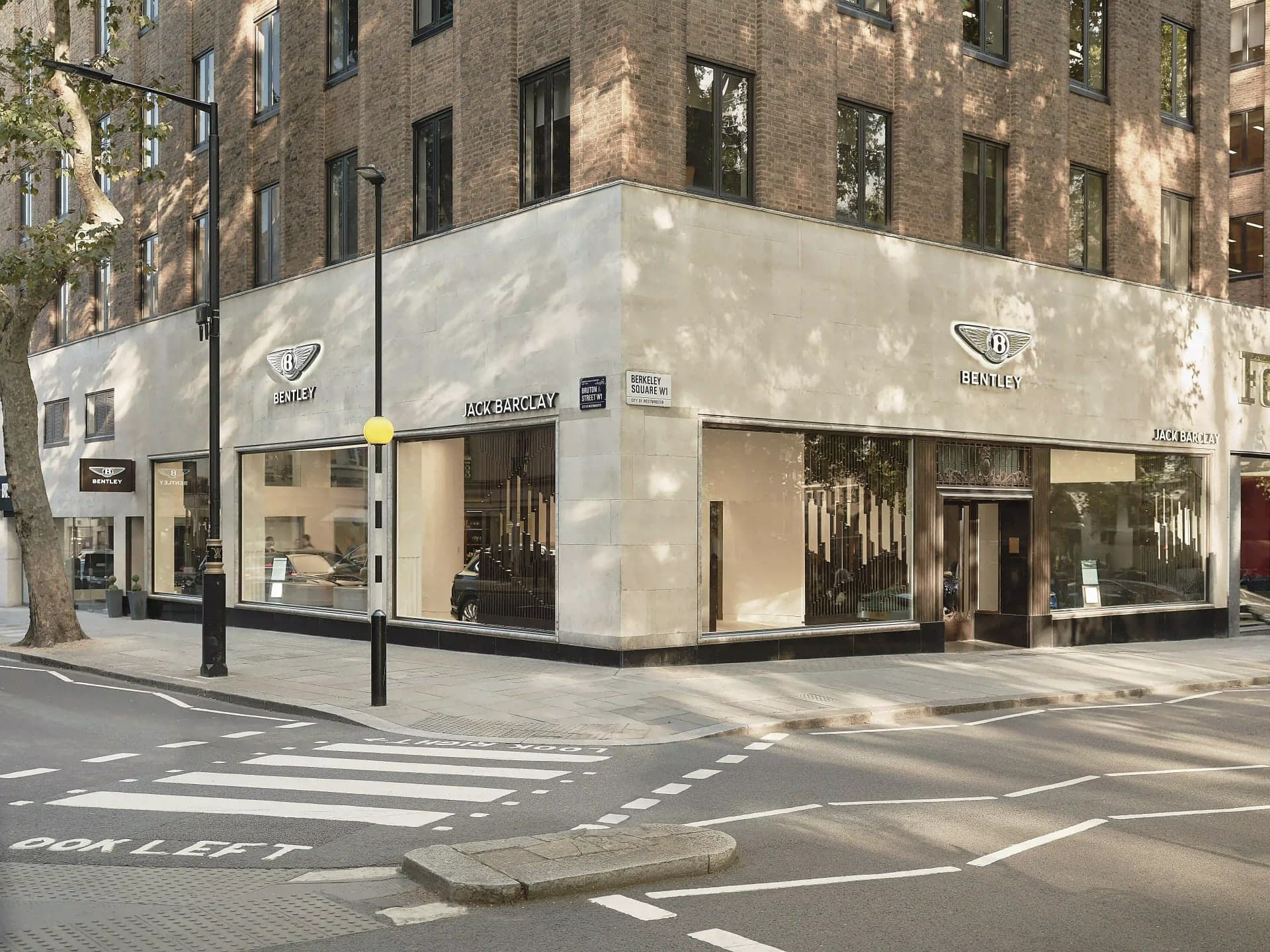
Bentley's new showrooms sell the commission, not the car on the floor
Bentley is rebuilding its showrooms around personalisation, starting at Jack Barclay in London, the world's oldest Bentley retailer. The concept replaces rows of cars with a bar, a materials atelier and an LED configurator wall, and arrives a day after the Torcal. More than 70 percent of buyers already order Mulliner options, while deliveries fell 13.6 percent in the first half of 2026.
