Your wheel bolts lose their grip in the first fifty kilometres, and whose job it is to notice has already been to court
Everybody hears the same sentence at the counter, and almost nobody goes back for it.
The seasonal changeover starts across Europe in October, which means several million wheels are about to come off and go back on again. Somewhere in that transaction, at the counter or printed at the bottom of the invoice, you will be told to return after fifty kilometres so the bolts can be checked. Almost nobody does, almost nothing happens, and the note gets thrown away with the receipt. The number itself is not arbitrary. A wheel does not hang on its bolts the way a picture hangs on a nail. Each bolt is stretched like a very short, very stiff spring, and the tension in it presses the wheel against the hub hard enough that friction between those two flat faces carries the weight of the car, the braking and the cornering loads. In the first few dozen kilometres that joint settles. Paint, plating, brake dust and a film of surface rust between the faces are crushed down, the assembly heats and cools with every stop, and the stretch in every bolt drops by a small amount. Retightening to the same figure puts it back, and the whole exercise takes five minutes. What almost nobody realises is that the sentence at the counter has a second life in front of a judge, because in 2021 a German appeal court had to decide who that fifty-kilometre check actually belongs to, after a Mercedes left its rear wheel on the motorway.
Roughly a tenth of what you put into the wrench ends up holding the wheel on
When you pull on a torque wrench, most of what you are doing is fighting friction. In an ordinary wheel bolt something in the order of half the applied torque is consumed by friction in the threads, and around another forty percent disappears under the head of the bolt where it turns against its seat. Only the remainder, roughly a tenth, actually goes into stretching the bolt and generating the clamp load that holds the wheel on. That is a fragile way to measure anything, and it is why the condition of the parts matters more than the strength of your arm. A hub face with a ring of rust scale on it, a bolt seat with old grease in it, a thread that has been run over a corroded stud: each one changes the friction, and when the friction changes, the number on the wrench stops describing what is happening inside the joint. Clean, dry, undamaged parts are not a nicety here. They are the only reason the specified figure means anything at all.
The most common mistake is trying to help the bolt
Copper grease on the threads is the classic, and it looks like care rather than damage. It is neither. Grease removes most of the friction the torque figure was calculated around, so the same 120 Nm on the wrench now goes almost entirely into stretching the bolt instead of overcoming resistance, in the order of a third more clamp load and often a good deal more than that. Past a certain point the bolt does not spring back at all. It has been permanently stretched, and it either turns up loose on the hub a few thousand kilometres later or it shears off. Manufacturers are unanimous about it: threads and the tapered or spherical seat clean, dry and undamaged. The one place a thin smear is generally accepted is the raised centring lip of the hub that the wheel locates on, purely to stop an aluminium wheel corroding solid onto steel, and even there it goes nowhere near the threads or the seats. If what is in your hand is an aerosol rather than a grease, it is worth knowing what that product is actually for, because displacing water and lubricating a thread are not the same job.
A bolt that screws in is not automatically the right bolt
Wheel bolts and nuts are not defined by their thread alone but by the shape of the face that meets the wheel. Three are in common use: a sixty degree taper, a ball or radius seat in R12, R13 or R14, and a flat face with a captive washer. They are not interchangeable. Put a tapered bolt into a wheel machined for a ball seat and the two touch along a thin ring rather than across a face. The wrench clicks at the correct figure, the joint feels exactly right, and it works itself loose within a week, because there was never enough contact area to build clamp load in the first place. This is not an obscure problem. It is the everyday failure mode of a car wearing wheels it did not leave the factory with, and it is the first thing to check when somebody hands you a second-hand set. Length is the other half of it. You want at least the bolt's own diameter of thread engaged in the hub, so roughly twelve millimetres on an M12 bolt, which at a 1.5 millimetre pitch is about eight full turns. Thicker aftermarket wheels and spacers eat into precisely that.
The impact gun is a tool for taking wheels off
Most passenger cars sit between about 90 and 120 Nm on steel wheels and 100 to 130 Nm on alloys, with 110 to 120 the most common figure of all, but the only number that counts is the one in your own handbook. An impact wrench used without torque sticks and without a final check by hand routinely puts two hundred Nm or more through a joint specified at a hundred and twenty. The bolts usually survive it. The brake disc does not. Clamping its mounting face unevenly distorts the disc by a few hundredths of a millimetre, the pads then grind that distortion into a genuine thickness variation over the following weeks, and one morning you have a pulsing brake pedal that was not there before the tyre change. That signature is worth separating from the other one, because a shake that arrives in the steering wheel at a steady 100 km/h without touching the brakes is usually a balancing problem and a far cheaper conversation. Getting the tightening right costs nothing: work in a star pattern over two passes, snug everything lightly first, and take each bolt to its final figure with the weight of the car back on the ground rather than with the wheel hanging in the air.
Who the fifty kilometre check actually belongs to
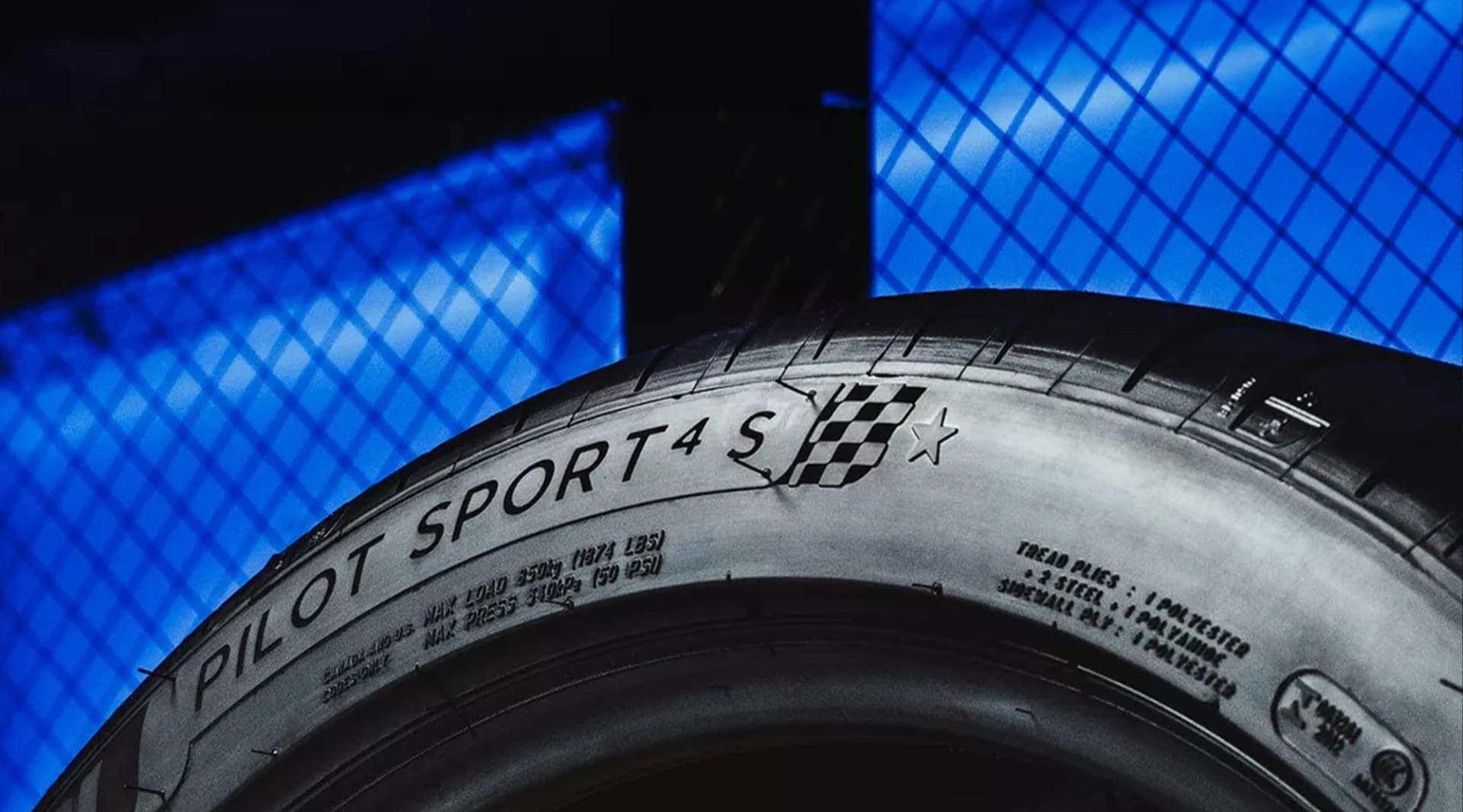
The honest answer depends entirely on who held the wrench. Change a wheel yourself on the driveway and the check is unambiguously yours, and that is the case where it matters most, because a home change is the one most likely to have been done without a calibrated wrench, on a hub nobody wire-brushed first. Hand the job to a professional and the picture changes. In May 2021 the higher regional court in Munich dealt with a Mercedes that lost its left rear wheel on the motorway roughly a hundred kilometres after a change, causing substantial damage. The lower court had put thirty percent of the blame on the owner for not returning to have the bolts checked. On appeal that was struck out, in case 7 U 2338/20: the technical expert found that correctly tightened bolts do not need retightening at all, and the court held that a workshop cannot move responsibility for verifying its own work onto the customer through a note that was never agreed as part of the contract. The judgment is German, but the principle behind it, that a contractor answers for the work it performed, is common ground in service contracts across Europe, and a slip handed to you at the counter after the job is finished is not something you agreed to. In practice that makes the return trip a sensible courtesy rather than a duty. Go anyway if it is easy, and while the wheels are accessible, read the four digit date code on each sidewall, since a tyre expires by the calendar whether it has been driven or not.
What to actually do
All of it reduces to a handful of habits that cost nothing and take a quarter of an hour, and they matter most in the weeks either side of the seasonal changeover.
Find your car's torque figure in the handbook before you start, not from a forum. It will usually be between 100 and 130 Nm, and it belongs to your wheels specifically.
Wire-brush the hub face and the back of the wheel. That thin layer of rust scale and brake dust is exactly what crushes down in the first fifty kilometres and takes your clamp load with it.
Threads and seats clean and dry. No copper grease, no oil, no anti-seize on a wheel bolt, ever.
Tighten in a star pattern over two passes. Snug all of them lightly first, then take each one to the final figure in the same sequence.
Do the final tightening with the weight of the car on the wheel, not while it hangs on the jack.
If the wheels are not the ones the car left the factory with, check the seat shape and the thread engagement before you check anything else. Cone, ball and flat seats look similar and behave nothing alike.
After a change you did yourself, go round them again at about fifty kilometres with the wheels cold. Release each bolt a quarter turn and pull it back to the figure rather than simply leaning on one that already feels tight.
After a change a garage did, treat the fifty kilometre note as a courtesy. Keep the invoice, and do not sign anything that converts their quality control into your obligation.
Retighten locking bolts along with the rest. The removable adapter is where torque quietly gets lost, and it is the bolt on the car most likely to be left under-tightened.
Listen in between. A rhythmic click or knock at low speed that changes as you load the steering is a wheel telling you it has started to move, and it is a reason to stop rather than to drive on and see.
Frequently asked questions
The garage put a note on my invoice telling me to come back after 50 km. Do I have to?
No, and a German appeal court said so plainly in 2021. A workshop cannot transfer the checking of its own work to you through a note you never agreed to, and if a wheel comes loose after a professional change the liability sits with the business that fitted it rather than with the customer who did not make a second trip. That is a legal position rather than a mechanical one, and the two point in slightly different directions. The check itself takes five minutes and costs nothing, so if you are passing anyway, have it done.
Can I just pull hard on the wheelbrace instead of buying a torque wrench?
You can, and you will almost certainly overtighten. An average adult leaning on a forty centimetre brace produces well over 200 Nm without feeling like they are trying, roughly double what a typical wheel is specified at. A click-type torque wrench in the right range costs about as much as having one tyre fitted, lives in the boot, and is the only way to know you have reached the figure rather than your own idea of tight. Store it wound back to its lowest setting so the spring inside keeps reading true.
There is a vibration since my tyres were changed. Is a wheel loose?
Probably not, and the way you feel it tells you a great deal. A steady shake through the steering wheel that arrives at a particular speed and fades above and below it is usually wheel balance. A pulse felt only through the brake pedal, appearing days or weeks after the change, points at a disc distorted by uneven or excessive tightening. A rhythmic knocking at low speed that changes when you turn is the one that means stop now and check the bolts by hand before driving any further.
Does this apply to every job, or only to tyre changes?
Any time a wheel has been off the car. A brake job, a roadside puncture, a repair at a body shop, an alignment where the wheels came off: all of them reset the joint and start the bedding-in over again. The roadside change with the car's own toolkit deserves the most attention of all, because that one gets done on a jack, in a hurry, at whatever angle the verge allowed, and almost never with a torque wrench.