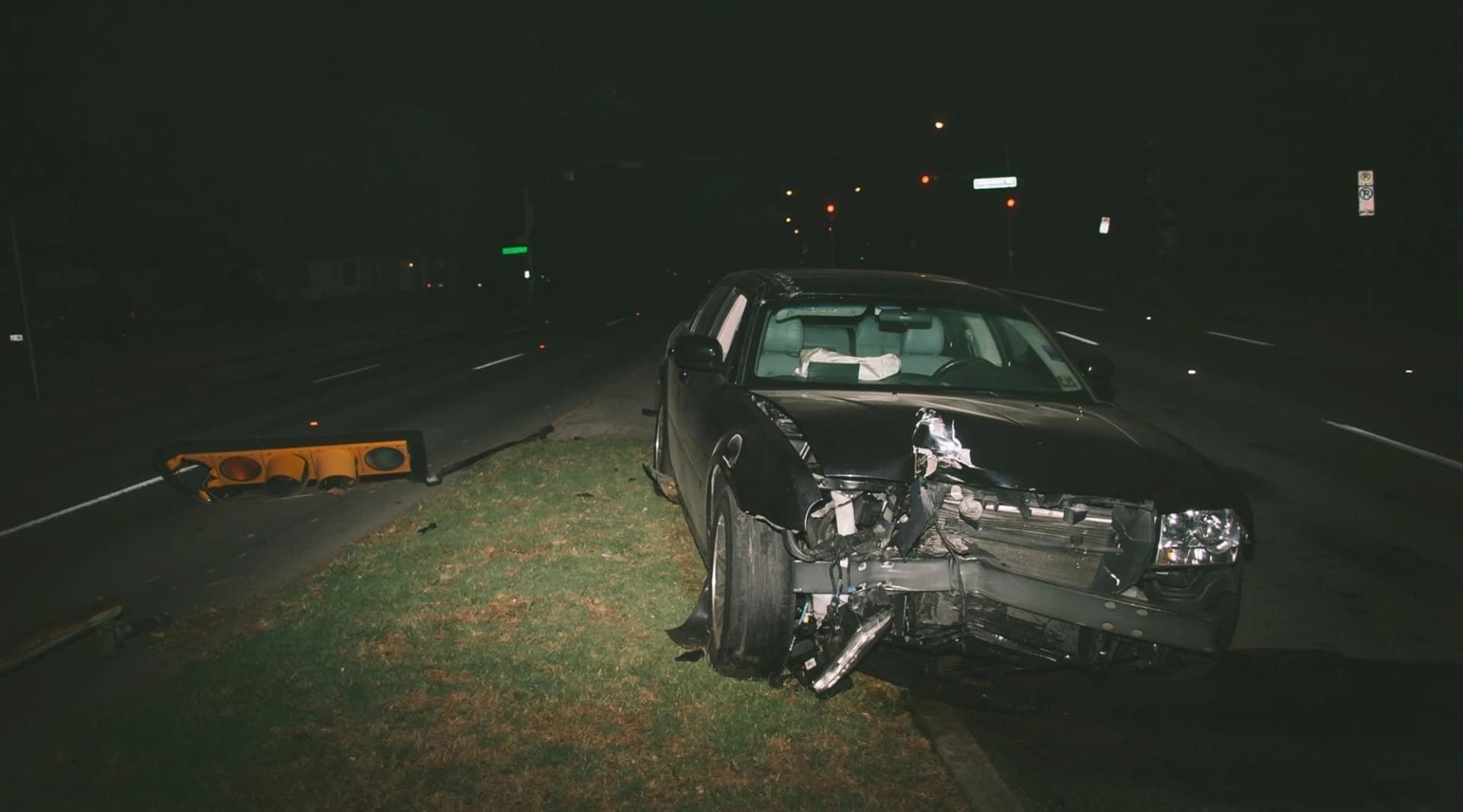
The payout for a written-off car is an opinion, and you can disagree
Two numbers decide what lands in your bank account, and neither of them is the price you paid.
When an insurer calls a car a total loss, it is not making a statement about how bent the metal is. It is doing a sum. An expert puts a figure on what the car was worth on the morning of the accident, then puts a second figure on what the damaged shell is worth to a salvage buyer. If the cost of repairing the car is more than the difference between those two, repairing it stops making commercial sense and the car is written off. Everything you are then offered flows from those two numbers. Not from the invoice in your file, not from the loan you are still paying, not from what a replacement will actually cost you next week. Both figures were produced by a professional working to a method, which means both can be examined, evidenced against and, where the evidence supports it, argued down or up. Most people never do, because nobody tells them the offer is the start of a conversation rather than the end of one.
Economic and technical total loss are two different verdicts
A technical total loss means the car cannot be put back into a safe, roadworthy state at all. Think of a collapsed safety cell, a chassis that has moved, a flood that has been through the electronics and the seat foam, or a fire. That verdict is about physics and it is comparatively rare. An economic total loss means the car could be repaired perfectly well, but not for a sum that makes sense against what it was worth. That is the verdict most drivers actually meet, and it is why the same impact produces wildly different outcomes depending on the car it lands on. A five year old estate with a value in the tens of thousands absorbs a serious front end hit and goes back on the road. A tidy, well kept twelve year old hatchback worth a couple of thousand can be written off by a shunt that bends a wing, pops an airbag and cracks a headlight, because two airbags and a modern LED unit alone can outrun the whole value of the car. Nothing about that says the car was rubbish. It says the repair bill was bigger than the sum.
Where the value before the accident actually comes from
This is the number that matters most, and it is a market valuation rather than a replacement guarantee. The expert weighs make, model and exact specification, mileage, age, mechanical and cosmetic condition, service history and what genuinely comparable cars are changing hands for right now in your country. Insurance across Europe works on the indemnity principle, which is the idea that a claim should put you back where you were and not somewhere better, so the target is what your car was worth, not what a similar one will cost you to buy with a dealer margin on top. That principle is also the crack in the door. A valuation built on assumptions can be corrected with facts. Full stamped service history, an invoice for a cambelt or a clutch done last year, four tyres fitted in spring, a factory option list that a base model does not have, genuinely low mileage for the year, a recent inspection certificate: every one of those is a documented reason to move the figure. So is the opposite, which is worth knowing before you argue. Kerbed alloys, tired suspension bushes and the damage that comes from parking half on a kerb all count against you, and an expert who has seen the car will have noted them.
The wreck is worth money, and you get a say in who keeps it
The second figure is the residual value, sometimes called the wreck or salvage value, and it is not a guess either. The expert invites bids from salvage buyers and dismantlers and takes the best one, which is why a car with a healthy engine, a clean interior and desirable parts is worth far more as a wreck than a rusty one with the same damage. What happens next depends on the cover you hold and the country you are in. If the insurer takes the wreck, you receive the pre accident value and walk away. If you keep the wreck, you receive the pre accident value minus what the wreck was worth, and you now own a damaged car. In Belgium, a driver without comprehensive cover is generally left to sell the wreck themselves, with the expert collecting bids over a period of about thirty days and reporting the highest one back. Keeping the car is a real option and occasionally a smart one, typically when you have a cheap and honest route to repairing it, but only if you go in knowing what your national registry will record against it afterwards.
You can disagree, and there is proper machinery for it
This is the part almost nobody uses. In Belgium and the Netherlands, and in similar form across much of the continent, you have the right to appoint your own expert, a counter expertise. Your expert and the insurer's expert try to agree. If they cannot, they jointly appoint a third expert, and that third opinion is binding on both you and the insurer. It is a genuine adversarial process, not a complaints form. Two things determine whether it is worth using. The first is cost, and here most people give up too early: a great many comprehensive policies reimburse the fee of your own expert up to a stated ceiling, so read the clause before you assume you are paying for it, and if you are claiming against the other driver's insurer, ask in writing whether reasonable expert costs are covered. The second is timing. Once you have signed a release for the wreck, or once the salvage bids have expired, your leverage has gone and the numbers are effectively fixed. Belgium adds a further check worth knowing about: where the pre accident value minus the wreck value exceeds roughly 8,500 euros excluding VAT, the expert is required to notify the liable party's insurer, which may then appoint a control expert of its own. Bigger claims attract more eyes, in both directions.
A write-off follows the car for the rest of its life
Every European country flags a written off car in some way, but no two do it identically, and the differences matter enormously if you are buying second hand. In the Netherlands the vehicle can be given a driving prohibition recorded in the RDW register, historically known as a WOK status, and a repaired total loss has to pass an RDW re inspection before it may be used on the road again. The RDW has since pulled that status out of its open data to stop it being abused commercially, which makes an independent history check more important, not less. The United Kingdom uses four categories: A means the car must be crushed entire with nothing salvaged, B means the shell is destroyed although parts may be reused and the car may never legally return to the road, S means repairable structural damage with the DVLA notified and the car re registered before use, and N means non structural damage. This is also the honest answer to why some used listings look suspiciously cheap. A written off history knocks a serious hole in resale value permanently, and a car that has crossed a border between the write-off and the advert can arrive with that history conveniently thinned out. If you are on the other side of this, selling a car privately, the flag is not something you can quietly leave out of the conversation.
The gap between the payout and what you owe is yours to close
Here is where a total loss turns from annoying into expensive. If the car is financed or on a lease, the settlement is paid against the market value of the car, while your finance balance follows the contract you signed. In the first year or two of most agreements, depreciation runs ahead of what you have repaid, so a payout that is entirely fair can still leave you owing money on a car you no longer have. Two things exist to stop that. The first is GAP cover, sold as return to invoice, vehicle replacement or lease and contract hire shortfall depending on what it is bridging, and it pays the difference. The second is the new value or invoice value clause built into many comprehensive policies, which reimburses at the original price rather than the depreciated one for a defined window at the start of the car's life. In Belgium those windows are commonly twelve or twenty four months and some are capped by mileage as well, with variants running to thirty six months and thirty six thousand kilometres, so the exact terms you bought matter more than the general rule. There is also the difference between an agreed value policy, where the sum is fixed up front, and an actual value policy, where the expert decides after the event. Find out which of these you hold now, while it is a five minute question, rather than on the day it becomes a five thousand euro one.
What to actually do
Six steps, and the first one costs you nothing but a written request.
Ask for the expert's report in writing, with both figures shown separately: the value before the accident and the residual value of the wreck. A verbal offer over the phone is not a valuation and cannot be checked.
Build the counter file before you answer. Service history, invoices for recent big-ticket parts, the last inspection certificate, photos of the car as it was, and five to ten screenshots of genuinely comparable cars advertised in your own country with their mileage and asking price.
Read the counter-expertise clause in your policy before you hire anyone. Many comprehensive policies reimburse your own expert's fee up to a ceiling, which turns a costly gamble into a free second opinion.
Do not sign a wreck release or accept a salvage bid while you are still disputing the value. Bids expire, and your leverage expires with them.
If the car is financed or leased, request a settlement figure from the finance company on day one and hold it next to the offer. Then check whether you bought GAP cover or a new-value clause before you assume you are short.
If you are tempted to keep the wreck, find out first what your national registry will record against it. A repaired write-off may need a re-inspection before it can be driven, and it will be worth markedly less the day you sell it.
Frequently asked questions
The offer is lower than what the same car sells for online. Can I just refuse it?
You can, because an offer only becomes a settlement once you accept it. Refusing on the grounds that it feels low will not move anything, though. What moves it is a structured reply: the expert's own report, your documented evidence on condition, history and specification, and a set of live adverts for cars that genuinely match yours on model, engine, year, mileage and trim. Send it in writing and ask for a reasoned response. If that does not resolve it, escalate to a formal counter-expertise, which is the mechanism specifically designed for exactly this disagreement.
Who pays for my own expert?
It depends on your cover and on who is liable, so check before you instruct anyone. A large number of comprehensive policies reimburse the cost of a counter-expert up to a stated limit, and the entitlement generally survives even if the policy has since ended, because the damage happened while you were covered. If you are claiming against another driver's insurer, ask in writing whether reasonable expert costs will be met as part of the claim. Getting that answer on paper first is what separates a free second opinion from an expensive one.
Can I keep my car after it has been written off?
For an economic total loss, usually yes, and your payout is reduced by the wreck value instead. For the most severe categories it is not permitted at all: a car in the UK's Category A must be crushed entire, and a Category B shell may never legally return to the road even though its parts can be reused. Where keeping it is allowed, budget for more than the repair. Expect a re-inspection requirement before it can be driven in several countries, a permanent flag on the registration, and a resale value well below an equivalent car with a clean history.
My car is barely a year old. Why am I being offered less than I paid for it?
Because a standard policy pays the market value on the day of the accident and a new car sheds a large slice of its price in the first twelve months. The remedy has to be bought in advance: a new-value or invoice-value clause pays the original price for a defined opening window, commonly twelve or twenty four months in Belgium and sometimes capped by mileage as well, while GAP cover bridges the shortfall against a finance or lease balance. If you hold neither, the offer can be entirely correct and still feel unjust. Check which of these is on your policy today rather than after an accident.
Does a write-off damage my no-claims discount?
The write-off itself does not. What counts is who was liable. If the other driver is at fault and their insurer pays, your own record should not be penalised, whereas a claim on your own comprehensive cover for an accident you caused normally is. The details vary a great deal between national bonus-malus systems and between insurers, and some policies let you protect your discount for a premium, so ask your insurer to confirm in writing how a specific claim will be recorded before you commit to it.
