The only crash record some used cars have is the thickness of their paint
Nobody in Europe is obliged to write down that a car was pulled straight and resprayed.
There is no European register of repaired accident damage. Belgium's Car-Pass certifies mileage and nothing else. The Dutch RDW file records ownership, plate history and inspections rather than the week a wing was replaced. And across the whole continent, the two most common kinds of damage are the two that vanish completely: the knock settled privately between two drivers over a coffee, and the one paid out of pocket precisely so that a no-claims discount survives intact. Neither reaches an insurer, so neither reaches a history report, however many countries that report claims to cover. What the repair does leave behind is paint, and paint has a thickness that anyone can measure from the outside of a locked car in about ten minutes. Factory finish on a steel panel, primer and colour and clearcoat together, lands somewhere around 80 to 150 microns depending on the manufacturer, and the striking thing is not the number but its consistency: every panel went through the same plant on the same day, so they all read within a narrow band of each other. Anything sanded, filled and refinished afterwards carries a second set of layers on top of the first, and it does not land in that band. It reads 200, 250, 300, sometimes far more, and it reads that way whether the seller volunteers the story or not.
What the gauge measures, and why 80 to 150 microns is the number worth memorising
A paint thickness gauge is not really measuring paint, it is measuring distance. The magnetic induction type presses a small coil against the panel and works out how far away the steel is, and everything non-magnetic in between, primer, colour, clearcoat, filler, is reported as a single figure in microns, thousandths of a millimetre. On a factory finish that stack is thin and predictable: primer roughly 10 to 40 microns, colour a similar amount, clearcoat around 30 to 50, for a total that most European cars carry between 80 and 150. German brands tend to sit at the upper end of it, and some makers finish noticeably thinner and vary more between panels, which is exactly why the car's own average matters more than a figure copied off a forum. A refinished panel adds a fresh primer, a fresh colour coat and a fresh clearcoat on top of whatever survived the sanding, so a reading of 200 is a strong hint and 250 to 300 stops being a hint. Past roughly 500 microns you are no longer measuring paint at all. You are measuring body filler, and filler is there because the metal underneath was pushed out of shape and someone chose to shape it back with a spreader.
One high panel is a repair, six high panels are a different conversation
The individual number matters far less than the shape of the whole set, which is why the technique is three to five readings on every panel, all the way round, written down as you go. A car that reads 110 to 130 everywhere and 260 on the left rear door has had one door resprayed, which on a ten-year-old car is about as alarming as a car park on a Saturday. A car that reads normally down one flank and 200 plus across the bonnet, both front wings and the front of the roof has had a frontal impact, and the question stops being cosmetic: what you now want to know is whether anything structural was pulled straight. Uniformly high readings on every panel including the roof usually mean a full respray, which is expensive enough on a modern car that something must have justified it, often a colour change or corrosion. Readings that leap around within a single panel, ordinary at the top of a sill and enormous at the bottom, point at filler over rust rather than over crash damage, and rust is the more expensive of the two. And when a car has clearly been rebuilt after something serious, keep in mind what an insurer's decision to repair rather than write off actually reflects. It is a sum of money set against a market value, not a verdict on how the car will feel at 120 km/h in a crosswind.
The cheap magnetic gauge stops working exactly where a modern car needs it most
This is the trap, and it is worth understanding before spending anything at all. A purely magnetic gauge, whether the old pencil-shaped one with a spring or the cheapest digital models, only works on ferrous metal. Hold it against an aluminium bonnet, an aluminium wing or an aluminium door, none of which are exotic any more and all of which now appear well below the premium end of the market, and it reads nothing, or it reads nonsense. That blank is easy to misinterpret as either a broken tool or a damning result, when the panel in front of you may be perfectly original. What you want instead is a dual Fe/NFe gauge, which switches by itself between magnetic induction for steel and eddy current for aluminium, and which costs roughly what you put in the tank on the way to the viewing. Even then one category stays invisible: plastic. Bumpers are plastic on virtually every modern car, some wings and tailgates are composite too, and neither probe type can read a non-conductive surface at all. The most frequently damaged part of any car is therefore the one part a gauge cannot help you with, and for that you are back to eyes and fingertips, hunting for orange peel that does not match the wing beside it, overspray inside the wheel arch liner, and a fine mist of colour on the edge of a lamp unit or a rubber seal.
A respray is not bad news by itself, an unexplained one is
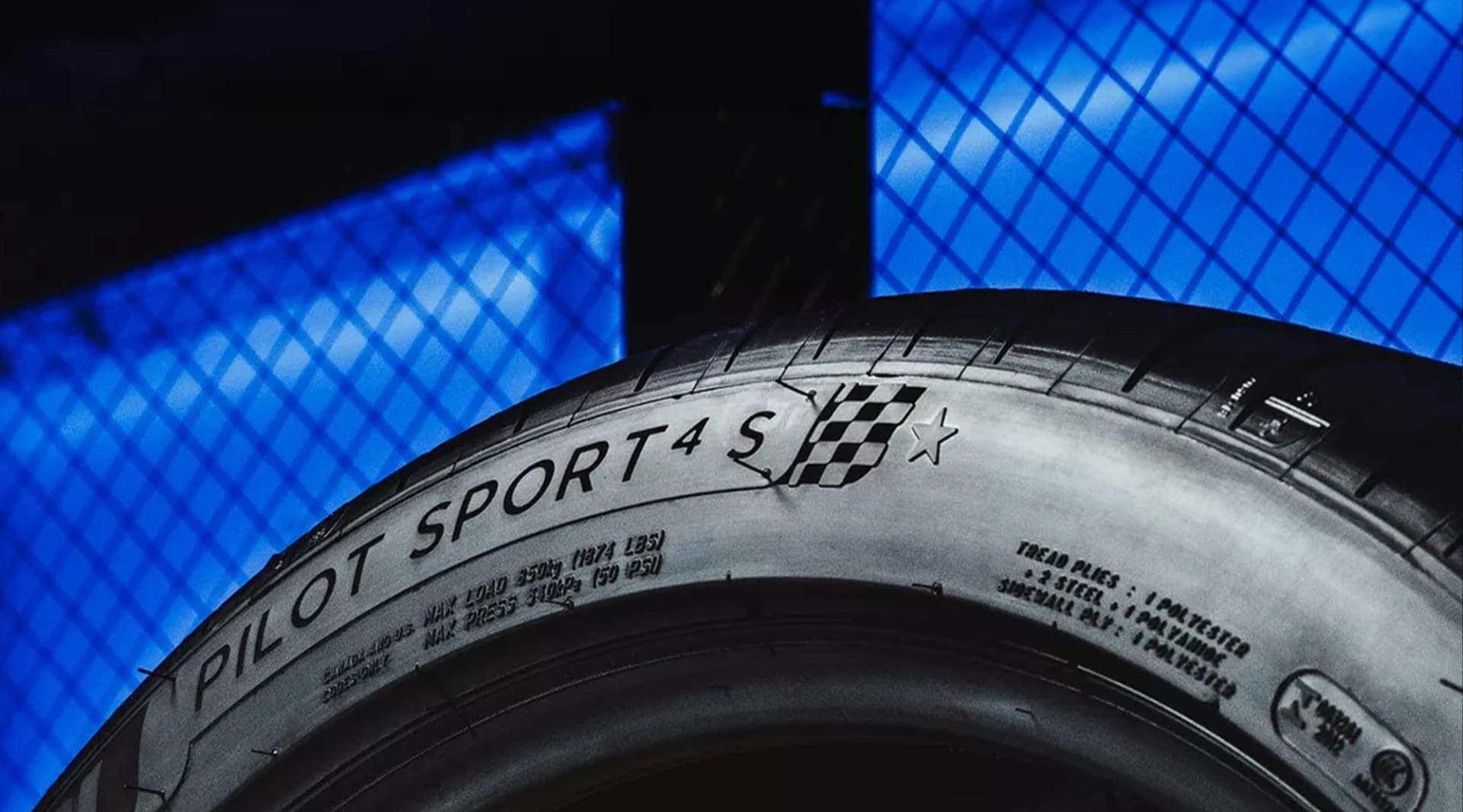
Plenty of thoroughly honest cars carry refinished panels. A stone-blasted bonnet on a high-mileage motorway car, a keyed door, a bumper corner sacrificed to a tight underground garage, a tailgate resprayed under warranty to cure a factory paint defect: all of them read high, and none of them should cost the seller a cent. What the gauge really does is stop the conversation being vague. You are no longer asking whether the car has ever been damaged, a question sellers answer with genuine forgetfulness at least as often as with dishonesty. You are pointing at one panel and asking what happened to that one, and a seller with nothing to hide will usually tell you, and surprisingly often still has the invoice. Then cross-check the answer against everything else the car is prepared to admit. The date codes moulded into the sidewalls of its tyres can quietly contradict a story about a light scrape, because a car wearing two new fronts and two five-year-old rears has had something happen at the front end. So can a service history that goes silent for four months. And if you are standing on the other side of this transaction, selling privately rather than buying, the lesson runs the same way: declaring the repair in writing costs far less than having a buyer discover it with a thirty-euro tool on your own driveway.
What to actually do
Ten minutes per car, and the discipline is in the order rather than in the tool.
Buy a dual Fe/NFe digital gauge before you start viewing, not for one specific car. A magnetic-only model is cheaper and will read nothing at all on the aluminium bonnet of the car you were most worried about.
Ask permission and use it in front of the seller. It is a probe resting against paint, it leaves no mark and takes a second, and a seller who refuses has told you something for free.
Measure the car cold, dry and unpolished if you can. Water, wax and a thick layer of fresh sealant each add a few microns, so a car detailed for sale that morning reads slightly high everywhere.
Take three to five readings per panel, away from edges, swage lines and seams, where even an untouched car gives unreliable figures. Go round in the same order every time and write every number down.
Set the car's own baseline first from the roof and the panels least likely to have been touched, then judge everything else against that rather than against a number from the internet.
Treat 200 as a question, 250 to 300 as a repair, and anything past roughly 500 as filler with reshaped metal underneath it.
Use your eyes where the gauge is blind. Open every shut line and the boot floor, look behind the wheel arch liners, and check for overspray on rubber seals, sealer beads that do not match the factory pattern, and bolt heads whose paint has been cracked by a spanner.
Ask about each high panel individually rather than about the car in general, and ask for the invoice. The answer is worth more than the reading that prompted it.
If the readings cluster around structural areas, front rails, sills, inner arches or the boot floor, stop measuring and buy a professional pre-purchase inspection from a motoring club or an independent workshop before you agree to anything.
Frequently asked questions
Does a high reading mean the car has been in a crash?
It means the panel has been refinished, which is not the same claim. A single door or bumper-adjacent wing at 250 microns is far more likely to be a scratch, a scuff or a dent pulled and painted than a collision. What turns a refinish into a crash is the pattern: several adjacent panels reading high together, readings that spill onto the roof or the sills, or a figure past 500 that says filler. One panel is maintenance history. A whole corner of the car is an accident.
Will it work on an aluminium bonnet or a plastic bumper?
Aluminium yes, but only with a dual Fe/NFe gauge that has an eddy current mode; a magnetic-only tool reads nothing there and the blank means nothing at all. Plastic, no, and no consumer gauge in this price range will change that, because both measuring principles need a conductive substrate underneath. Ultrasonic gauges do read composites and are what a professional appraiser carries, at several times the price. For bumpers, look instead: mismatched texture, overspray behind the wheel arch liner, and paint on the clips or the edges.
Is it rude to turn up at a viewing with one?
Traders see them constantly and think nothing of it, and most private sellers are more curious than offended once you explain what it is. The trick is tone. Ask before you touch the car, say plainly what you are checking, and treat a high reading as a question rather than an accusation, because you are usually looking at something the seller either knows about and will explain or genuinely did not know about, having bought the car with the repair already done.
Would a paid history check not find the damage anyway?
Only the damage that passed through an insurer and then reached a commercial database, and in Europe that is a minority of it. National registers are built for other purposes: ownership, roadworthiness and, in Belgium, mileage. Insurers do keep their own records, but a private buyer cannot query another person's claims. Damage repaired privately, or paid in cash to protect a no-claims discount, exists in no file anywhere. A history check and a gauge are answering two different questions, and the cheap one answers the question the paperwork cannot.
Should I walk away from a car with a repaired panel?
Usually not. Almost every car over five years old has had something done to it, and a well-repaired bolt-on panel such as a wing, a door or a bonnet is a cosmetic event. Price it accordingly and move on. Two things deserve a harder look: repairs that reach welded structure, meaning sills, inner arches, front rails or the boot floor, and repairs the seller denies when the gauge says otherwise. The first is a job for a professional inspection, the second is information about the person rather than the car.