BMW's iX3 will upload 120 seconds of unblurred road video from September
Every hard brake in a BMW iX3 can now become 120 seconds of evidence
BMW records short video clips from customer cars when something on the road nearly goes wrong, and from mid-September it does so across the European Union. The programme covers the iX3, i3, X5 and 7 Series running the current operating system, it works only with the owner's express consent, and each triggered event produces at most 120 seconds of camera and sensor data.
BMW switched the programme on in Germany on 1 April 2026
Germany went first. BMW began collecting event-based image data from consenting customer cars there on 1 April 2026 and has been widening it across the European Economic Area since, with the EU-wide rollout landing in mid-September. Eligible cars need both the specified operating system version and the right sensor hardware, which in practice means the Neue Klasse generation plus the current X5 and 7 Series, not anything already sitting on the used market.
A 120-second clip needs an emergency brake or an avoided collision
Nothing records on an ordinary commute. The trigger list is narrow: the emergency brake assistant issuing a warning, a collision avoided during a lane change, heavy manual braking, a sudden evasive manoeuvre, an obstacle detected in the road. When one fires, the car keeps a maximum of 120 seconds combining exterior camera footage with environment sensor readings and driving dynamics, including speed, direction and steering angle. It is a clip wrapped around an incident, not a rolling archive of every mile.
From mid-September the iX3 stops blurring faces before it uploads
This is the part that actually changed. Between April and September, faces and number plates were automatically obscured inside the car, as far as technically possible, before anything was transmitted. From mid-September the video is sent in unaltered form instead, and BMW does the obscuring on its own systems: automated analysis runs on the raw footage, and blurring is applied at the point an authorised employee opens a file by hand. The vehicle identification number is deleted shortly after successful transmission, so BMW says a clip cannot be traced back to a specific car.
Consent comes from the driver, not from the cyclist in the frame
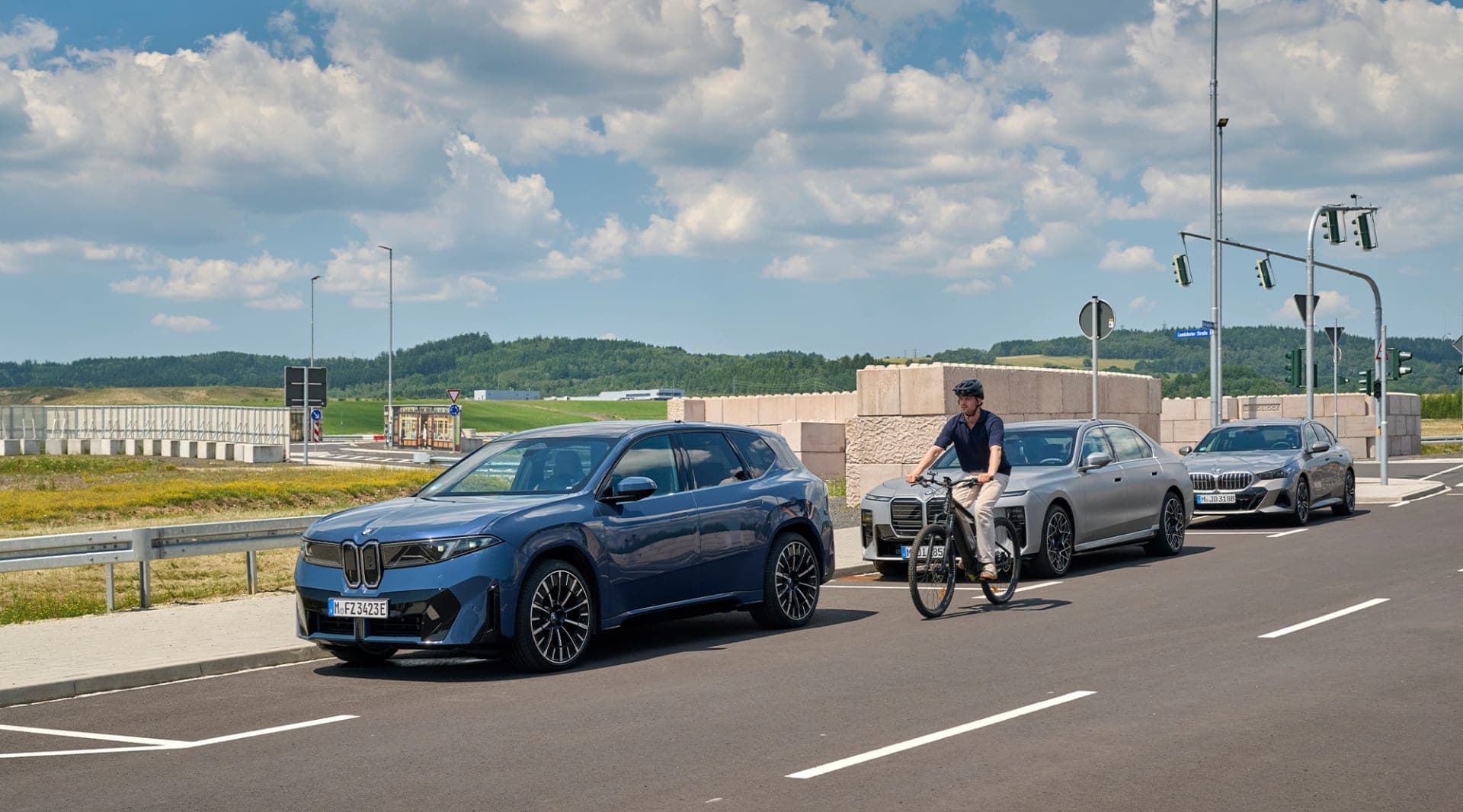
Only one person in a 120-second clip has agreed to any of this. The owner opts in through the Privacy menu in the car or the My BMW app, and can opt out again the same way. The cyclist the system is trying to protect, the pedestrian who stepped out, the driver in the next lane whose plate is now legible on a server: none of them were asked, and none of them can decline. It is the same iX3 whose doors already refuse to open when a cyclist is coming, which is precisely the sort of function this footage is meant to sharpen.
Europe's mandatory black box has stored no pictures since July 2024
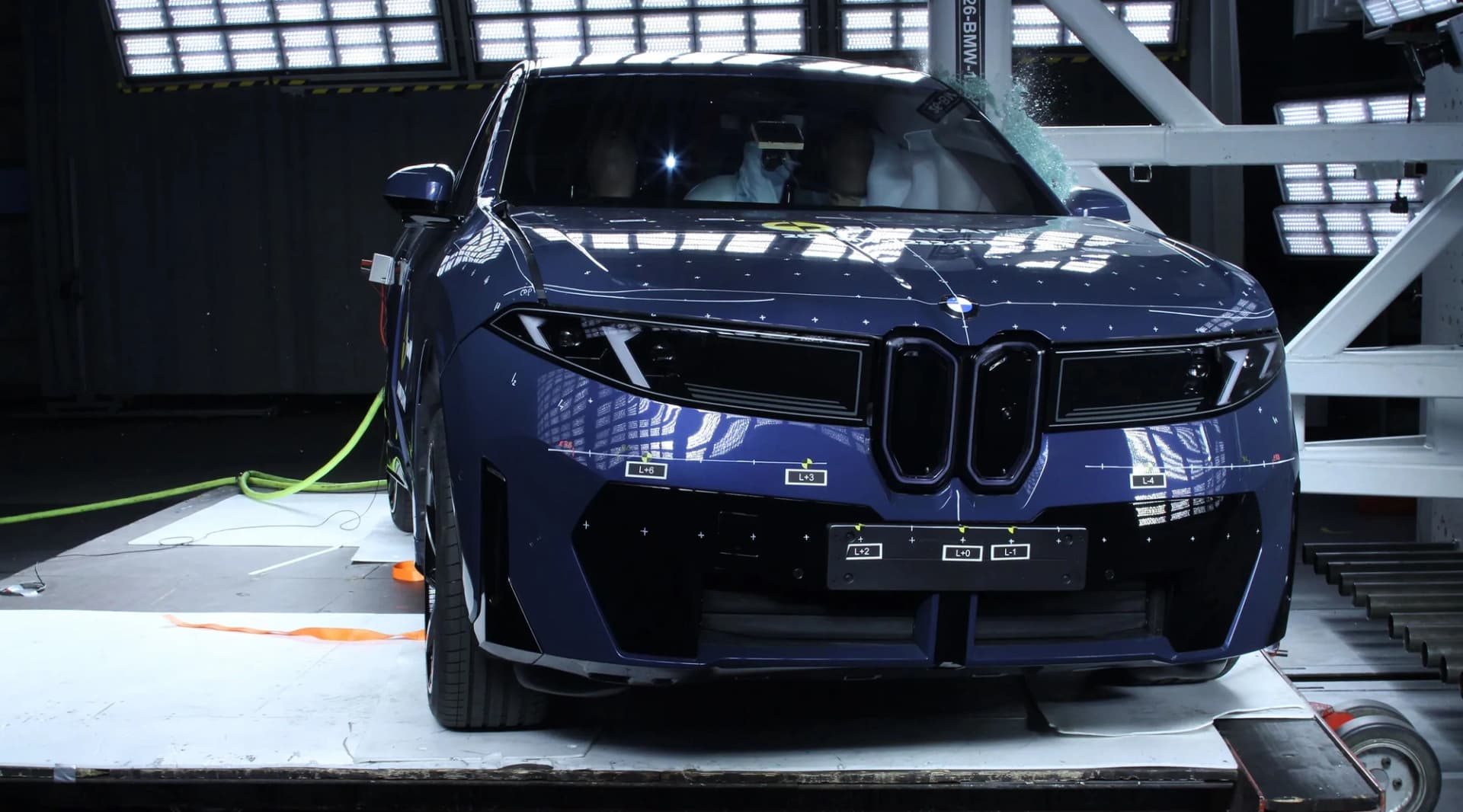
Every new car sold in the EU already carries a recorder, and it runs on the opposite principle. Under Regulation (EU) 2019/2144, event data recorders have been compulsory in all new vehicles since 7 July 2024, and the law requires the stored data to be anonymised and forbids keeping the vehicle identification number, because that number leads back to a driver. An EDR captures a few seconds of numbers around a crash and no images of anyone at all. The same iX3 that took five stars under Euro NCAP's stricter 2026 protocol now carries both recorders, built to opposite instincts.
AutoNext Take
The change worth watching is not the EU rollout, it is the direction the blurring moved. BMW spent five months obscuring faces inside the car and then stopped doing it, and nobody removes a privacy step that is working. The obvious reading is that sanitised footage was costing the training data something, which makes the raw pipeline a performance decision dressed as a process improvement. If it is genuinely necessary, BMW can put a figure on what the in-car blurring cost it in accuracy. It has not.
The rest is a question of who carries the risk. BMW deletes the vehicle identification number, promises no individual road user is identified, and is probably telling the truth on both counts. It still leaves a system where the only consent belongs to the one person in the frame who was never going to be filmed by their own car. BMW has already found out what happens when owners feel their car is working for someone else, and that was an advert on a dashboard, not other people's faces leaving the vehicle unblurred.