Hiroshi Okuda, the outsider who forced Toyota to change and gave us the Prius, has died at 93
The industry is still driving down the road he chose thirty years ago
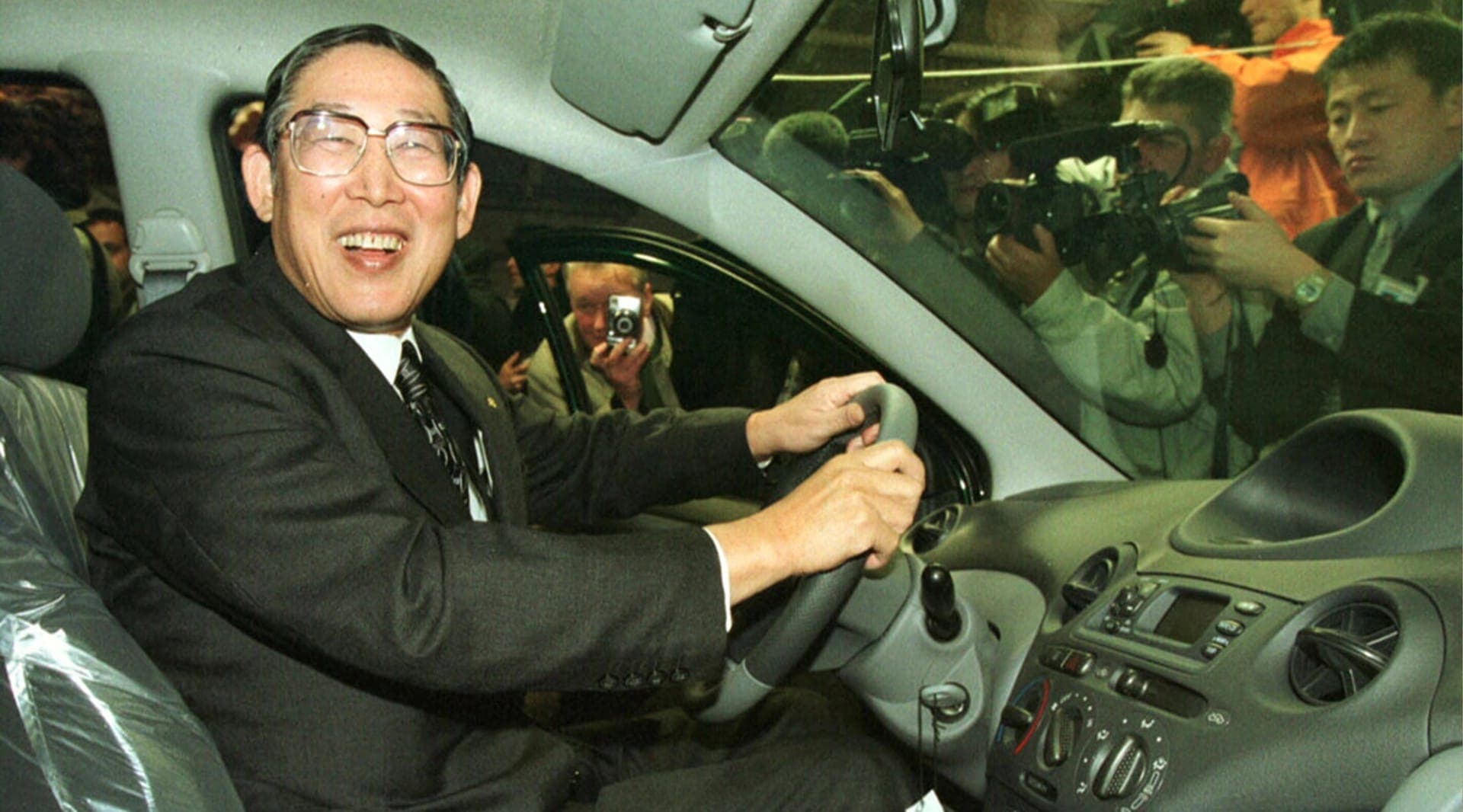
Some executives run a company. A rare few change the direction of an entire industry. Hiroshi Okuda, who has died at the age of 93, was firmly in the second group. As the man who led Toyota into the modern era and pushed the hybrid Prius into showrooms, he set in motion a transformation the whole car world is still living through, and he did it by insisting that even the mightiest company had to change.
An outsider at the top
Okuda joined Toyota in 1955, straight out of Hitotsubashi University in Tokyo, and spent a 45-year career with the company. In 1995 he became president, the first person from outside the founding Toyoda family to hold the role in a generation. He served as president until 1999 and then as chairman until 2006. For a company as tradition-bound as Toyota, an outsider reaching the very top was itself remarkable, and he used the position to shake the place up.
The Prius bet
He is best remembered as the driving force behind the Prius. The hybrid had many contributors, but it was Okuda who championed it internally and reportedly pushed to bring its launch forward by a year, and the car arrived in 1997. At the time, a petrol-electric family saloon was a gamble on a technology few rivals took seriously. It became one of the most influential cars ever made, normalising hybrid power and giving Toyota a lead in electrified drivetrains that it holds to this day.
The reformer who broke the mould
Okuda was known as a blunt, impatient moderniser in a corporate culture that prized consensus and seniority. He promoted younger managers, favouring capable people in their fifties over waiting for their sixties, a real break from Japanese norms. He expanded Toyota's manufacturing in the United States and Europe and oversaw the years in which the Camry became a fixture of American roads, turning a strong Japanese carmaker into a genuine global giant able to trade blows with General Motors and Volkswagen. Beyond Toyota, he later chaired Keidanren, Japan's most powerful business federation, becoming one of the country's leading industrial voices.
AutoNext Take
It is worth pausing on how prescient Okuda's central bet turned out to be. Thirty years ago he committed one of the most conservative companies on earth to a technology nobody was sure customers wanted, and today, as the rush to pure electric cars runs into range, cost and charging realities, the hybrid he backed looks less like a stepping stone and more like a destination in its own right. Millions of drivers across Europe are choosing exactly the kind of car he willed into existence, which is about the best legacy an executive can have.
His deeper lesson was cultural, not just technical. Okuda understood that success is the most dangerous moment for any company, because it breeds the complacency that kills it, and he spent his time at the top forcing a winning firm to keep questioning itself. In an industry now facing the biggest upheaval in its history, that instinct feels more valuable than ever. Toyota, and the wider car world, owe a great deal to the outsider who refused to let a good thing stand still. Our thoughts are with his family and colleagues.