BMW starts building the new i3, its second Neue Klasse model, in Munich
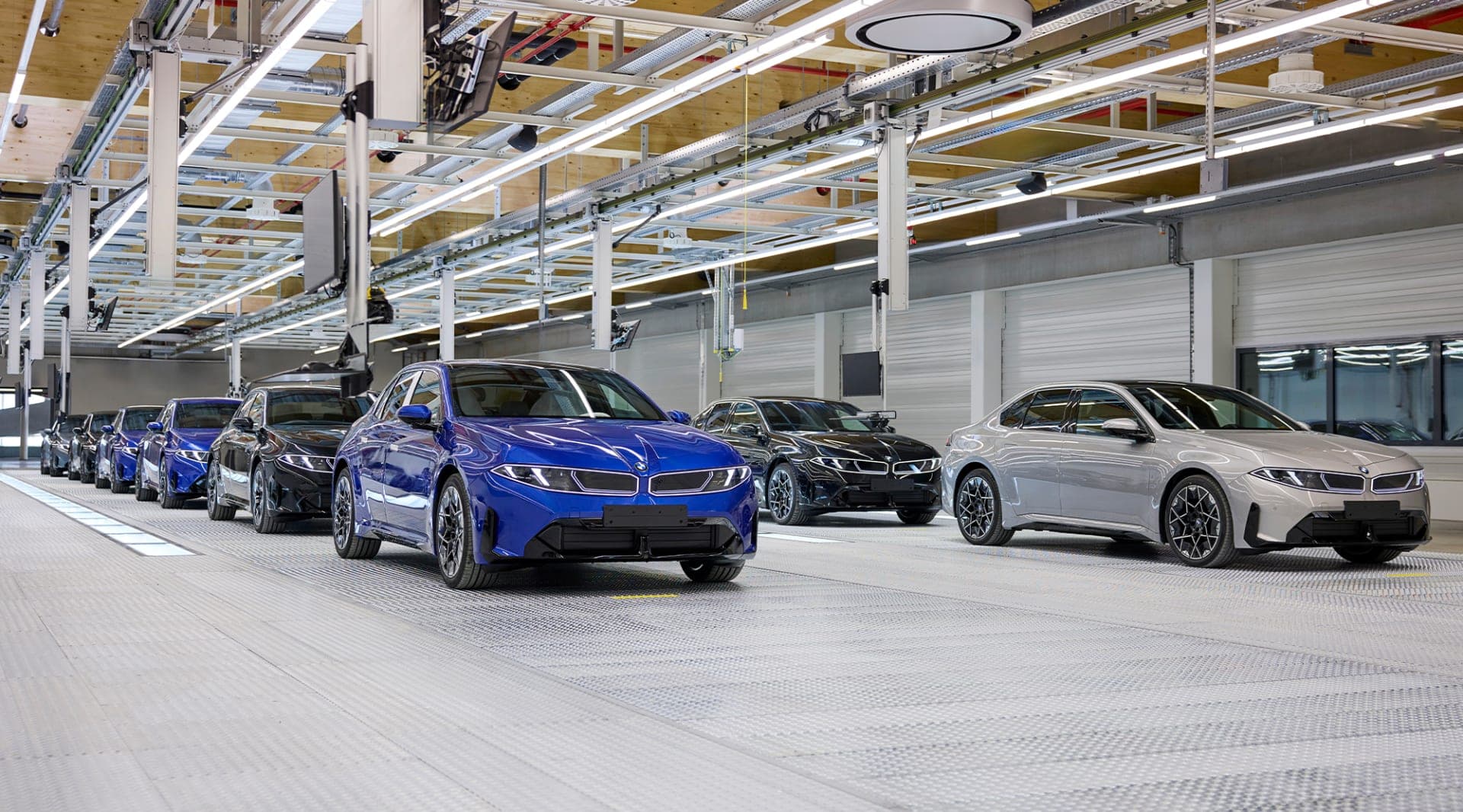
BMW has started series production of the new i3 in Munich, an all-electric Neue Klasse sedan effectively replacing the 3 Series. It shares nothing with the quirky carbon-tub city car that wore the same badge from 2013 to 2022
BMW has begun series production of the new i3 at its Munich plant, the second model built on the brand's Neue Klasse electric architecture after the iX3. Orders opened in mid-June 2026, well ahead of schedule, after what BMW describes as demand strong enough to justify a steep production ramp-up at the plant. European customer deliveries start this autumn, with US deliveries following in late 2027, once a second production line in San Luis Potosí, Mexico comes online.
The name is doing a lot of work here
BMW built the original i3 from 2013 to 2022 around a carbon-fibre passenger cell, a genuinely unusual, forward-thinking city car for its era. The new i3 shares none of that: it is a mainstream electric sedan built to sit alongside, and effectively replace, the petrol 3 Series in BMW's lineup. Platform, body style, positioning, and buyer are all different. AutoNext covered this exact car when it first leaked ahead of its official reveal; the only thing carried over from the original is two letters and a number.
What is actually launching first
The i3 50 xDrive, a dual-motor all-wheel-drive variant, leads the range at launch, with an i3 40 and a sportier i3 M60 expected shortly afterwards. BMW has also confirmed a fully electric M3, internally coded ZA0, arriving in 2027, along with an i3 Touring estate, coded NA1, launching the same year.
The numbers, with the usual early caveats
BMW's provisional WLTP figures for the i3 50 xDrive list combined energy consumption of 16.1 to 13.4 kWh per 100 km and a range of 758 to 912 km, with zero tailpipe emissions. The car uses a Gen6 high-voltage battery built at BMW's Irlbach-Straßkirchen plant and a Gen6 electric motor from Steyr, Austria. BMW says modernised production technology and streamlined processes have cut manufacturing costs by a further 10 percent. Treat the wide range band as provisional and pre-homologation, reflecting different wheel and trim combinations rather than a single confirmed figure.
Pricing already out ahead of the launch
BMW has published pricing well before deliveries begin. The First Edition starts at €75,340 in Germany, while the standard i3 50 xDrive is set at €65,900, with order books for that version opening in late September 2026.
AutoNext Take
Calling this car the i3 actually makes more sense than it first appears. BMW's electric sub-brand has always numbered its cars to roughly match the conventional lineup it sits alongside: i3 for 1/3-series territory, i4 for the 4-series-shaped coupe, i5 and i7 mirroring the 5- and 7-series, iX3 for the X3. A Neue Klasse sedan built to replace the 3 Series slots cleanly into that logic, even though the actual car, architecture, and target buyer share nothing with the 2013 hatchback that wore the badge first.
That is the real story here: a steep ramp-up built on genuine demand, a second Neue Klasse model arriving only months after the iX3, and a roadmap that already includes an M3 and a Touring wagon rather than a single isolated model. BMW is treating this platform as its actual electric future, not a side project, and giving it a name that fits the brand's own numbering system, rather than one borrowed for nostalgia, is a sensible way to signal that.