:focal(undefined))
A speed camera abroad only photographs your plate, and your own country hands over the rest
A camera in Italy has no idea who you are, and it does not need to.
The letter turns up in October for something you did in July, on paper, with a photograph attached, and the first reaction is almost never about the money. It is confusion about how anyone found you. The answer is duller and rather more interesting than the folklore around it. No foreign police force holds a file with your name in it. What happened is that a camera read a plate, an authority in Italy or France or Spain fed that plate into a system that queries the vehicle register of the country that issued it, and your own national register answered with a name and an address. Every step of that is written into a single piece of European law, and so are the limits on it, which is where the genuinely useful part starts. Because the law that lets a foreign camera find you says almost nothing about whether anybody can make you pay.
How your address travels from Rome to your letterbox
The instrument is Directive (EU) 2015/413, usually shortened to the cross-border enforcement directive. Every Member State designates a national contact point with automated access to the vehicle registration data of the others, restricted to what the case needs: the vehicle, and the name and address of the registered keeper. The authority that detected the offence then posts an information letter, and the directive is unusually specific about that letter. It must be written in the language of the registration certificate, which is why a Belgian who is flashed outside Bologna receives a letter in Dutch or French rather than Italian. It has to state the offence, the amount, how to pay and how to contest. What it is not is a judgment. It is a notification, and treating it as the end of a process rather than the start of one is how people talk themselves out of an appeal they would have won.
Eight offences today, and a much longer list from 2027
The 2015 directive covers exactly eight things: speeding, drink-driving, driving under the influence of drugs, not wearing a seatbelt, not wearing a helmet, failing to stop at a red light, using a forbidden lane and illegal use of a mobile phone. Anything outside that list cannot travel through this route at all, however firmly the local officer explained it at the roadside. Directive (EU) 2024/3237, signed on 19 December 2024, widens it considerably: following too closely, dangerous overtaking, dangerous parking, crossing one or more solid white lines, wrong-way driving, failing to form or respect an emergency corridor, driving an overloaded vehicle, hit-and-run and failing to comply at a railway level crossing. Member States have until 20 July 2027 to write it into national law, and the same directive orders up a public portal where any driver can look up another country's rules, fines and appeal routes before travelling rather than after being caught by them.
Sending a fine and collecting one are two different jobs
The directive gets your address. It does not get anybody's money. Cross-border collection runs on a separate and much older instrument, Council Framework Decision 2005/214/JHA, which lets an authority in one Member State hand a financial penalty to an authority in another and have it recognised and executed as though it were a domestic one. That instrument has a floor written into it. Article 7(2)(h) allows the executing state to refuse where the penalty is below 70 euro. In practice, the modest holiday speeding fine that lands somewhere between forty and sixty euro is frequently not worth routing through mutual recognition, and frequently is not routed through it.
That is a fact worth knowing and a poor basis for a plan. Nothing about the 70-euro floor cancels the debt; it leaves it exactly where it was. Several countries pass unpaid foreign fines to private debt collection agencies, some escalate the amount automatically once a deadline passes, and the surest consequence is the one nobody mentions: drive back into that country and the plate in the photograph is still the plate on your car.
The letter goes to the keeper, not to the driver
This is where people get caught out, because the register knows who the vehicle belongs to and nothing whatsoever about who was behind the wheel. In several countries, France and the Netherlands among them, the registered keeper carries the liability unless they identify the driver, and doing that within the stated deadline is a legal step rather than a courtesy. If you sold the car and the offence date falls after the handover, the answer is documentary rather than argumentative: send the transfer paperwork and the date. It is the least glamorous reason to insist on a proper written transfer when you sell a car privately, and the one that shows up months later.
If the car was rented or leased, the company holds the registration and receives the letter first. It will pass your details to the authority and charge you an administration fee for doing so, usually somewhere between twenty-five and fifty euro depending on the company. That fee is a separate commercial charge, it is not part of the fine, and it does not come back if you later win the appeal. Ask the rental company for the authority's own case reference so you can deal with the fine directly instead of through their handling process.
Where the system stops
The exchange is an EU instrument covering EU Member States. The United Kingdom lost access to it on leaving, which is why fines from European cameras to British addresses largely dried up after Brexit; the May 2025 EU-UK summit committed to negotiating an arrangement on vehicle registration data, but nothing is in force yet. Switzerland sits outside the mechanism as well. And an entire class of charges that feels identical from the driver's seat is outside it in every country: an ordinary parking ticket, a low-emission-zone charge, an unpaid toll or a congestion charge is generally not one of the road-safety offences the directive lists, so it cannot use this route. Those reach you by other means, most often a commercial arrangement between the operator and a debt collection agency in your own country, which is why the envelope for one of those can look and read very differently from a police notification.
The cheapest fine is the one the camera never takes
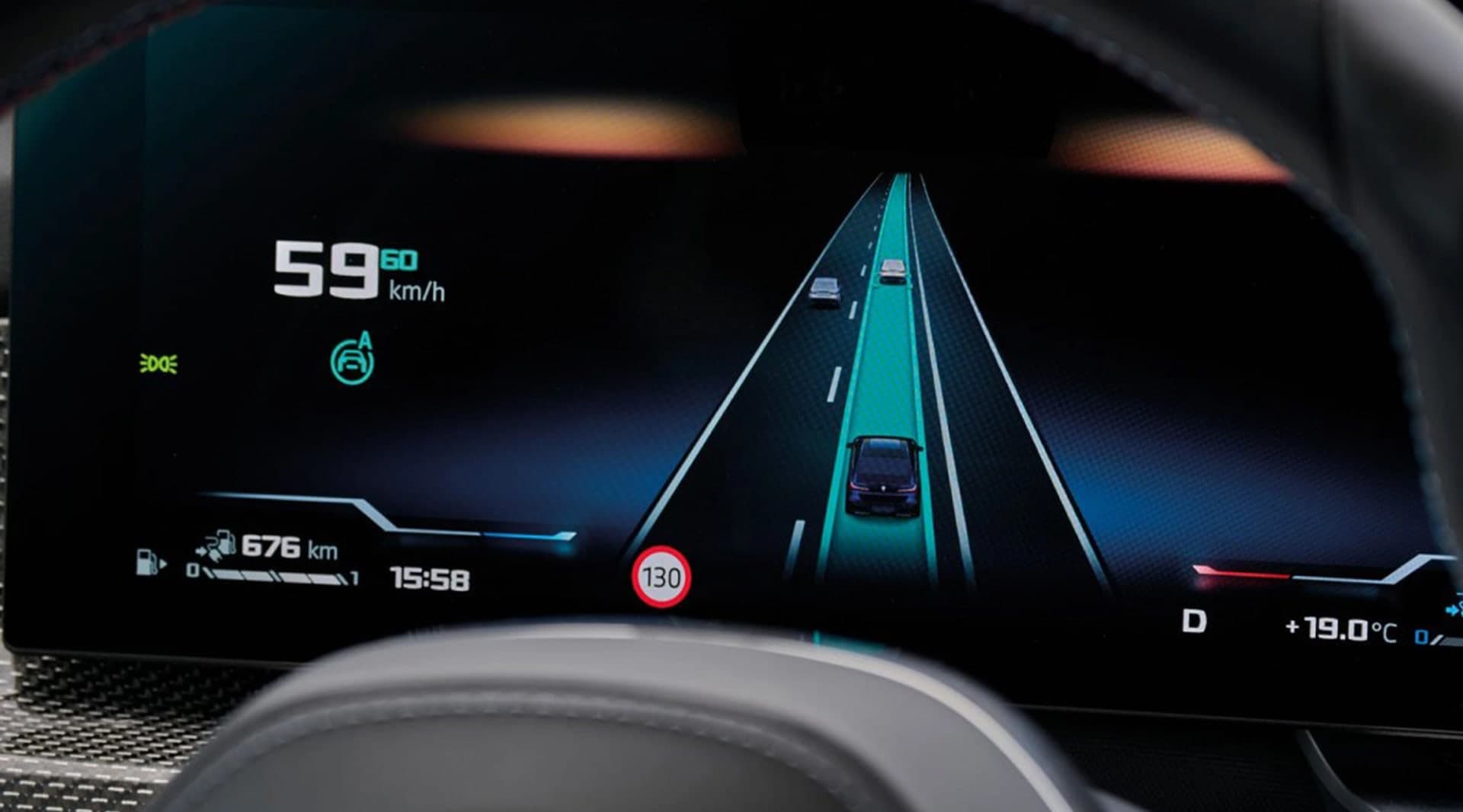
Most fines collected from foreign drivers are not for reckless driving. They are for a rule the driver did not know existed: a motorway limit that drops in the rain in France, an urban zone that changed last year, a lane a foreign plate is not allowed to use. Your car will not save you from those, because the sign recognition behind your windscreen reads what is printed on the sign and knows nothing about conditional limits, which is one of the documented weaknesses of the speed assistance system fitted to every new EU car. Ten minutes with the rules of the country you are entering is worth more than any of it, and it is the same ten minutes that tells you the local obligations nobody thinks about until they apply, such as what you are legally required to do after hitting an animal.
What to actually do
Eight things, in the order they matter once the envelope is open.
Check the offence date against that country's notification deadline. Italy must notify a driver resident abroad within 360 days of the offence; a letter that arrives well outside a national deadline is a real ground for contesting it.
Match the plate, the date, the time and the place against your own trip before you do anything else. Misread plates happen, and so do cloned ones.
If you accept it, pay inside the early window. Spain cuts the fine by half if you pay within twenty days; Italy has a similar short-window reduction. Taking the discount normally means giving up the right to appeal, so decide in that order, not the other way round.
Pay only through the official channel named in the letter. Fake foreign-fine emails and texts are one of the most reliable scams in Europe, precisely because the real letters are unfamiliar.
If it was a rental, ask the company for the authority's case reference and handle the fine yourself. Their administration fee is separate and is not refundable.
If you had sold the car, reply with the transfer document and the date rather than a denial. The register, not the buyer, is what put your name on the letter.
If someone else was driving, check whether that country requires you to name them and by when. Missing that deadline can cost more than the original offence.
Keep the paperwork even for a fine that goes quiet. A penalty under 70 euro is often not worth enforcing across a border, which is not the same as cancelled, and the country that issued it is the country you may drive back into.
Frequently asked questions
Can a fine from another EU country really be enforced where I live?
Yes, through Framework Decision 2005/214/JHA, which lets the issuing authority hand the penalty to an authority in your country of residence to be recognised and executed as a domestic one. It is a separate step from the letter itself, it is used unevenly between Member States, and the executing state may refuse where the penalty is below 70 euro.
So can I ignore anything under 70 euro?
You can, and people do, but understand what you are relying on. The 70-euro rule is a permission to refuse enforcement, not an expiry date on the debt. The fine stays on file in the issuing country, several countries route unpaid foreign fines to private debt collectors, some increase the amount after a deadline, and the record is still there the next time you drive in with the same plate.
Why did it take four months to arrive?
Because three organisations have to act in sequence: the authority that processes the camera image, the national contact point that queries the foreign register, and the postal route to your address. National deadlines are generous for non-residents, and Italy's 360 days for a driver resident abroad is the clearest example of how long that window legally is.
I rented the car. Why is the rental company charging me as well?
Because the vehicle is registered to them, the letter reached them first, and passing your details to a foreign authority is administrative work they charge for under the rental agreement you signed. It is typically twenty-five to fifty euro, it is not the fine, and the fine itself still has to be paid separately.
Does any of this apply to the UK and Switzerland?
Not through this directive. The UK lost access to the EU exchange when it left, and Switzerland was never part of it. The May 2025 EU-UK summit agreed to work towards an arrangement on exchanging vehicle registration data, but until something is actually in force, a fine crossing either of those borders usually arrives because a rental or leasing company handed over your details rather than because a register did.
Do parking tickets and low-emission-zone charges work the same way?
Generally not. The directive lists road-safety offences, and an ordinary parking ticket, a zone charge or an unpaid toll is usually not on it, so it cannot use the register exchange. Those are pursued commercially instead, most often through a debt collection agency operating in your own country, which is why they can reach you when a speeding fine from the same trip never does.