The main dealer cannot void your warranty, but a vague invoice can
There is no line in your warranty that says main dealer, because there is not allowed to be one.
The belief that a new car has to go back to the brand's own workshop for its first three or five services is one of the most expensive myths in European motoring, and it survives because nobody selling servicing has any reason to correct it. The rule that kills it is not consumer law at all. It is competition law. Regulation (EU) No 461/2010, the block exemption that governs how carmakers are allowed to run their repair networks, was prolonged by Regulation (EU) 2023/822 and now runs until 31 May 2028, and the Commission's own Supplementary Guidelines spell out the consequence in plain language: a manufacturer's warranty may not be made conditional on the owner having repair and maintenance work that is not covered by the warranty carried out only inside the authorised network, and it may not be made conditional on using the manufacturer's own branded spare parts for that work. The Guidelines reach further than most drivers assume, because they apply the same reasoning to an extended warranty the manufacturer itself grants, not only the statutory one. So the legal question has been settled for fifteen years and is not really a question. What is still open, and what genuinely decides whether a claim gets paid three years from now, is what your garage writes on the invoice and where that record ends up.
What the block exemption forbids, and the one thing it still allows
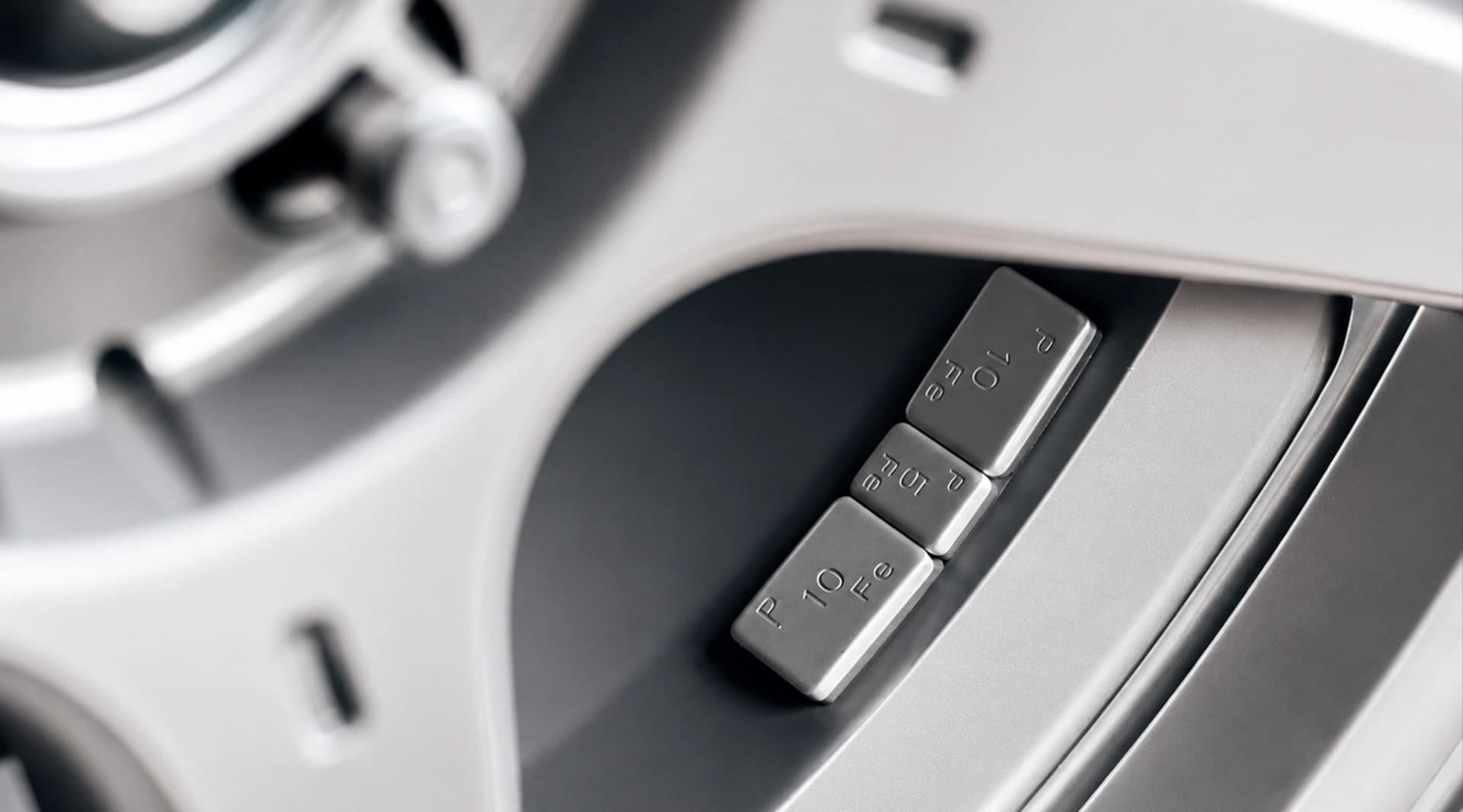
The line that matters runs between work you pay for and work the manufacturer pays for. Anything you pay for, a scheduled service, a set of brake pads, a cambelt, a clutch, is yours to place wherever you like, and tying your warranty to that choice is exactly the practice the Supplementary Guidelines describe as likely to foreclose independent repairers and close off alternative channels for spare parts. Anything the manufacturer pays for is a different matter. Warranty repairs carried out free of charge, free servicing included in the purchase, and safety recalls can all legitimately be reserved to the authorised network and to original parts, and the Guidelines treat that as objectively justified rather than as a restriction on competition. Knowing which side of that line a job falls on is worth real money in both directions. If the failure is the maker's problem, taking the car to an independent and paying for the repair yourself is money thrown away on something you were owed. If the work is routine and sits on the schedule, the network has no claim on it at all, and a job as ordinary as getting the wheels balanced properly is done no better by a badge on the building.
The independent garage is not working blind, and that is also written into law
The usual objection is that a small workshop simply cannot know what a modern car needs, and twenty years ago that had some force. It no longer does, because a second piece of European law removed the excuse. Article 61 of Regulation (EU) 2018/858, the type-approval regulation, obliges vehicle manufacturers to give independent operators unrestricted, standardised and non-discriminatory access to on-board diagnostic information and to vehicle repair and maintenance information, presented so that it can be processed with reasonable effort, for a fee that must be reasonable and proportionate and must not discourage access. In December 2023 the Court of Justice went further in Case C-319/22 and confirmed that manufacturers cannot bolt their own extra conditions onto that access. In practice this means the servicing schedule, the torque figures, the fluid specifications, the reset procedures and the diagnostic protocols for your car are available to any garage willing to pay the subscription. The question to ask a workshop is therefore not whether it is allowed to touch your car. It is whether it has bought the access for your brand, and a good independent will answer that in one sentence.
A claim can still be refused, but only with a chain of cause behind it
None of this makes a warranty unconditional, and the carve-out is narrow enough to state precisely. A manufacturer may refuse a claim where the situation leading to it is causally linked to a repairer having failed to carry out a particular operation correctly, or to the use of a poor-quality part. Read that carefully, because it is an accusation about one specific job and one specific failure, not a policy. A gearbox that fails has nothing to do with who changed the oil, and saying so is not a defence anyone has to accept. The burden sits with the party making the claim of causation, which is the manufacturer, and asking in writing for that link is the single most effective thing an owner can do. The parallel is close to what the payout on a written-off car really is. A refusal arrives with the tone of a fact and is very often an opinion you are entitled to disagree with.
The digital service book is where the protection quietly runs out
Here is the part the legal texts do not solve. The service record has migrated out of the paper booklet in the glovebox and into each manufacturer's own online system, and the manufacturers control who may write into it. Some have opened the door: Mercedes-Benz, for one, lets independent repairers register and record service events in its Digital Service Booklet. Others have not, and the result is a service that is entirely legal, entirely correct and entirely invisible, a gap in the digital history with nothing to explain it. Your warranty rights are untouched by that. Your resale value is not, because the person reading the record in three years is not applying competition law, they are looking for a hole. It is the same reason a private sale does not end when the buyer drives away: the documentation is the car, as far as a stranger is concerned. Multi-brand digital service books built for the independent sector now exist and are worth asking about, but the reliable answer is still the dull one. Keep every invoice, itemised, dated, with the mileage on it.
What to actually do
The law is already on your side. Everything below is about making sure the paperwork agrees with it.
Work out first what you actually hold. A manufacturer warranty is protected by competition law. A prepaid service plan bought with the car, or an insurance-backed policy sold by a dealer, is an ordinary contract whose conditions you agreed to. They are not the same thing and they do not have the same rules.
Ask the independent garage one question before booking: does it have manufacturer technical access for your brand. It should be able to name the schedule for your exact engine and model year, including variable intervals, without looking it up on a forum.
Refuse an invoice that says only serviced. You want the operations listed, the parts named with numbers or brands, the quantities, the mileage and the date. That document is the whole of your defence and it costs nothing to insist on.
Make sure the oil is described by its approval, not just its viscosity. Two bottles of 5W-30 can meet completely different manufacturer specifications, and the wrong one reaches the particulate filter long before it reaches an argument about warranty.
Ask whether the garage can write into your brand's digital service book, and get the answer before the work rather than after. If it cannot, ask for a stamped paper record and photograph both sides of it.
Send warranty repairs, free scheduled servicing included in the purchase, and recalls back to the authorised network. Those are the manufacturer's cost, and paying an independent for them is money you never had to spend.
Keep the parts receipts as well as the labour invoice, and keep them in one folder rather than in an inbox. A claim two years from now is decided by what you can put on a table in five minutes.
If a claim is refused, reply in writing and ask for the causal link between the work done elsewhere and the failure. Do not argue about principle. Ask for the chain, and attach the invoices that show the schedule and the specification were met.
If the answer does not improve, take the file to your national consumer authority or the European Consumer Centre in your country. A dispute that touches an EU competition rule reads very differently from a dispute about a warranty term.
Frequently asked questions
Does servicing at an independent garage void my manufacturer warranty?
No, and a warranty written so that it does is precisely the practice European competition law targets. Regulation (EU) No 461/2010 and the Commission's Supplementary Guidelines are clear that a manufacturer may not make its warranty conditional on non-warranty servicing being carried out inside the authorised network. What you owe in return is real, though: the manufacturer's schedule, the manufacturer's specifications, parts of matching quality, and a record that proves all three. Meet those and the warranty stands.
Can the garage fit parts that are not original?
Yes, provided they are of matching quality. The Guidelines set the bar at parts good enough that using them does not endanger the reputation of the authorised network, and a good deal of what a franchised dealer fits carries someone else's brand anyway, because the carmaker did not make it. Fluids are where care pays off most. An oil that carries the manufacturer's own approval number is not the same product as an oil of the same viscosity, and that difference is one of the few that can genuinely be traced to a failure later.
What about the extended warranty I paid for?
Look at who grants it. Where the manufacturer extends its own warranty, the Supplementary Guidelines apply the same reasoning, because they refer to the manufacturer's warranty whether legal or extended. A separate insurance-backed policy sold by a dealer or a third party is a different animal: it is an ordinary contract, and a clause requiring servicing within a named network is a clause you signed. The same goes for a prepaid maintenance package bought with the car. That is a service you purchased, not a condition imposed on your warranty.
Will an independent service history hurt what the car sells for?
Sometimes, and it is worth being honest about why. Buyers are not applying competition law, they are reading a document, and a bundle of invoices from a garage they have never heard of takes more work to trust than a complete digital record from the brand. The fix is paperwork rather than a dealership: itemised invoices naming the parts and the oil approval, dated, with the mileage, plus an entry in the digital book wherever your garage is able to make one. On a car under three years old the argument for keeping that digital record unbroken is at its strongest.
The manufacturer has refused a claim. What now?
Ask in writing for the causal link between the work carried out elsewhere and the failure being claimed. That is the standard the Guidelines set, and a refusal resting only on where the car was serviced does not meet it. Attach the invoices showing the schedule was followed and the specification met, and keep the letter short and factual. Most refusals of this kind are a first position rather than a final one, and they change when the question stops being about loyalty and starts being about evidence.