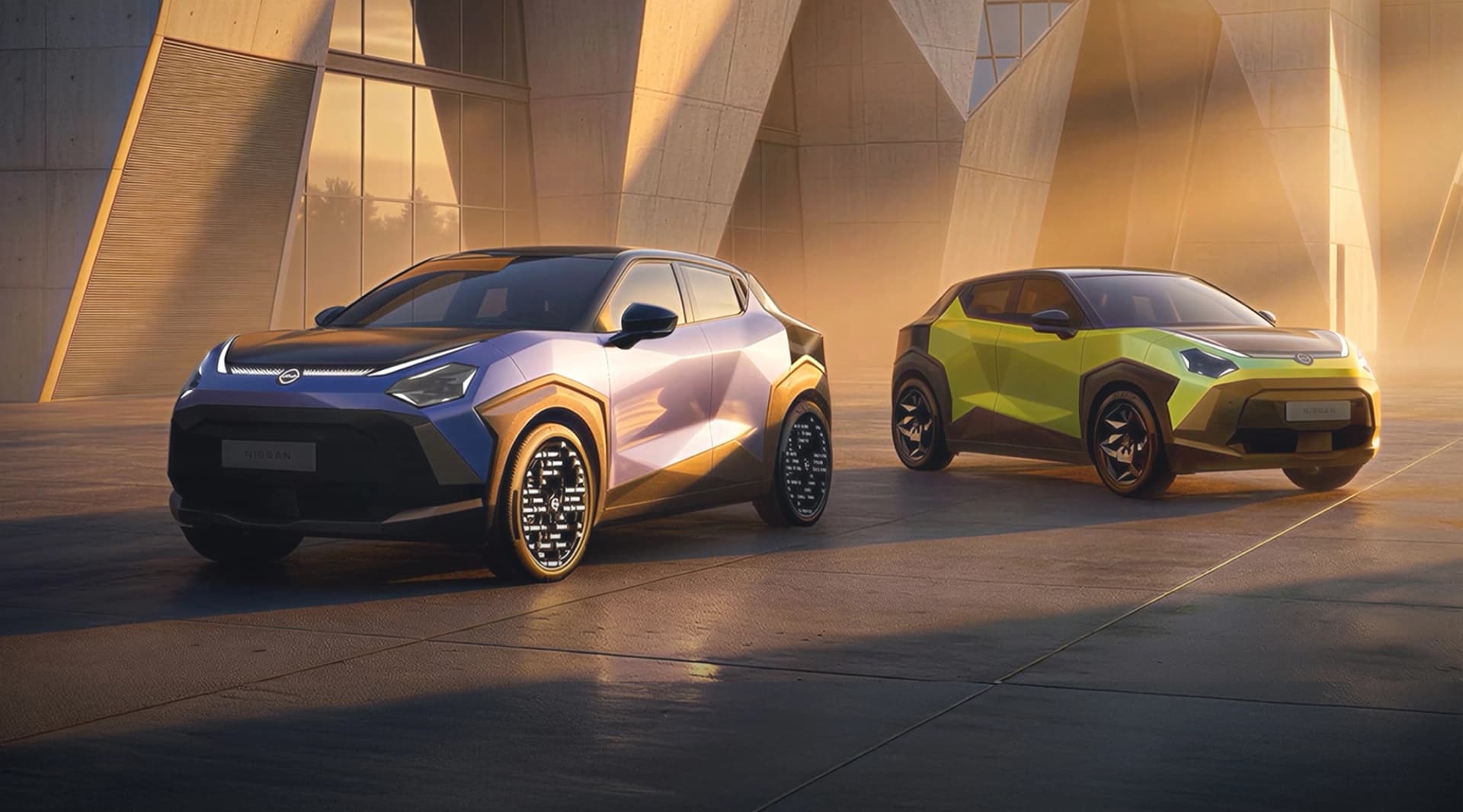
All-new Nissan Juke EV, the bold rebel goes electric but can it still matter?
This is a risk Nissan had to take.
Nissan is doing something far more ambitious than a redesign. It’s rewriting the entire concept. The all-new, third-generation Juke is going fully electric, marking one of the most symbolic shifts in the brand’s European strategy. But here’s the real question: Can a car built on personality survive in a market increasingly driven by logic, efficiency and price?
From segment disruptor to EV statement
When the original Juke launched in 2010, it didn’t just enter the compact crossover segment, it created it. Over 1.5 million units later, its influence is undeniable. But the world has changed.
Today, the segment is saturated with polished, efficient, and often interchangeable crossovers. Design alone is no longer enough. Electrification is no longer optional. So Nissan had to make a choice: evolve… or become irrelevant.
The result is this: a fully electric Juke, built on the CMF-EV platform, the same architecture underpinning more serious EVs in the Renault-Nissan alliance. And that’s where things get interesting.
A familiar attitude, with a completely different foundation
Nissan is clearly trying to keep the Juke’s DNA intact. The proportions remain compact, the stance is playful, and the intention is obvious: this still needs to feel like a Juke. But underneath, everything changes.
The move to a dedicated EV platform doesn’t just mean zero emissions, it fundamentally reshapes the car. Expect better interior space, improved weight distribution, and a driving experience that leans more toward refinement than raw character. In other words, the Juke is growing up.
Built in Europe, for a very European battle
Production will take place in Sunderland, UK, a plant that has quietly become one of the most important EV hubs in Europe. That’s not a coincidence.
Nissan knows Europe is one of the toughest EV markets in the world right now. Regulations are tightening, competition is exploding, and price pressure (especially from Chinese manufacturers) is relentless.
We’ve touched on this before in our analysis of the shifting EV landscape: legacy brands are no longer just competing with each other. They’re fighting an entirely new wave of players who move faster, build cheaper, and think differently.
And if even giants like Toyota are warning about survival, as we covered recently, then a model like the Juke suddenly carries a lot more weight than it used to.
Part of a much bigger strategy
The Juke EV doesn’t stand alone. It joins an expanding European line-up that includes the new Micra EV, the next-generation Leaf, the Ariya, and upcoming smaller electric models. Nissan is clearly pushing toward a future where every customer has an electrified option, whether fully electric or via its e-POWER hybrid system.
There’s also something more strategic happening here. The Juke EV will support Vehicle-to-Grid (V2G) technology, meaning it won’t just consume energy, it can give it back. That’s a shift from cars as products to cars as part of an energy ecosystem.
It sounds technical, but the implication is simple: your car becomes part of your home, your grid, your daily life.
AutoNext Take
Let’s be honest. The Juke, in its current form, was starting to fade into the background. Still distinctive, yes, but no longer disruptive.
Going electric changes that narrative completely. It gives the Juke a reason to exist again. But it also introduces a new challenge:
in the EV world, personality alone doesn’t win. Range, charging speed, pricing and tech matter more than ever.