BMW M's M3 decision: pure combustion, pure electric, no compromise
Two versions, one name, zero compromises
BMW M does not do things quietly. When BMW M chief Frank van Meel speaks, his words tend to carry a directness that the rest of the automotive industry often lacks. This week, he drew a clear philosophical line around the M3: it will go pure combustion or pure electric. No plug-in hybrid sits in between.
That is not a small decision. The automotive industry has spent the last several years positioning plug-in hybrids as the safe, logical transitional technology: extra range, reduced emissions, regulatory compliance without a full commitment to electrification. BMW itself has leaned into this with models like the X5 50e. But for the M3, van Meel is calling that approach a halfway solution, and BMW M does not do halfway solutions.
The S58 gets a Euro 7 pass
The next M3, based on the G84 generation, will keep the S58 3.0-litre biturbo inline-six. That engine will be Euro 7 compliant, without requiring a plug-in hybrid system to reach those standards. BMW M calls this the 'perfect combustion principle': if you are building a combustion engine, build it correctly. Fit only what is needed for efficiency, in this case a mild-hybrid system, and keep the weight penalty minimal.
The significance here is practical as much as philosophical. The current M3 Competition weighs around 1,730 kg. A plug-in hybrid battery pack adds 150 to 200 kg before you have even looked at the suspension changes needed to manage it. Van Meel's argument is that those kilograms would undermine the M3's fundamental reason to exist.
The name that signals everything
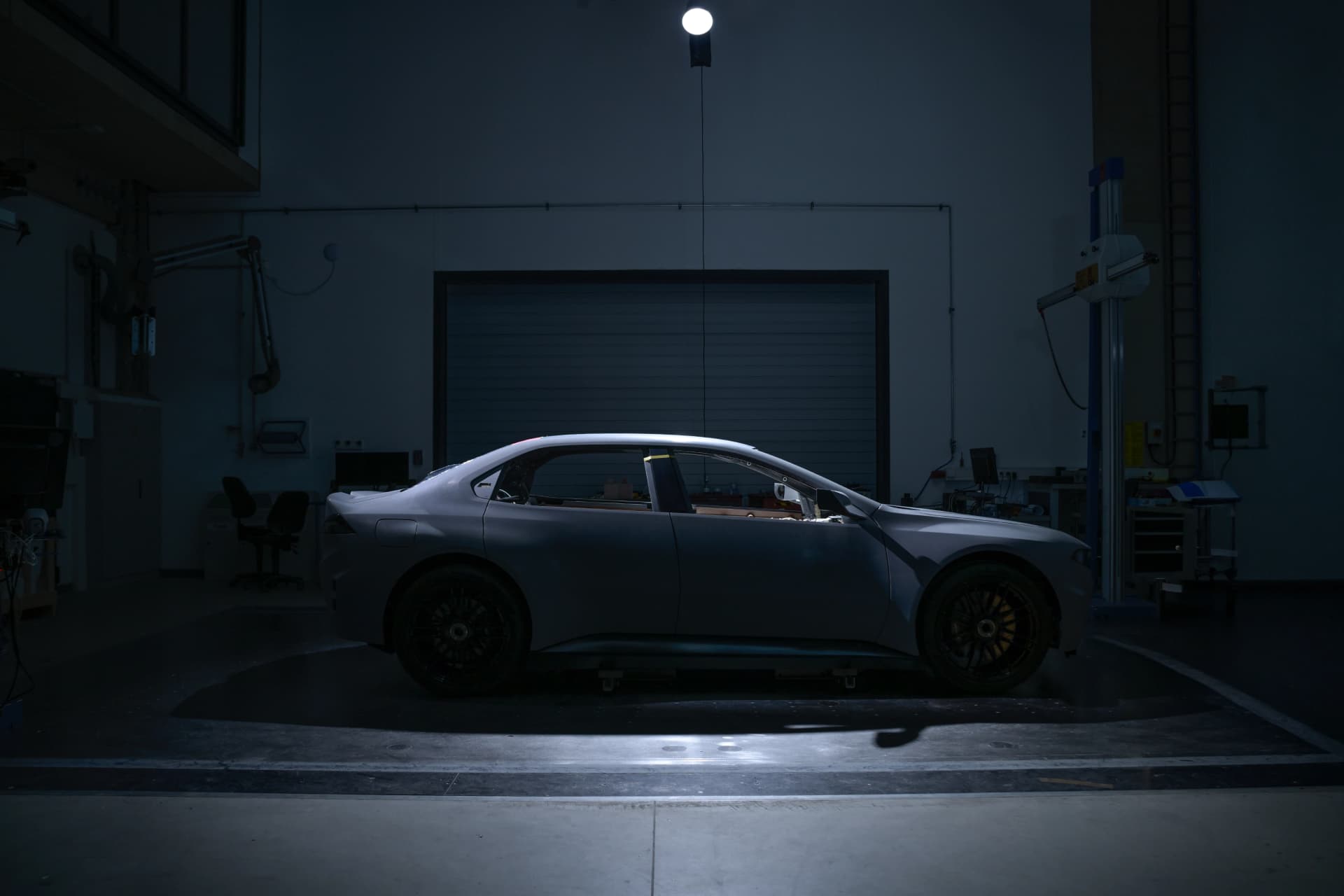
The electric M3 will arrive on the Neue Klasse platform, BMW's next-generation electrical architecture. Its name will be M3. Not iM3. Not M3e. Just M3.
Van Meel made the reasoning explicit: the M3 designation is not a drivetrain descriptor. It did not change when the DCT replaced the manual. It does not change now that an electric drivetrain is joining the range. 'M3 is an all-encompassing name,' he said. The 'i' prefix belongs to BMW's EV sub-brand, and M operates independently of that naming convention. BMW M is positioning its electric future not as a concession to regulation but as an evolution of the same performance DNA.
What a manual transmission means in this context
Van Meel also mentioned that BMW is exploring a manual transmission option for the combustion M3. That detail is easy to dismiss as fan service, but it supports the same broader argument. BMW M is doubling down on the emotional and mechanical authenticity of its combustion cars precisely because the electric M3 will offer something categorically different: instant torque, no gear changes, a different kind of engagement.
Rather than blending both into a plug-in hybrid compromise that does neither particularly well, BMW M is creating two distinct products. You choose based on what you want from the driving experience. That level of clarity is rare in a market where most manufacturers are still hedging.
An M3 Touring in two versions
Van Meel confirmed that an M3 Touring on the Neue Klasse platform is also planned, available in both combustion and electric form. The Touring has been the most convincing recent argument for the M3's relevance in daily life, and carrying that format into the next generation suggests BMW M is confident the estate will outlast the saloon in volume terms.
Combined with a spiritual M1 successor that BMW is understood to be exploring, BMW M appears to be in a period of expansion rather than consolidation. The constraints of Euro 7 and electrification are being channelled into focus, not dilution.
AutoNext Take
The 'no hybrid' decision tells you exactly what BMW M understands about its own cars. A plug-in hybrid M3 would have been the politically convenient choice. It would have hit the efficiency numbers on paper, satisfied fleet buyers on the WLTP cycle, and given BMW a compliant talking point. Van Meel rejected that route because it would have produced a car that weighs more, feels heavier, and compromises the one thing M cars are built around: the connection between driver, engine, and road.
Naming the electric version M3 rather than iM3 is the quieter but equally important statement. BMW M is not apologising for electrification. It is absorbing it into the same identity that has made the M3 relevant for forty years. Two cars, same name, same badge earned on merit. That is harder to pull off than it sounds, and it is the right decision.