Ferrari P4/5 by Pininfarina celebrates 20 years
This was something else, and twenty years later, it still looks extraordinary.
Some cars become famous because they are fast. Some because they are rare. And a very small number because they feel like they should never have been allowed to exist in the first place. The Ferrari P4/5 by Pininfarina belongs to that final category.
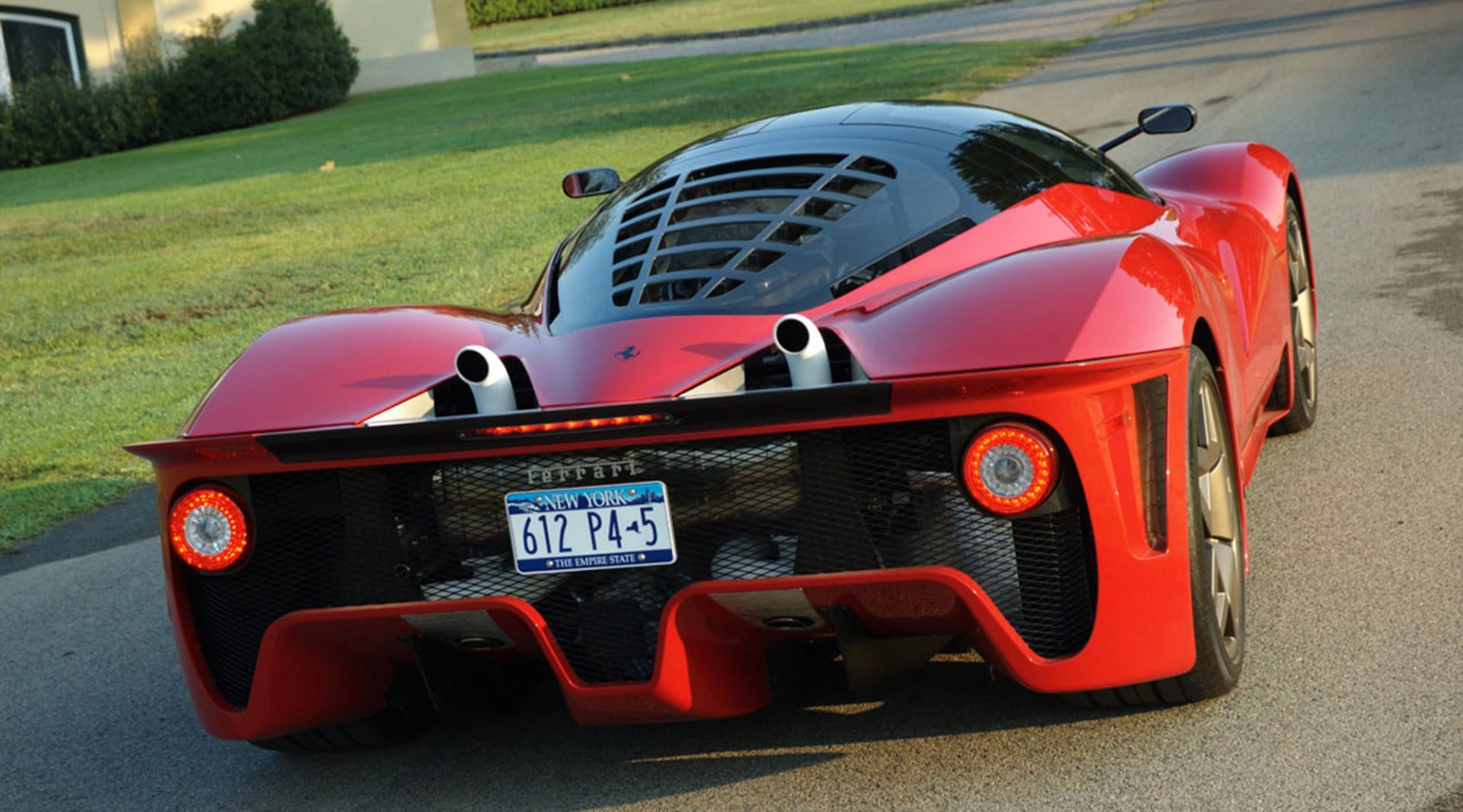
Unveiled at the Pebble Beach Concours d’Elegance in 2006, the P4/5 was commissioned by American collector James Glickenhaus and built around the mechanical base of a Ferrari Enzo. But calling it an Enzo with a different body would almost be insulting.
A Ferrari Enzo, completely transformed
Underneath, the P4/5 used the legendary Ferrari Enzo as its base. That meant a 6.0-litre naturally aspirated V12, around 660 hp, a carbon-fibre structure and proper hypercar performance. It could accelerate from 0 to 100 km/h in around 3.55 seconds and reach a claimed top speed of 362 km/h.
But visually, almost nothing of the Enzo’s sharp, Formula 1-inspired design language remained. Pininfarina reshaped the car into something softer, lower, more fluid and far more romantic. The carbon-fibre body, butterfly doors, flowing aerodynamic surfaces and bubble-like canopy created a silhouette that clearly referenced Ferrari’s P3/4 and 330 P4 racing legends without becoming a retro copy.
Built like a design object, engineered like a real car
The P4/5 was not just a showpiece. It was wind-tunnel tested at Pininfarina’s facility in Grugliasco, Turin, where the aerodynamic work helped shape the car’s surfaces around real performance requirements. Its body was designed to balance elegance, stability, cooling and speed.
Many one-off cars look spectacular in a studio and then feel fragile in the real world. The P4/5 was different. It was conceived as a functioning, road-going hypercar with proper engineering depth behind the beauty. The carbon bodywork reduced weight and allowed Pininfarina to create shapes that would have been far more difficult with traditional materials. The result was a car that looked almost liquid, but still carried serious purpose.
James Glickenhaus did not just buy a car
The story works because James Glickenhaus was not simply ordering something expensive. He was trying to create a new chapter in Ferrari-inspired history. His passion for the Ferrari P-series racers shaped the direction of the project, but the final result was developed through a real collaboration with Pininfarina.
That is what makes it feel authentic. The P4/5 was not designed by committee. It was not engineered to satisfy a market segment. It was not created for shareholders, social media or a limited-edition strategy.
AutoNext Take
The Ferrari P4/5 by Pininfarina is still one of the greatest one-offs of the modern era. It respects the past without becoming trapped by nostalgia. It uses Ferrari Enzo engineering without being visually dominated by it. It carries Pininfarina elegance at a time when supercars were starting to become more aggressive, more angular and more obsessed with shock value.
And twenty years later, that restraint is exactly why it still works. The P4/5 reminds us that true automotive luxury is not always about adding more. Sometimes it is about understanding what to remove, what to soften, what to reference and what to leave untouched.