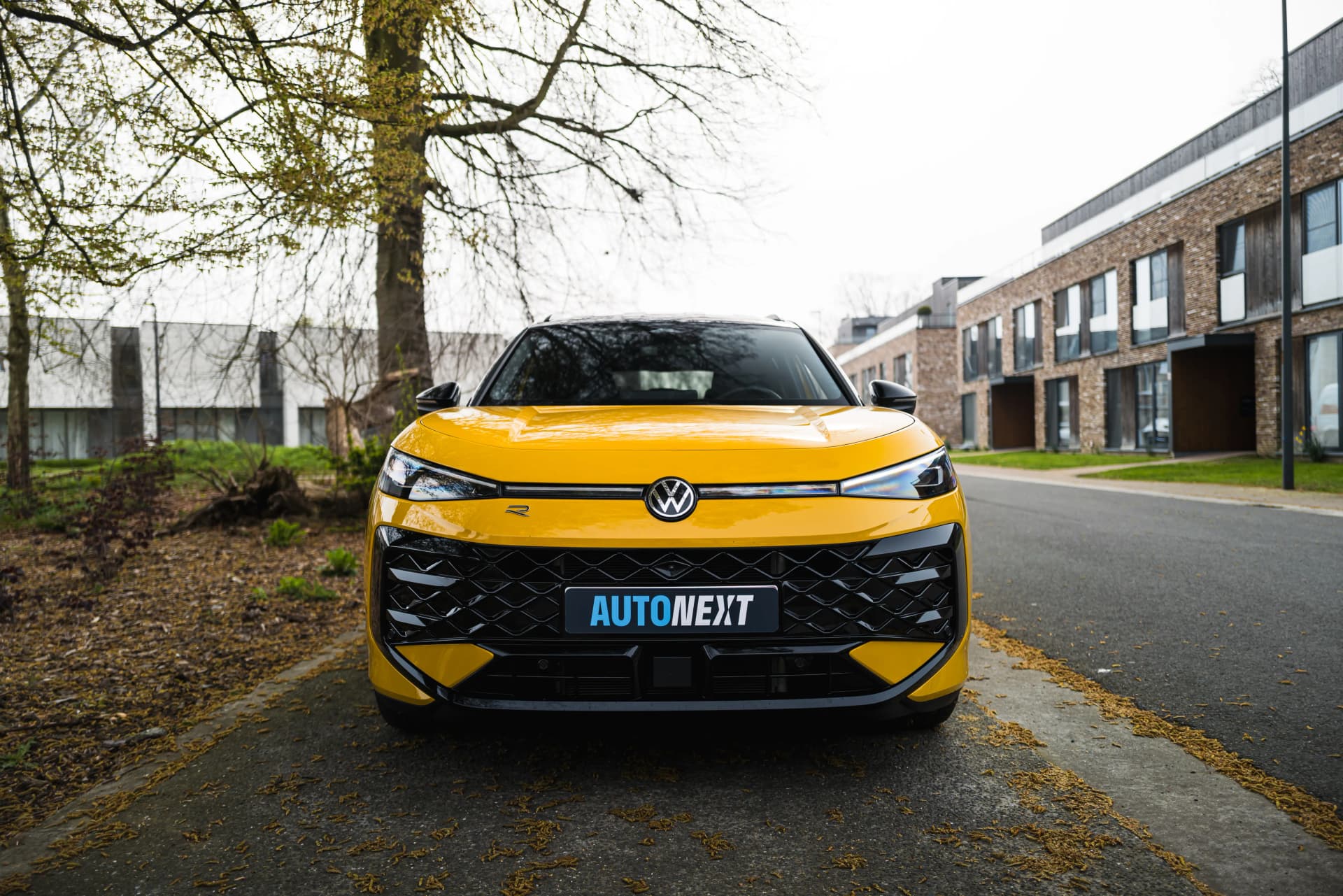
2026 Volkswagen T-Roc R-Line
It doesn’t try to reinvent anything. Instead, it simply focuses on doing everything well.
Between the T-Cross, Taigo, T-Roc and Tiguan, not to mention the fully electric ID models, it’s sometimes difficult to immediately understand where each model fits. Yet the Volkswagen T-Roc still manages to carve out a very clear place in the range.
It sits right in the middle of the lineup: bigger and more mature than the T-Cross or Taigo, but more compact and lifestyle-oriented than the Tiguan. And after spending time with the new T-Roc R-Line, it becomes obvious why this model continues to be so popular.
Design & Presence: playful colours and confident proportions
One thing Volkswagen clearly worked on with this latest evolution is the car’s presence. The T-Roc always had a distinctive look, but this version feels more mature and slightly more confident on the road.
Our test car was finished in one of Volkswagen’s new, more playful colours, options like Canary Yellow, Celestian Blue Metallic and Flame Red Metallic add a welcome dose of personality to the otherwise quite rational German design. Combine that with the contrasting black roof and the R-Line styling package and the T-Roc suddenly looks far more dynamic than you might expect from a compact family SUV.
Our car also sat on 19-inch York Black wheels, which visually suit the R-Line very well. Volkswagen does offer 20-inch wheels, but honestly the 19-inch setup probably strikes the better balance. The car already looks sharp, and larger wheels would likely make the ride unnecessarily firm.
Powertrain: the familiar 1.5 TSI mild-hybrid
Under the bonnet sits Volkswagen’s familiar 1.5-litre TSI petrol engine, available in two power outputs depending on the specification. 115 horsepower with 220 Nm of torque, or (including our R-Line test car) deliver 150 horsepower and 250 Nm.
Both engines are paired with 48-volt mild-hybrid technology, and while you’ll never drive purely on electric power, the system works quietly in the background to improve efficiency and smoothness. The electric architecture assists during acceleration and allows the engine to temporarily switch off when coasting.
You notice it almost immediately. Lift off the throttle and the car glides effortlessly, particularly at lower speeds. The stop-start system reacts almost instantly, and overall the drivetrain feels smooth and refined without ever drawing attention to itself.
Volkswagen claims fuel consumption between 5.6 and 6.0 litres per 100 kilometres, and during our time with the car those numbers proved surprisingly realistic. Even with a mixture of urban driving, secondary roads and motorway kilometres, the T-Roc stayed comfortably within that range.
Part of the reason is weight. At 1,474 kilograms, the T-Roc is still relatively light compared with many modern SUVs, especially when compared with the increasingly heavy electric alternatives.
Driving Experience: comfort over drama
It’s not trying to be a sporty crossover, but the chassis feels well balanced and composed. The suspension absorbs imperfections comfortably while still maintaining stability at motorway speeds, and even on the 19-inch wheels the ride remains impressively smooth.
In many ways it feels like a reminder of what everyday cars used to feel like before SUVs gained hundreds of extra kilograms of battery weight.
The seven-speed DSG gearbox, fitted as standard across the range, contributes to that relaxed character. There is no manual transmission available, but in this case that hardly feels like a drawback. The DSG shifts quickly and smoothly, blending perfectly with the mild-hybrid system to create a very effortless driving experience.
Push the car harder and it behaves exactly like you would expect a Volkswagen to behave: stable, predictable and safe. There is plenty of grip and the steering feels precise enough, but the overall setup prioritises comfort and composure rather than entertainment.
Interior & Technology: usability finally returns
Volkswagen has clearly listened to criticism from earlier models, particularly regarding interior controls. The steering wheel now features proper physical buttons instead of the controversial haptic touch controls that frustrated drivers in the past. It sounds like a small detail, but it dramatically improves usability.
Behind the steering wheel sits a fully digital driver display with multiple information layouts, ranging from minimalist to highly detailed. In the centre of the dashboard, the updated 12.9-inch infotainment system handles navigation, media and vehicle settings.
Compared with Volkswagen systems from a few years ago, this interface is a clear improvement. It’s responsive, visually cleaner and far less frustrating to operate. The navigation menus can still feel slightly complicated, but once you connect Apple CarPlay or Android Auto, most drivers will probably rely on smartphone mirroring anyway.
Charging your device is easy enough thanks to the wireless charging pad, although the centre console only offers two USB-C ports.
Space & Practicality: more room than you expect
The car has grown slightly compared with the previous generation: it is now 122 mm longer, which translates into roughly 30 mm more rear legroom and a 30-litre increase in boot capacity. The removable boot floor allows you to create a flat loading surface or a deeper cargo well, while the 40:20:40 split rear seats fold completely flat when needed.
Pricing & Rivals: a fiercely competitive segment
There is currently no plug-in hybrid or electric version of the T-Roc, and the engine lineup sends all power to the front wheels without an all-wheel-drive option in this configuration. But perhaps that simplicity is part of the appeal.
Pricing starts at roughly €28,000, making the T-Roc relatively accessible within Volkswagen’s SUV lineup. However, once you step into the R-Line specification and begin adding options, the price climbs quickly. Our test car, fully equipped, approached €45,000.
That places it directly against some very strong rivals such as the Audi Q2, Ford Puma, MINI Countryman, Peugeot 2008, Toyota C-HR and Volvo XC40, all competing fiercely for the same buyers. Yet the T-Roc still manages to stand out.
AutoNext Verdict
Because the truth is, the Volkswagen T-Roc doesn’t try to be revolutionary. It doesn’t attempt to dominate with extreme technology, radical design or electrified complexity.
Instead, it focuses on the fundamentals: comfort, efficiency, refinement and usability. And in a market where many SUVs are becoming heavier, more complicated and increasingly digital, the T-Roc almost feels refreshingly straightforward. Sometimes, that’s exactly what makes a car good.
Discover more
Dive deeper into the world behind every car.
On every detail page you will find a complete and transparent presentation of the vehicle: from technical specifications and option lists to service history, features and unique highlights.
Search cars
Discover our premium selection, compare the different models with ease and find the car that perfectly matches your style and expectations.
Your next exceptional driving experience starts here.
Expert reviews
Our experienced car experts put every car under the microscope and share honest, in-depth insights that go beyond the standard brochure information.
From ride comfort and technology to build quality and performance. We analyse every detail so you can make the right choice with confidence.
