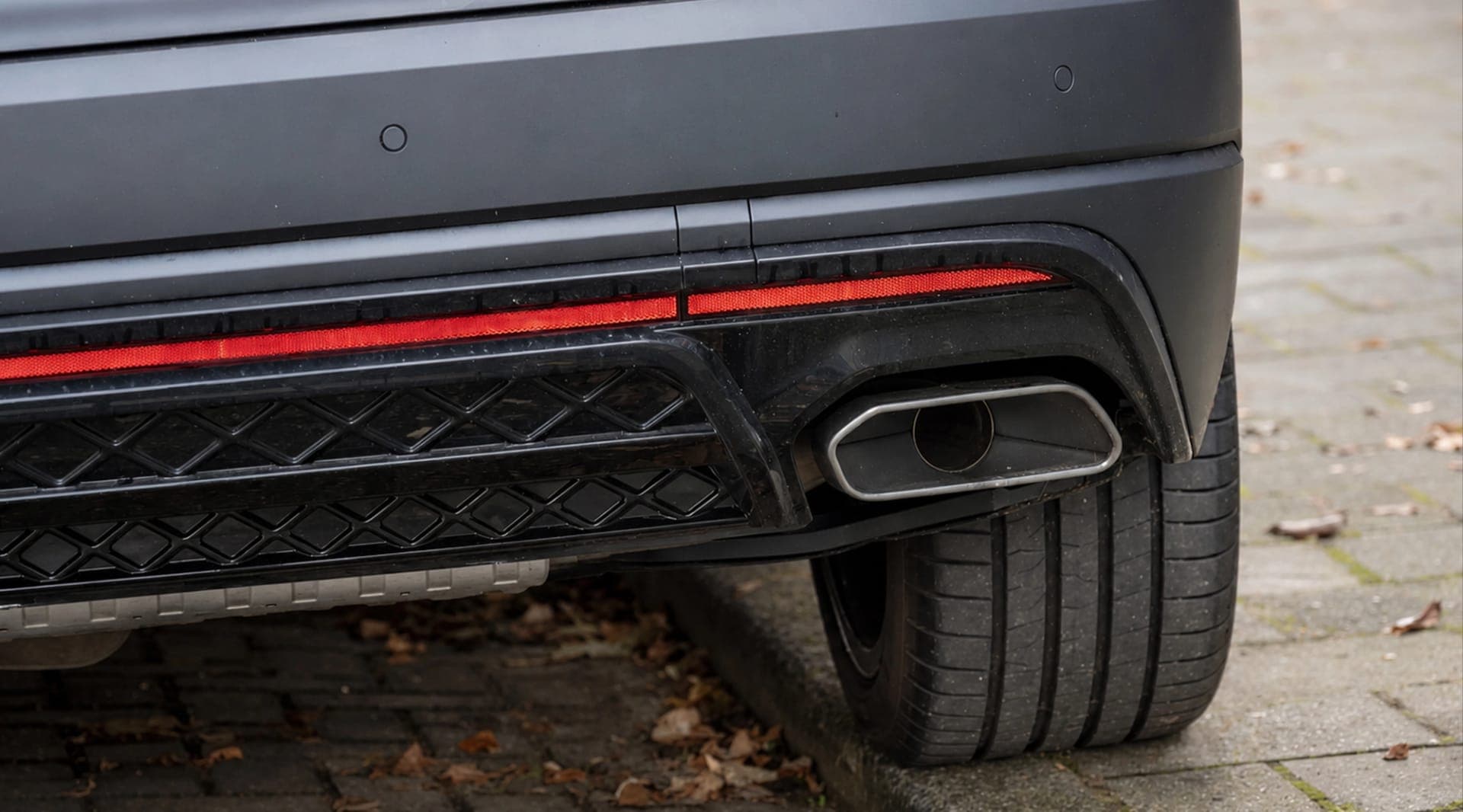
Is parking on a kerb bad for your car?
The car sitting tilted is not the problem. Getting up there is.
Parking with two wheels up on a kerb is unlikely to hurt your car while it sits there. Suspension is built to hold the car's weight at an angle, and a night resting tilted does no harm. The damage, when it happens, is done in the act of mounting and dismounting, and it lands on your tyres and wheels first: a scraped or pinched sidewall you cannot see, a curbed or buckled alloy, and, after a hard hit, knocked-out tracking. Take it slow and straight and the risk is small. There is also a simpler reason to avoid it in Belgium, which we will come to: parking on the pavement is, in principle, not allowed.
What actually gets damaged, and in what order
Kerbing touches four things: the face of the alloy, the tyre sidewall, the seal between the tyre and the rim, and the wheel alignment. Notice what is not on that list at the top: the suspension. The springs, bushes and joints do get uneven load if you kerb the car hard or do it every single day, but they are rarely the first thing to suffer. Your tyres and wheels are, because they are what actually make contact with the edge.
A gentle parallel-parking nudge usually does nothing worse than mark the rim. It is the harder, faster or more angled contact, especially against a tall or sharp kerb, that sends a real shock up through the tyre and wheel and starts causing the damage that costs money.
The sidewall is the part to worry about
Of everything a kerb can damage, a tyre sidewall is the one that can bite you later. The face of a tyre is tough, but the sidewall is thin and flexible, and scraping it against an edge can scuff it, pinch it, or leave a small internal injury that shows almost nothing on the outside. If that develops into a bulge, cut or split, the tyre cannot be repaired, it has to be replaced, and a weakened sidewall can fail at speed weeks later. So the risk is not just cosmetic. If you clout a kerb hard, it is worth looking closely at the sidewall, and having it checked if you are unsure.
Alloys are the visible casualty. A light scuff to the face can usually be refurbished, but a wheel that ends up cracked or buckled will leak air or vibrate, and that one needs replacing rather than tidying up.
Speed, angle and the kerb itself decide the risk
Whether a kerb hurts your car comes down to three things: how fast you meet it, at what angle, and what kind of kerb it is. Slow, straight-on and one wheel at a time is the safe way. Fast, oblique, or against a sharp ninety-degree granite edge is where sidewalls get pinched, wheels get bent and tracking gets knocked out, which then shows up as the car pulling to one side or the tyres wearing unevenly. A low, rounded kerb taken at walking pace is close to harmless. The same kerb clipped at speed is not.
It is worth keeping this in proportion. As plenty of mechanics will tell you, one bad pothole hit at speed puts more strain on your suspension than a great many slow, careful kerb climbs. The point is not to be scared of kerbs, it is to treat them with the same care you would a speed bump.
Does sitting tilted overnight hurt the suspension?
No, not in any way worth worrying about. This is the kerb-parking version of the myth that turned wheels damage your steering: a car resting at an angle is not stressing anything unusual. The springs are simply holding the weight a little unevenly, well within what they are designed for, and they do not take a set from a night on the kerb. If mounting the kerb did no harm on the way up, the car sitting there until morning will not undo that.
Across Europe, it is usually not allowed anyway
Beyond the wear question, there is the law, and across most of Europe the answer is the same: parking on the pavement is not allowed unless a sign or road marking specifically permits it. Only the details and the fines change from country to country. In France, half-mounting the kerb counts as stationnement tres genant and carries a fixed 135 euro fine, with the risk of being towed. Germany allows it only where the pavement-parking sign expressly says so, and otherwise fines it from around 55 euro, rising to 70 euro plus a point on your record if you block anyone. Belgium treats it as dangerous or obstructive parking, with fines that can climb well into the hundreds, and requires a clear strip of at least 1.50 metres for pedestrians. In the Netherlands most parking fines start around 70 euro. The common thread everywhere is the same: leave enough room for people to pass, above all anyone with a pram or a wheelchair, and assume the kerb is off limits unless something clearly tells you otherwise. If you are weighing up your next car, you can also browse the latest listings on AutoNext.
Frequently asked questions
Does parking on a kerb damage your suspension?
Rarely from sitting there. A car resting at an angle is within what the suspension is built for. The wear risk comes from mounting and dismounting hard or every day, which over time can knock the tracking out and add uneven load to joints like tie rod ends and ball joints. Slow and straight keeps that risk low.
Can a kerb damage a tyre even if there is no visible mark?
Yes. A sidewall can be pinched or weakened internally with almost nothing to see on the outside. If it develops into a bulge, cut or split, the tyre cannot be repaired and must be replaced, and a weakened sidewall can fail later at speed. After a hard knock, it is worth having the tyre checked.
How do I get up a kerb without damaging anything?
Approach slowly and as straight-on as you can, one wheel at a time, and avoid tall or sharp-edged kerbs. A low, rounded kerb taken at walking pace is close to harmless. Speed and a shallow angle are what cause the damage.
Does hitting a kerb affect wheel alignment?
It can. A hard or angled strike can knock the tracking out, which shows up as the car pulling to one side or the front tyres wearing unevenly. If you notice either after a knock, have the alignment checked, because it also wears your tyres faster.
Is it legal to park on the pavement in Europe?
In most countries no, not unless a sign or road marking specifically allows it. The fines vary: a fixed 135 euro in France, from around 55 euro in Germany, and higher still in Belgium, where it counts as dangerous parking. Wherever you are, you have to leave enough clear width for pedestrians to pass, so check the local signs and rules before you leave the car.