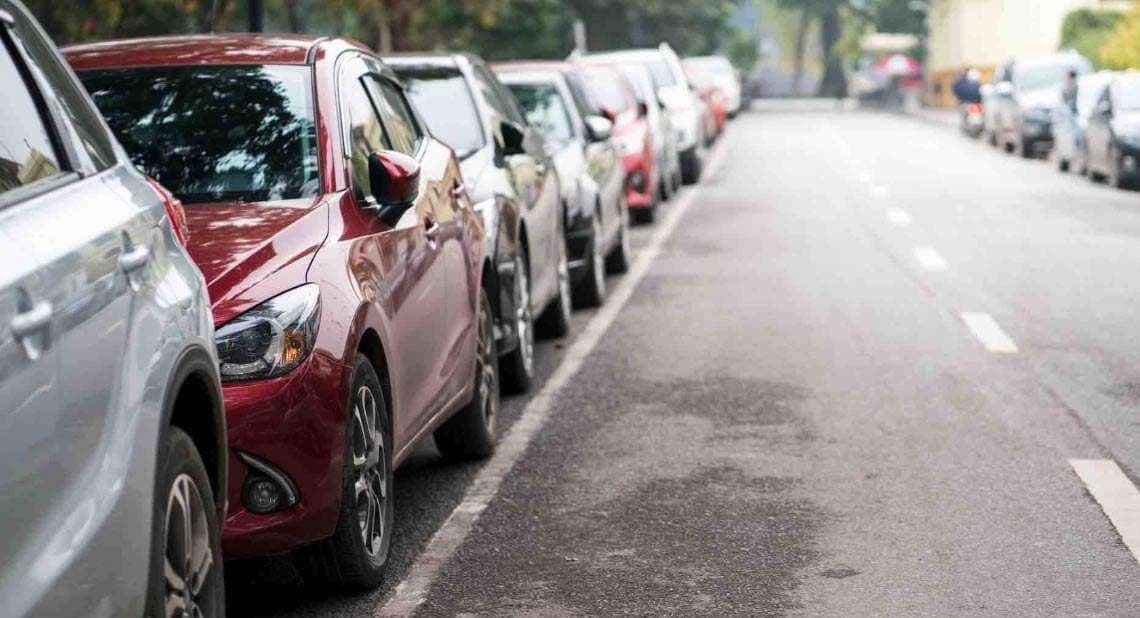
Should you straighten your wheels when you park?
The advice is real, but not for the reason most people give
Straightening your wheels when you park is mostly about safety and habit, not about saving your steering from overnight damage. A parked car with the engine off puts almost no strain on the steering, whether the wheels are dead straight or cranked to one side. The part that genuinely wears your power steering is holding the wheel hard against its end stop while the engine is running. And on a slope, the way you leave your wheels is a real safety decision: if the handbrake ever slips, it chooses whether the car rolls into the kerb or into traffic.
The short version
A parked car with the engine off puts almost no strain on the steering, wheels turned or straight.
The real strain is holding the wheel at full lock with the engine running, so do not pin it against the stop.
On a slope, turn the wheels so a runaway rolls into the kerb or off the road, never into traffic.
Straightening on flat ground is a good habit for a clean pull-away, not a rule you must obey.
The overnight-damage story is mostly a myth
You will find plenty of articles telling you that leaving your wheels turned loads up the steering and slowly damages it. Take that with a pinch of salt. Once the engine is off and the car is standing still, the steering is not under any real load. The rack, tie rods and joints are simply sitting at an angle, exactly as they do every time you drive around a long bend. There is no hydraulic pressure, no motor working, nothing being stressed. Your tyre sidewalls take a slightly different resting load, but that is negligible and nothing your tyres are not built for.
So the version that says you will ruin your steering does not really hold up. The useful version of this advice is about something else entirely.
The real strain: holding full lock with the engine running
Here is the part worth taking seriously. When you turn the wheel all the way to its end stop and hold it there with the engine running, a hydraulic power steering system can spike to around 2,000 psi as the pump pushes against a valve that has nowhere left to go. Hold that for more than a second or two and you overheat the fluid, stress the hoses and start wearing the pump internals and seals. Most manufacturers say the same thing in the manual: brief full lock is fine, holding it there is not.
This is exactly the situation you drift into when you are shuffling into a tight parking spot and leave the wheel jammed against the stop while you think about your next move. The fix is simple: do not hold the wheel pinned at full lock. Ease it back a fraction, and straighten up as you finish the manoeuvre.
Hydraulic or electric: does it change anything?
It changes how much it matters, not whether it matters. Older cars and many vans use a hydraulic pump driven off the engine, and those are the ones most exposed to the full-lock problem above. Most modern cars use electric power steering, or EPS, where a motor provides the assistance. An EPS system is smarter about it: when the control unit senses the rack has reached its stop, it automatically dials back the assistance to protect itself. That makes it more forgiving, but not immune. The motor still heats up and the rack is still loaded, so the same habit applies. And electrohydraulic setups, where an electric motor drives a hydraulic pump, inherit the hydraulic system weakness.
Bottom line for both types: it is the holding against the stop with the engine running that does the harm, not the wheels sitting turned once you have switched off.
The habit that genuinely matters: parking on a slope
This is the one worth making automatic. If you park on a hill and your handbrake ever fails, or you forget it, the front wheels decide where a runaway car goes. Aim them so the car rolls away from traffic and toward something that will stop it. The simple principle: point the wheels so that if the car moves, it heads into the kerb or onto the verge, never out into the road.
Facing downhill: turn the wheels toward the kerb, so a rolling car noses into it and stops.
Facing uphill with a kerb: turn the wheels away from the kerb and let the car settle back a few centimetres until the tyre rests against it.
Uphill or downhill with no kerb: turn the wheels toward the edge of the road, so a runaway rolls onto the shoulder and away from traffic.
That last case is the everyday one on open roads, and it is the smart default: whatever the gradient, if there is no kerb to catch the car, aim it off the road rather than into the lane. Leave it in gear as well, or in P for an automatic, and set the handbrake firmly. The turned wheels are your backup if any of that lets go.
So should you bother straightening on flat ground?
Yes, but for low-stakes reasons, not because your steering is at risk. Straight wheels give you a predictable, controlled pull-away, especially in a tight space or when someone has parked close. They also keep a turned tyre from resting hard against a kerb overnight, which is its own small risk to your tyres and wheels. And they are simply tidier, your car sits square in the bay. None of that is urgent, so if you occasionally leave them turned on the flat, nothing bad happens. It is a good habit, not a rule you are breaking. If you are shopping for your next car, you can browse the latest listings on AutoNext.
Frequently asked questions
Does parking with the wheels turned damage the steering?
Not in any meaningful way once the engine is off. A stationary car with the engine off puts no hydraulic or motor load on the steering; the components just rest at an angle. The real strain comes from holding the wheel against its end stop while the engine is running, not from the wheels sitting turned while parked.
How long can I safely hold the steering at full lock?
Only a second or two. In a hydraulic system, holding full lock builds up to around 2,000 psi and quickly overheats the fluid and wears the pump. Electric power steering reduces its own assistance at the stop, but the motor still heats up, so the same advice applies: do not hold it there.
Which way should I turn my wheels when parking on a hill?
Aim them so a runaway car rolls away from traffic. Downhill, turn toward the kerb. Uphill with a kerb, turn away from it and let the car settle back against it. With no kerb, turn toward the edge of the road so the car would roll onto the verge, not into the lane.
Is this different for electric power steering?
Slightly. EPS is more forgiving because the control unit cuts assistance when the rack hits its stop, but it is not immune, the motor still heats under load. Hydraulic and electrohydraulic systems are the ones most affected by holding full lock.
Do I still need the handbrake if my wheels are turned?
Yes, always. Turned wheels are a backup, not a substitute. Set the handbrake firmly and leave the car in gear or in P. The wheel position only matters if that primary security fails.