Your dashcam is not the problem, the fact that it never stops recording is
No European country is going to fine you for owning a dashcam. What gets fined is what the camera does on all the days you do not crash.
A dashcam feels like a purely defensive purchase. You buy it because somebody else might one day be confidently wrong about who had priority, and until that day it costs you nothing. European data protection law does not see a witness sitting behind your mirror. It sees a private individual filming strangers on a public road, continuously, for months, and it asks the same question it asks of any camera pointed at people: what is this recording for, and does that purpose justify the intrusion. The European Data Protection Board answered for dashcams specifically in its Guidelines 3/2019 on processing of personal data through video devices, adopted in final form on 29 January 2020. In the section on what people can reasonably expect, it takes the case of a camera fitted precisely to collect evidence in an accident and says the thing almost no owner has considered: it is important that such a camera is not constantly recording traffic and the people near the road, because an interest in having footage for an accident that is still purely theoretical cannot justify an interference that serious. Read that once and the subject rearranges itself. Whether your dashcam is defensible has very little to do with which border you have just crossed. It is decided by how long your loop is, and by what happens to a file on the overwhelming majority of days when nothing at all happens.
The European rule is written about the recording loop, not about the camera
Almost every dashcam sold in Europe can already be set up the way the guidance wants, and almost nobody bothers, because the box does not explain why it matters. A defensible setup is a short loop, typically one to three minutes, that overwrites itself endlessly, combined with an impact sensor that locks a clip only when the car is hit or thrown about, and no habit of hoarding the card. What that produces is a camera which, on an ordinary Tuesday, has retained nothing about anybody. The version that gets you into trouble is the one running a large card as a rolling archive of every journey you have made since spring, because that is no longer evidence collection, it is a private surveillance record of public space that happens to be moving. Europe has form for deciding what the equipment in your car is allowed to do by default while leaving the driver a switch, and the speed warning that now beeps in every new car is the clearest example. The dashcam is the mirror image of that: nobody sets the default for you, so the setting is yours to get right.
Austria has actually priced this, and the invoice is smaller and stranger than the internet claims
Austria, Luxembourg and Portugal are the three European Union countries where the honest advice is to leave the camera unplugged and in the glovebox, and Switzerland belongs on the same list. Austria is the one worth understanding, because it is the one that has published numbers. The Austrian data protection authority decided a case on 27 September 2018 concerning a private driver with two motion-activated dashcams, one filming forward through the windscreen and one filming back through the rear window, recording to an SD card. The total penalty was 300 euros: 220 euros for operating the cameras and 80 euros for the missing signage, plus 30 euros of costs. That 80 euros is the detail worth carrying around, because it tells you the authority was not treating this as a bizarre foreign gadget but as ordinary video surveillance that had failed to identify itself. The motoring club ÖAMTC frames the Austrian position in one line that travels well: owning the camera is not what is prohibited, monitoring public space with it is. The five-figure fines that circulate in holiday articles are theoretical ceilings from the Austrian data protection act, not what actually landed on a driver.
Germany let the footage into court without ever declaring the recording lawful
The German position is the one people quote at each other most often and understand least, and it is genuinely two answers rather than one. On 15 May 2018 the Federal Court of Justice ruled in case VI ZR 233/17 that dashcam footage may be used as evidence in a civil claim after a traffic accident, following a balancing of the interests at stake. What it did not do was bless the recording. Permanent, unprompted filming of everything in front of the car remained a breach of data protection law in the same judgment, which leaves German drivers in the odd position of holding footage a court will look at and a method a supervisory authority could still fine them for. The practical reading is the same as everywhere else on the continent: short loop, event-triggered saving, nothing archived. Do that and both halves of the German answer point the same way for once.
The upload is where nearly everyone actually breaks the law
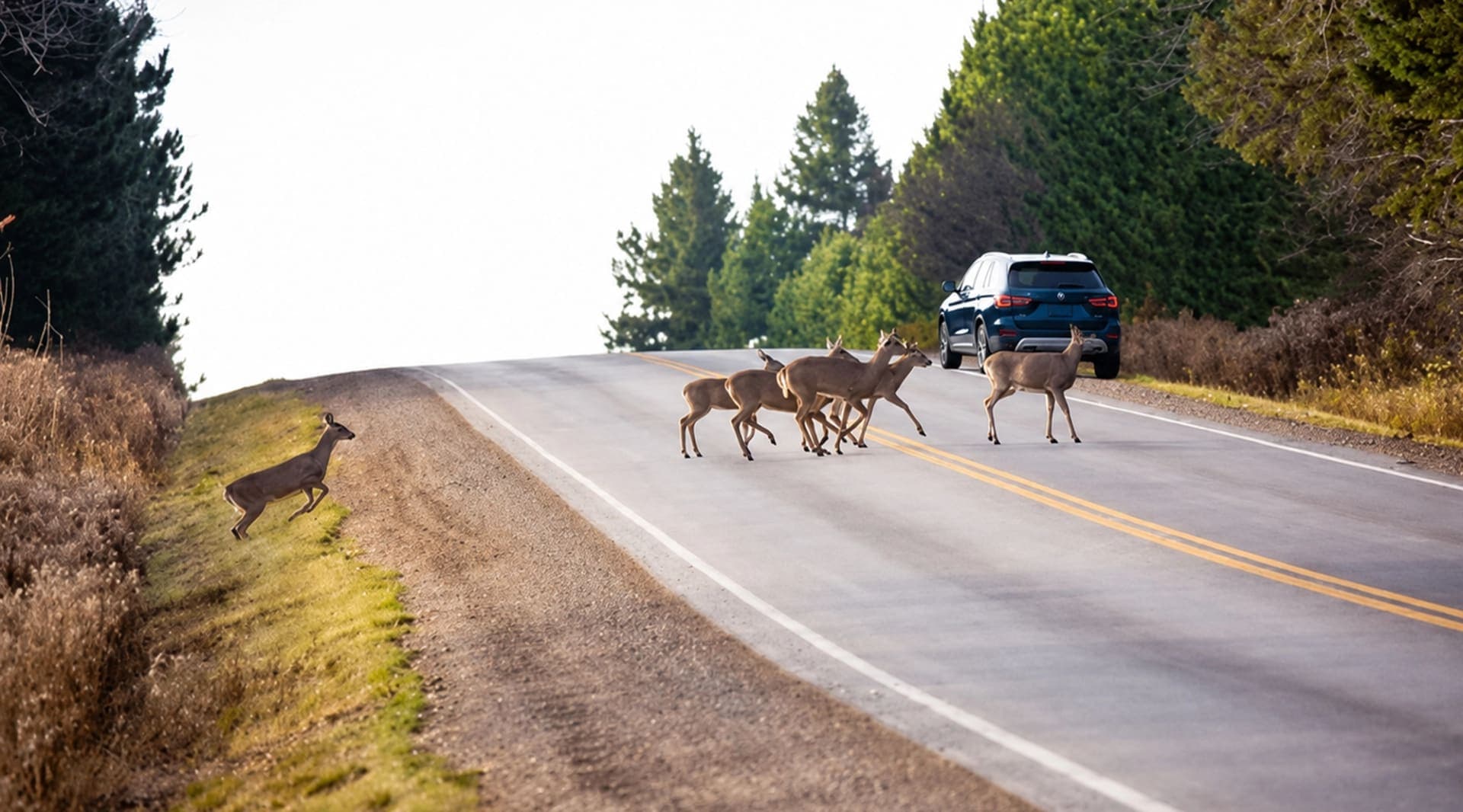
The idea that filming for your own purposes is a private matter has a specific limit, and the Court of Justice drew it in 2014 in the Ryneš case, C-212/13, which held that video recording covering public space is not covered by the exemption for purely personal or household activity. Everything that follows from that lands on the driver. Handing your file to the police or your own insurer after a crash is normal and expected, and in Belgium the rule goes one step further than most owners realise: you are required to tell the other party at first contact that you have a dashcam. Sending the same clip to social media is a different act entirely, and the Belgian data protection authority is blunt that consent from the people filmed would be needed first, which in practice means it does not happen. Blurring a plate does not fix it either, because the vehicle and the location together still identify somebody. It is worth remembering what the footage is really for: your insurer will use a clear, unedited file to work out fault, and the payout that follows is still an opinion you are allowed to disagree with. The same goes for the incidents where there is no other driver to argue with at all, such as what you owe the road and the animal after hitting a deer, where a locked thirty-second clip is worth more than an hour of unlocked road.
What to actually do
Ten minutes in the settings menu and one habit at the roadside is the whole of it.
Set the loop to one to three minutes and let it overwrite. The temptation is to buy the biggest card and keep everything, and that is exactly the choice that turns a witness into a surveillance system.
Test the impact sensor before you need it. Drive over a speed bump a little briskly and check that a clip has actually been locked into the protected folder. A G-sensor set to its least sensitive position saves nothing at all in a light collision.
Turn continuous parking mode off, or accept that it is the hardest use to defend anywhere in Europe. A parked car filming a public street for hours is plain video surveillance, with none of the accident argument behind it.
Switch off cabin audio unless you have a specific reason for it. Recording your passengers and anyone leaning in at a window adds a category of personal data you almost certainly do not need.
Mount it high, behind the mirror, inside the wiper sweep, with the cable tucked into the headlining. Keep it clear of the black patch behind the mirror where your car's own forward camera lives, and out of the airbag deployment path on the pillar.
Before Austria, Luxembourg, Portugal or Switzerland, unplug it and put the whole thing in the glovebox. A camera on the windscreen is what draws attention at a roadside check, and the suction mark on the glass is not evidence of anything.
If you have a collision in Belgium, tell the other party at first contact that you have a dashcam. It costs you nothing, it is what the rules ask, and it tends to shorten the conversation about what happened.
Hand over the original file, not a trimmed one. Copy the whole locked clip off the card with its timestamp intact, keep a second copy, and let the insurer or the police do the cutting. Edited footage is the footage that gets dismissed.
Do not post it. Not the plate, not the face, not for awareness, not in a group with two thousand members. That single decision is the one that moves you from a driver with evidence to a person processing other people's data in public.
Frequently asked questions
Is a dashcam legal in Europe?
In most of Europe, yes, with conditions, and there is no single European law that settles it. Fitting and using one is accepted across the great majority of countries. Austria, Luxembourg and Portugal are the practical exceptions inside the European Union, and Switzerland restricts it heavily. Everywhere else the question turns into how the camera is set up, and the European guidance is consistent: a device that films continuously is far harder to justify than one that overwrites itself and keeps a file only when something happens.
Can I use my footage against the other driver?
Usually, and Germany is the clearest proof of it. The Federal Court of Justice held in 2018 that dashcam footage is admissible in a civil accident claim even where the recording itself sat uneasily with data protection law. Courts decide admissibility case by case, and footage on its own rarely settles anything: it works alongside the accident statement, the damage and the positions of the cars. Keep the original file and do not touch it.
Can I put the video online if I blur the number plate?
Treat the answer as no. Once footage of identifiable people leaves your private circle, the exemption for purely personal activity stops applying, which is what the Court of Justice established in the Ryneš case in 2014. Belgium's data protection authority puts it plainly: publishing means asking the people filmed for permission first. Blurring helps less than people assume, because a car, a street and a timestamp together still point at someone.
What about parking mode while the car is left on the street?
This is the weakest position of all, because the accident justification disappears the moment you walk away. A camera filming a public street for six hours is doing what a fixed surveillance camera does, without the signage, the notices or the legal basis a shopkeeper would need. If you want protection against being hit while parked, use a mode that wakes on impact and records a short clip rather than one that films the pavement all evening.
Am I really going to be fined for this on holiday?
The realistic figure is smaller than the headlines and the reasoning is more interesting. The Austrian case from September 2018 ended at 300 euros, of which 80 was purely for not marking the vehicle as carrying cameras. The five-figure numbers quoted in travel articles are statutory ceilings rather than what drivers have paid. The sensible response is proportionate too: in the four countries that restrict it, take the camera off the glass and drive.