The branch on your roof is only a storm if the wind reached a number in your policy
A branch falling on a parked car is the same event in every country in Europe. Whether it counts as a storm is a number, and the number is not the same in any two policies.
Autumn is the season when European insurers stop selling storm cover and start defining it. The word looks like plain language and behaves like a technical term, because in most motor policies on the continent it is one. German conditions are the clearest example: partial comprehensive cover pays for Sturm damage from wind force 8, described as stormy wind, meaning from 62 km/h upward, and Allianz spells out that it is the policyholder who has to demonstrate the wind got there, for instance using measurement data from the Deutscher Wetterdienst. Dutch insurers work to a lower bar and a different institute. The condition there is that the storm reached at least wind force 7, and the insurer checks it against KNMI records. France sets no statutory figure at all and leaves the intensity to whatever your contract says, which is why French guidance tells drivers to gather press reports of damage in their own commune and, if necessary, to buy a weather certificate from Meteo-France for around 70 euros. Belgium files the whole thing under natural forces inside a mini or full omnium, with some insurers borrowing the Royal Meteorological Institute's definition of storm wind. Same branch, same roof, four different answers. And the wind threshold is only half of what your policy is doing, because the other half is water, where continental practice draws a line that is easy to remember and very expensive to cross.
The wind threshold sits in your conditions, and proving it was reached is your job
Almost everyone assumes the insurer looks up the weather. It works the other way around. In German motor conditions the burden falls on the policyholder to establish that the insured event actually occurred, which for a storm claim means producing evidence that wind force 8 was measured near enough to the car, and the Deutscher Wetterdienst will supply the reading for a given time and place on request. The Dutch version of the same logic is a check against KNMI data for wind force 7, and the French version is the most exposed of the three, because with no figure written into law the insurer's own contract decides, and the driver ends up buying a Meteo-France certificate to prove a point the policy never quantified. All of this is trivially cheap on the night and awkward a fortnight later, which is the practical lesson: the moment the warning goes out, screenshot it. A national met office warning, a local wind reading and a timestamp cost nothing while the storm is happening and are the whole case afterwards.
Third-party cover pays nothing, and the tier just above it is where the weather lives
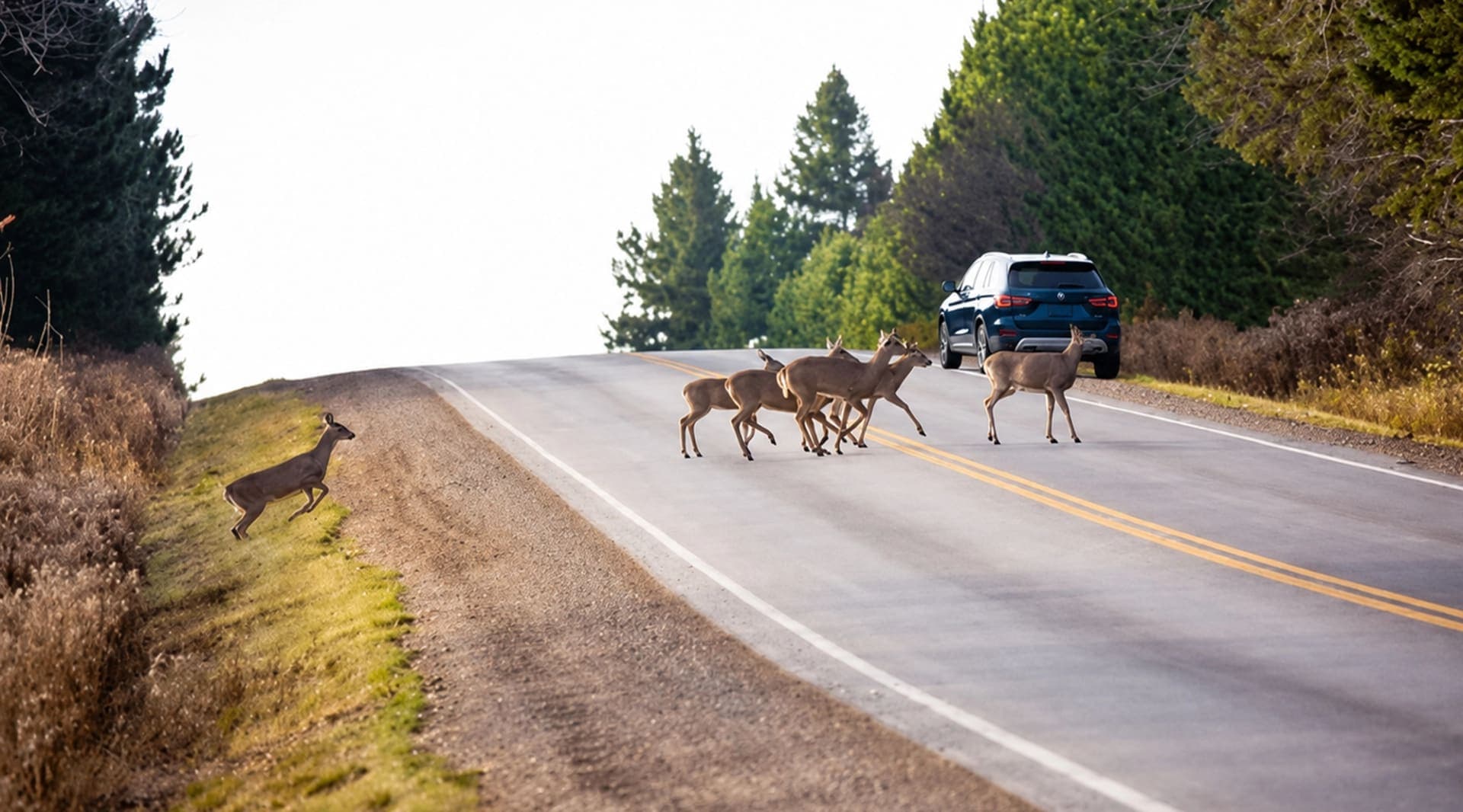
A third-party policy, called BA in Belgium, WA in the Netherlands and Haftpflicht in Germany, covers damage you do to other people. It has never covered the tree that fell on your own roof, and no amount of wind changes that. Storm, hail, flood, fire, theft, glass breakage and collisions with animals all sit one tier up, in the cover variously sold as Teilkasko, beperkt casco or WA-plus, mini-omnium or partial comprehensive. That tier is worth pricing properly on an older car, because it is a fraction of the cost of full cover and it carries the entire list of things that happen to a car without anybody driving it badly. It is the same cover that answers what happens when a deer walks into the road in front of you, and the excess is not always what you expect either: Belgian insurers commonly apply no deductible at all to a natural forces claim, while a French storm claim typically carries a franchise in the region of 380 euros.
If the water comes to the car you are covered, if the car goes to the water you may not be
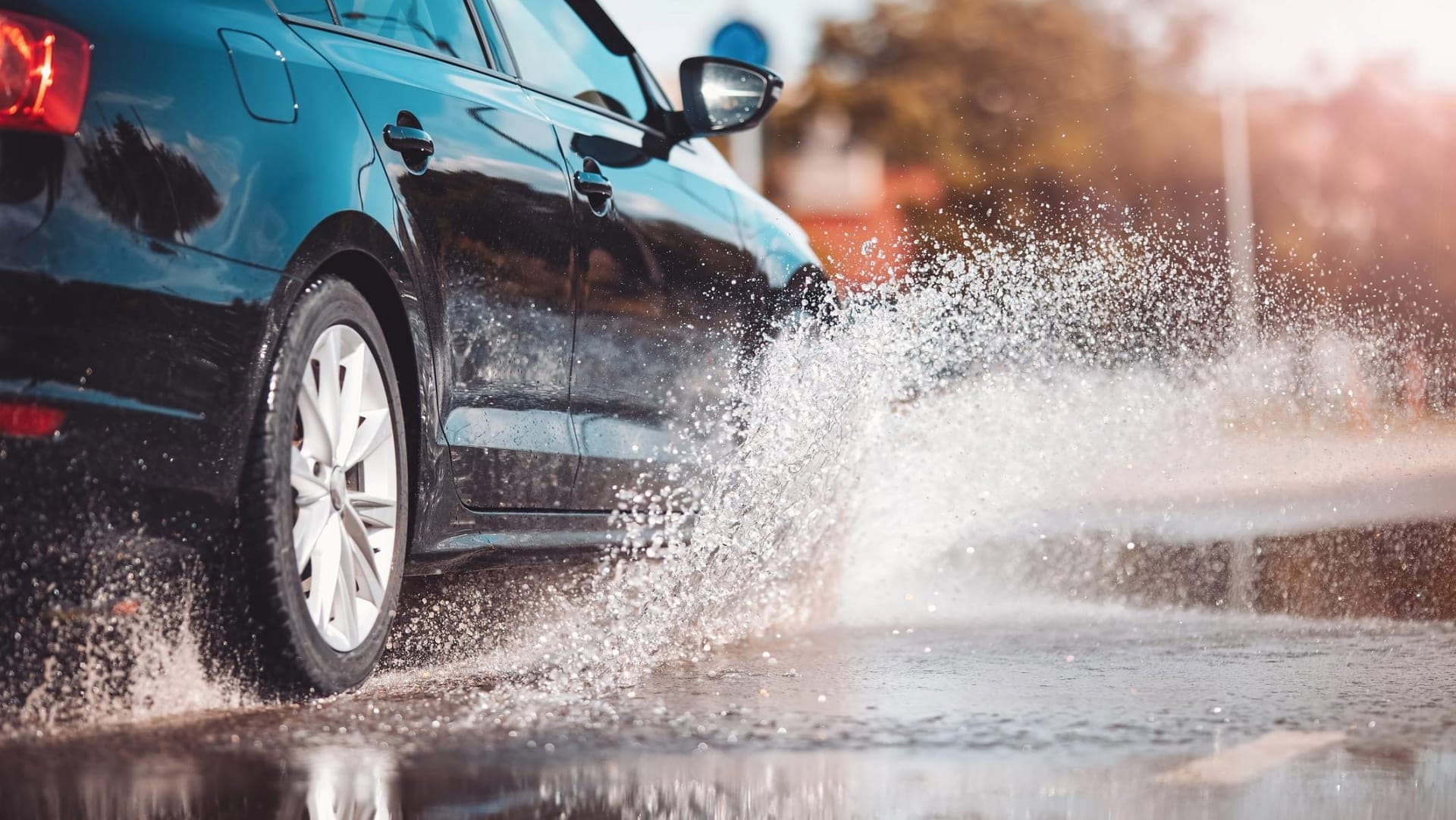
German practice compresses the whole of flood cover into one sentence worth memorising: if the water comes to the car, partial comprehensive answers for it, and if the car comes to the water, it becomes a question for full comprehensive cover instead. A parked car standing in a flooded street is a covered elemental event. A car driven into a flooded underpass that sucks water into the engine is not, because in the insurer's reading it was not the flood that caused the damage, it was the driving. Full comprehensive can still pay in that situation, but it is entitled to reduce the payout for gross negligence, and driving through a visibly flooded underpass past warning signs is the textbook example of it. There is one genuine exception, which is water arriving so suddenly that the driver had no realistic chance to stop the engine. Everything else in that scenario is decided in the ten seconds after the car stops, and the rule there is absolute: do not restart it. Cranking a soaked engine is what turns an expensive dry-out into a bent connecting rod, because water does not compress. The same instinct that makes people press on through standing water is the one worth arguing with in autumn generally, since the first rain after a dry spell is more slippery than a downpour.
A storm claim is a no-fault claim, which is why it usually leaves your discount alone
This is the part that changes behaviour, because a lot of drivers absorb hail damage out of their own pocket on the assumption that claiming will cost them more in premium later. In most European bonus-malus systems it will not. Luxembourg's official scale is explicit that natural events such as storm and hail never move the material damage bonus-malus, even when the insurer pays out, and Dutch guidance says a storm claim usually does not cost you claim-free years. The logic is the same everywhere the system is properly built: you cannot be downgraded for something you did not cause. Two things still deserve a phone call before you commit. Ask whether your insurer counts the claim toward an internal claims-frequency review even though the scale does not move, and ask what they intend to do with a car carrying two hundred small hail dents, because the repair estimate on panel work like that climbs fast and the answer may be a total loss offer rather than a repair. If it goes that way, remember that the payout on a written-off car is an opinion you are allowed to disagree with.
What to actually do
Most of this is done tonight, in your policy document, and the rest is done in the twenty minutes after the wind drops.
Find the storm clause in your own conditions and look for the number. German policies name wind force 8, from 62 km/h. Dutch policies name wind force 7. If yours names no figure at all, that is not generosity, it means the insurer assesses it case by case and you should know that before the branch lands.
Check which tier you actually hold, not which one you think you hold. If the policy is third party only, every one of these events is yours to pay for. Partial comprehensive is the tier that carries storm, hail, flood, fire, theft, glass and animals.
Screenshot the weather warning on the night, not the week after. The national met office alert and the nearest wind reading, with the time visible. It is free during the storm and costs around 70 euros as a Meteo-France certificate once you need it formally.
Photograph the scene before you move the car. The branch still on the roof, a wide shot showing the tree it came off, the plate in frame, and the damage close up. A car already towed to a safe spot is a car with no context left.
Never restart an engine that stopped in water. Not to move it, not to check whether it will catch. Have it towed and tell the garage and the insurer plainly that the engine stalled in standing water.
Refuse any standing water where you cannot see the road surface through it. Turning around and adding twenty minutes is the cheapest decision available, and it is also the one that keeps a gross negligence argument off the table.
Report inside the deadline, which is measured in days. France expects a claim within five working days. Waiting to see how bad the damage looks once it dries out is how a valid claim becomes a late one.
Ask specifically what excess applies to a natural forces claim. It is frequently not the standard one. Belgian insurers commonly waive the deductible entirely for storm and hail, which can make a claim worth filing that you had written off as too small.
Ask, before you claim, whether it moves your bonus-malus, and get the answer in writing. In most of Europe a no-fault weather claim does not, and that single confirmation is usually what decides whether the hail dents get repaired or lived with.
Frequently asked questions
Does my car insurance cover a tree falling on my car?
Only if you hold partial comprehensive cover or better, and only if the wind met whatever threshold your policy sets. Third party cover never pays for damage to your own car. If the tree stood on identifiable land and was visibly rotten or neglected, there is a separate route through the owner's liability, but that is a slower argument and it does not replace having the right cover in the first place.
Who decides whether it counted as a storm?
The contract sets the figure and the national weather service settles whether it was reached. German conditions require wind force 8 and the policyholder proves it, typically with Deutscher Wetterdienst measurements. Dutch insurers check wind force 7 against KNMI records. In France the intensity is whatever the contract says, so the driver assembles the evidence, which can include a paid Meteo-France certificate and reports of damage elsewhere in the same municipality.
Is flood damage to a parked car covered?
Normally yes, under the same partial comprehensive tier that handles storm and hail, because the water came to a stationary car and nothing the driver did caused it. Document the water line on the bodywork while it is still visible, because how deep the water reached is what determines whether this is a carpet and electronics job or a total loss.
My engine died in a flooded underpass. Will they pay?
This is the hardest claim in the whole category. Partial comprehensive generally declines it, on the reasoning that the damage was caused by driving rather than by the flood. Full comprehensive can cover it but is entitled to cut the payout for gross negligence, and passing warning signs into visibly deep water is exactly what that phrase describes. The claim survives best where the water rose suddenly and no reasonable driver could have stopped in time. Whatever the circumstances, do not try to restart the engine, because a second attempt to crank it can convert a recoverable car into a scrapped one.
Will a hail claim cost me my no-claims discount?
Usually not, because it is a claim without fault. Luxembourg's official bonus-malus scale states outright that natural events never affect the material damage rating, and Dutch guidance says the same about claim-free years. The caveat is that a bonus-malus scale and an insurer's own renewal appetite are two different things, so ask whether the claim is logged against your record even when it does not move you down the ladder.