Volvo doubles the XC60's battery to 37.9 kWh for 200 km electric
Volvo's XC60 now carries a bigger battery than a Dacia Spring
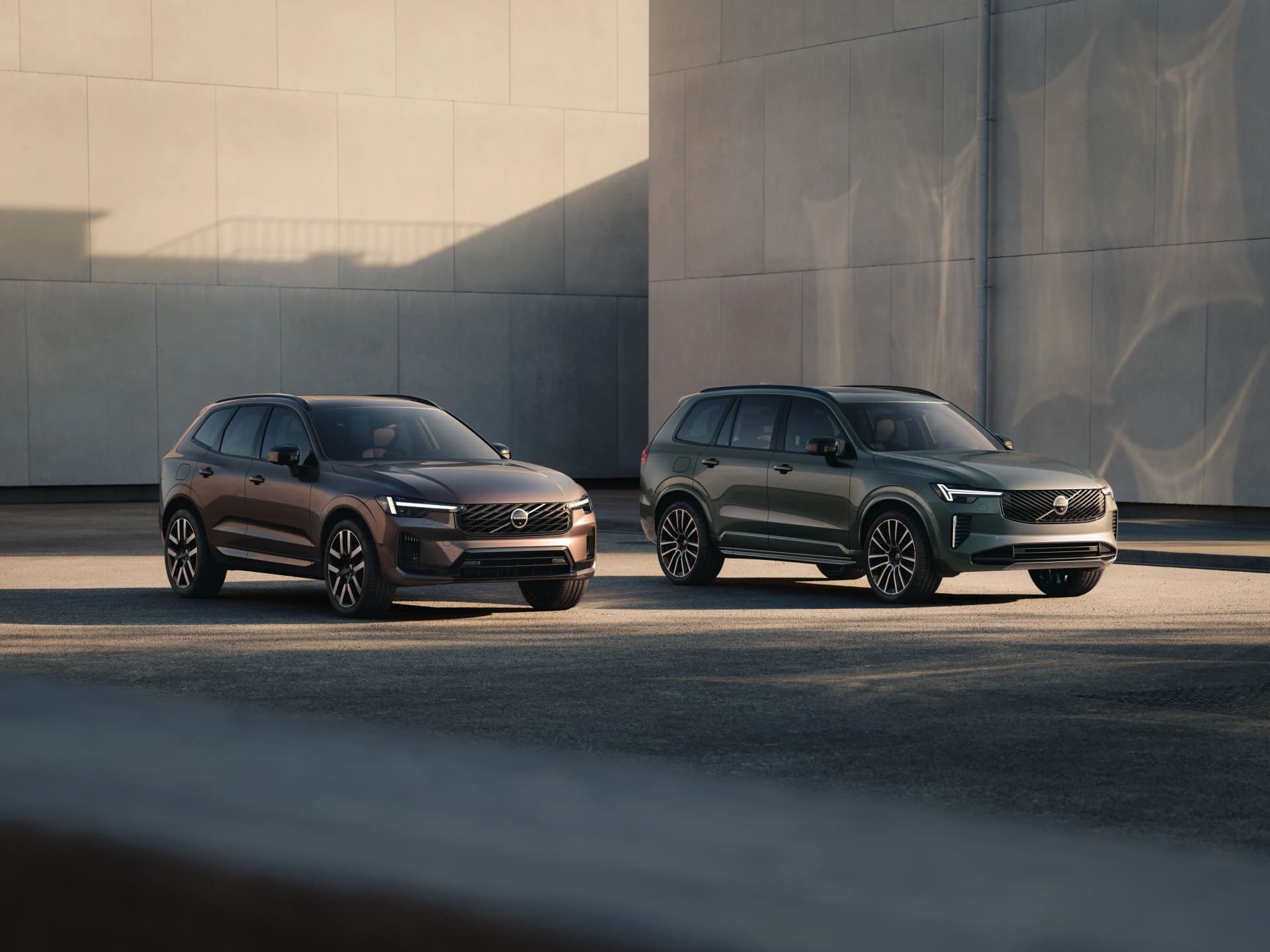
Volvo revealed the second update of its best-selling XC60 on Tuesday, and the headline is a battery. The plug-in hybrid's pack grows from 18.8 to 37.9 kWh, more than the 26.8 kWh a Dacia Spring carries, and WLTP electric range rises from 81 to 200 km in the T6. The XC90 gets the same hardware for 164 km. Both reach European customers in January 2027.
XC60 T6 and T8: 37.9 kWh under the floor, 200 km WLTP and 23 g/km
The new pack no longer fits under the rear seats, so Volvo has moved it under the floor, where an electric car keeps its battery. The T6 makes 356 hp and is rated at 200 km and 23 g/km. The T8 keeps the 455 hp and 709 Nm the current car already has, and on 21-inch wheels is rated at 189 km and 26 g/km, with 0 to 100 km/h in 4.8 seconds. Combined range is quoted at 1,200 km, consumption at 1.0 to 1.1 l/100 km. The front metalwork and tailgate are new, the Thor's Hammer lights take the slimmer form that arrived on the EX40 last week, and Google Gemini runs on the 11.2-inch screen.
The XC90 gets 164 km and 35 g/km from the same 455 hp T8
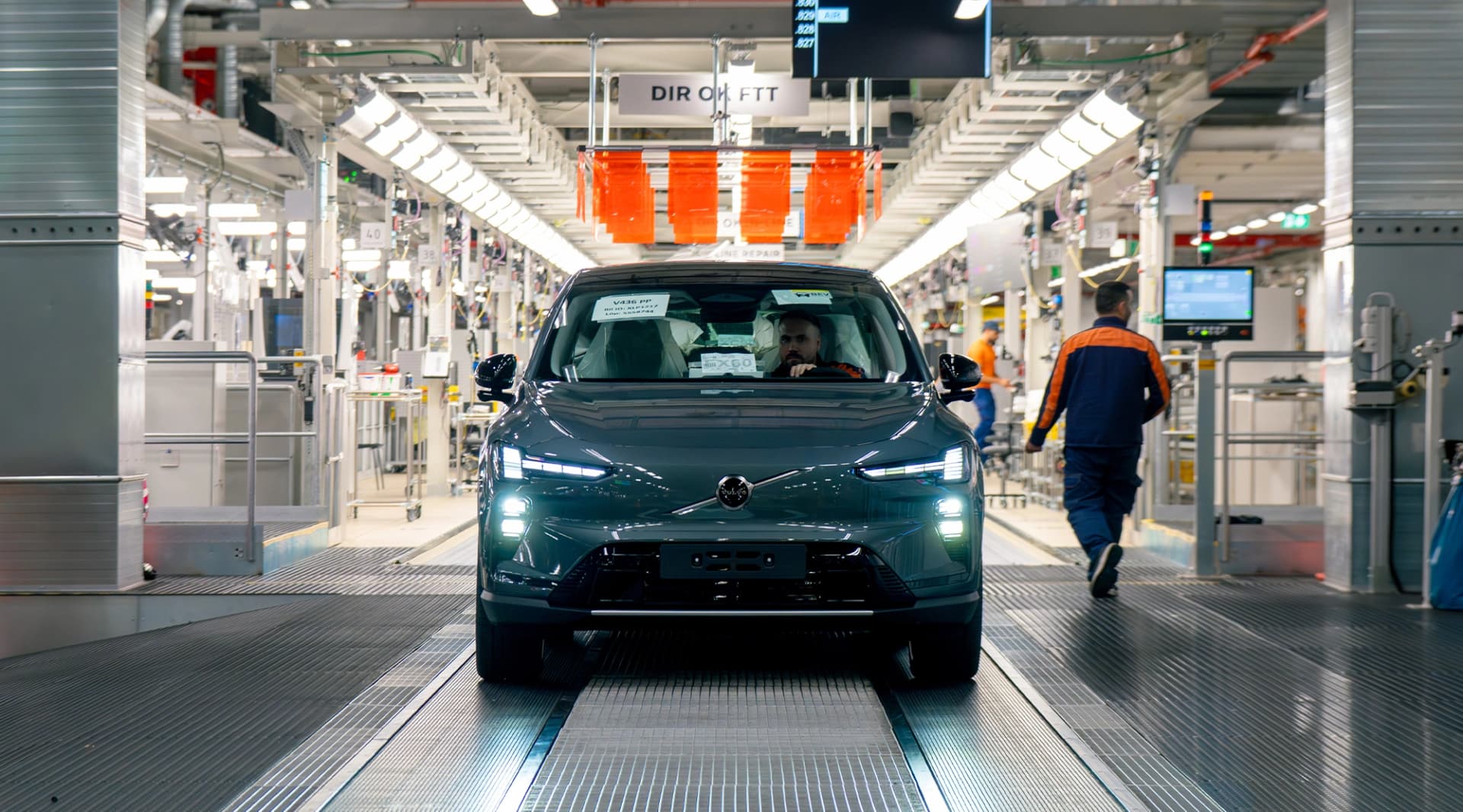
The XC90 takes the identical 37.9 kWh battery and 455 hp T8 drivetrain with no further styling changes, because its restyle arrived last year. It is rated at 164 km of electric range and 35 g/km, does 0 to 100 km/h in 5.2 seconds, keeps seven seats as standard and quotes about 1,100 km combined. Production starts shortly, XC60 first, with the first European cars registered in January 2027 and the United States following late next year as a 2028 model. Volvo has not given prices. Both are products of the September 2024 retreat from an all-electric 2030, and they will sell alongside the EX60 that has been in production since April.
Lynk & Co 08 has offered 200 km from 39.6 kWh in Europe since 2024
Volvo is catching up with its own group. The Lynk & Co 08, on Geely's CMA Evo platform, has sold in Europe since 2024 with a 39.6 kWh battery and the same 200 km WLTP figure, and crossed the Sahara on it last month. Against the German rivals the XC60 now stands alone: the Mercedes GLC 350e carries 31.2 kWh for up to 130 km, the BMW X5 xDrive50e manages about 110 km, and the Range Rover Sport P460e turns a similar 38.2 kWh into around 120 km. Two hundred kilometres from under 40 kWh on a platform that dates from 2017 is the more impressive number.
Regulation (EU) 2026/1764 rewrites the plug-in formula from 29 November 2026
A plug-in hybrid's official CO2 depends on the utility factor, the share of driving the test assumes happens on battery, and the EU is correcting that curve in two steps because onboard fuel monitors showed 2024's PHEVs emitting 145 g/km against 24 on paper. The first step applied in 2025. The second, under Commission Implementing Regulation (EU) 2026/1764, applies to newly type-approved plug-in hybrids from 29 November 2026 and to every new registration from 29 November 2027. On the corrected curve a 60 km hybrid loses much of its paper advantage and a 200 km one keeps most of it. ACEA wants the second step scrapped before the Council debate on 12 October, and Volvo has just built the car that needs the lobbying least.
ICCT data: real electric driving fell to 17 percent as PHEV range rose to 68 km
The counter-evidence comes from the same monitors. The International Council on Clean Transportation's analysis of roughly 920,000 plug-in hybrids registered between 2021 and 2023 found the electric share of real driving fell from 26 to 17 percent while average electric range rose from 58 to 68 km, and that the longer the range, the wider the gap grew. Volvo's answer is behavioural: with 200 km, it says, most European commuters need one charge a week rather than the nightly plug-in a 60 km car demands. Nobody can know whether owners comply until the fleet is on the road, but the XC60 will be the first plug-in with a battery this size to enter the monitor dataset at volume. More than three million have been delivered since 2008.
AutoNext Take
Two hundred kilometres is the first plug-in range at which the weekly charge Volvo describes is physically plausible, and that makes this XC60 a test case rather than a facelift. Everything damning in the 2021 to 2023 fleet data was measured on hybrids averaging 68 km, whose owners could not get through a working week without the petrol engine; nobody has measured a 37.9 kWh one at volume because none has been sold at volume. Volvo's best-seller will be the first, and every one of them carries the fuel monitor that reports the answer.
That answer arrives in 2029, when the European Environment Agency publishes onboard data for cars registered in 2027. If XC60s registered that year average under 50 g/km, roughly twice their paper figure, the gap will be narrower than the plug-in fleet has shown in any year since reporting began in 2021, and ACEA will finally have evidence that range fixes the problem. If they land anywhere near the 145 g/km of the 2024 fleet, the bigger battery will have bought Volvo a compliance number and its drivers a heavier petrol SUV.
Follow us on Google News.
Set AutoNext as your preferred source on Google Discover.