Half a degree of toe drags your tyre nine metres sideways in every kilometre
Three angles are set at every corner of your car, and only one of them is quietly spending your money.
Alignment is not one measurement but three, taken at each wheel, and they matter to you in very unequal amounts. Toe is the angle at which a wheel points inwards or outwards, seen from directly above the car. Camber is how far the top of the wheel leans in or out, seen from the front. Caster is the tilt of the whole steering axis seen from the side, the same geometry that makes a supermarket trolley wheel trail obediently behind its pivot instead of shopping in its own direction. Caster decides how the steering feels and how firmly it returns to centre. Camber decides how flat the tread sits on the road once the body leans into a corner. Toe decides whether the tyre rolls or scrubs, and since a car spends almost its whole life travelling in a straight line, toe is the angle that turns into money. The figures involved sound harmless: a family car is specified in minutes of arc, and the entire tolerance band is usually a fraction of a degree wide. What that fraction does over a year of ordinary commuting is not harmless at all. The strangest part is that the roadworthiness test you pay for every year or two is under no European obligation to look at it, because the directive that governs those tests lists wheel alignment as an item and then marks it as one that is not essential.
One degree of toe drags the tyre 17.5 metres sideways in every kilometre
The arithmetic is ordinary trigonometry and it is worth doing once, because it explains everything that follows. A wheel pointing one degree away from the direction the car is actually travelling is being dragged crabwise across the road for the whole time it rolls. Over a kilometre of forward travel that sideways component is the tangent of one degree multiplied by a thousand metres, which is 17.5 metres. Half a degree, still several times the entire factory tolerance on most cars, works out at 8.7 metres in every kilometre. Drive 15,000 km a year with that error and each affected tyre has been scraped sideways for roughly 130 kilometres, across a contact patch about the size of a postcard, while doing nothing more violent than following a motorway. That is why toe wear appears so quickly and so lopsidedly, and it is why the sideslip plate that some inspection lanes make you roll across reports its answer in exactly those units, metres per kilometre. Note what that plate is and is not: it reads the combined result of toe and camber from sideways displacement alone, without accounting for the load sitting on the wheel, so it screens for a problem rather than measuring either angle. On a heavy electric car the same error costs more per kilometre, because the tyres are already doing more work than they would on a petrol equivalent.
Camber and caster usually cannot be adjusted, so a bad reading means something is bent
This is the part that saves people from paying for the wrong job. On most cars with a MacPherson strut front end, and that is the majority of what Europe drives, the factory provides an adjustment for front toe and nothing else. Camber and caster are fixed by the shape and position of the parts themselves. So when a printout shows camber out of specification on one corner, the honest reading is not that the car needs adjusting, it is that a strut, a control arm, a collapsed bush or a subframe has moved, and the workshop is holding a damage report rather than a service quote. The wear patterns keep the two apart. Toe leaves feathered, sawtooth edges across the tread blocks that you can find in seconds with the flat of your hand: run your palm across the tread and it feels smooth in one direction and sharp in the other. Camber leaves smooth, even wear concentrated on a single shoulder with no feathering at all. Caster wears nothing, and instead announces itself as a car that pulls towards the side with less of it and a steering wheel that no longer springs back to centre on its own after a roundabout. The commonest cause of all three going out at once is a single hard impact, which is one of the bills that mounting a kerb carelessly eventually presents.
Why a front-only tracking job can leave your steering wheel crooked
Because a car follows its rear axle, not its bodywork. The direction the rear wheels collectively push the car in is called the thrust line, and the angle between that line and the geometric centreline of the body is the thrust angle. If the rear axle sits fractionally skewed, the car travels down the road very slightly crabwise, and the driver has to hold the steering wheel a few degrees off centre to keep it straight. Set the front toe on its own, referenced to the centreline of the body, and you have made the front wheels straight relative to a car that is not travelling in that direction, so the wheel stays crooked and the front tyres keep scrubbing. A four-wheel alignment measures all four corners and sets the front relative to the thrust line instead. This is worth insisting on even if your car has a simple torsion beam rear axle with nothing adjustable on it at all, because the point of measuring the rear is not to adjust it, it is to know what the front has to be set against. Ask for a printout with a before column, an after column, all four wheels and a thrust angle figure. Without the before column you have no way of knowing whether anything was ever wrong.
The free test that separates a geometry pull from a faulty tyre
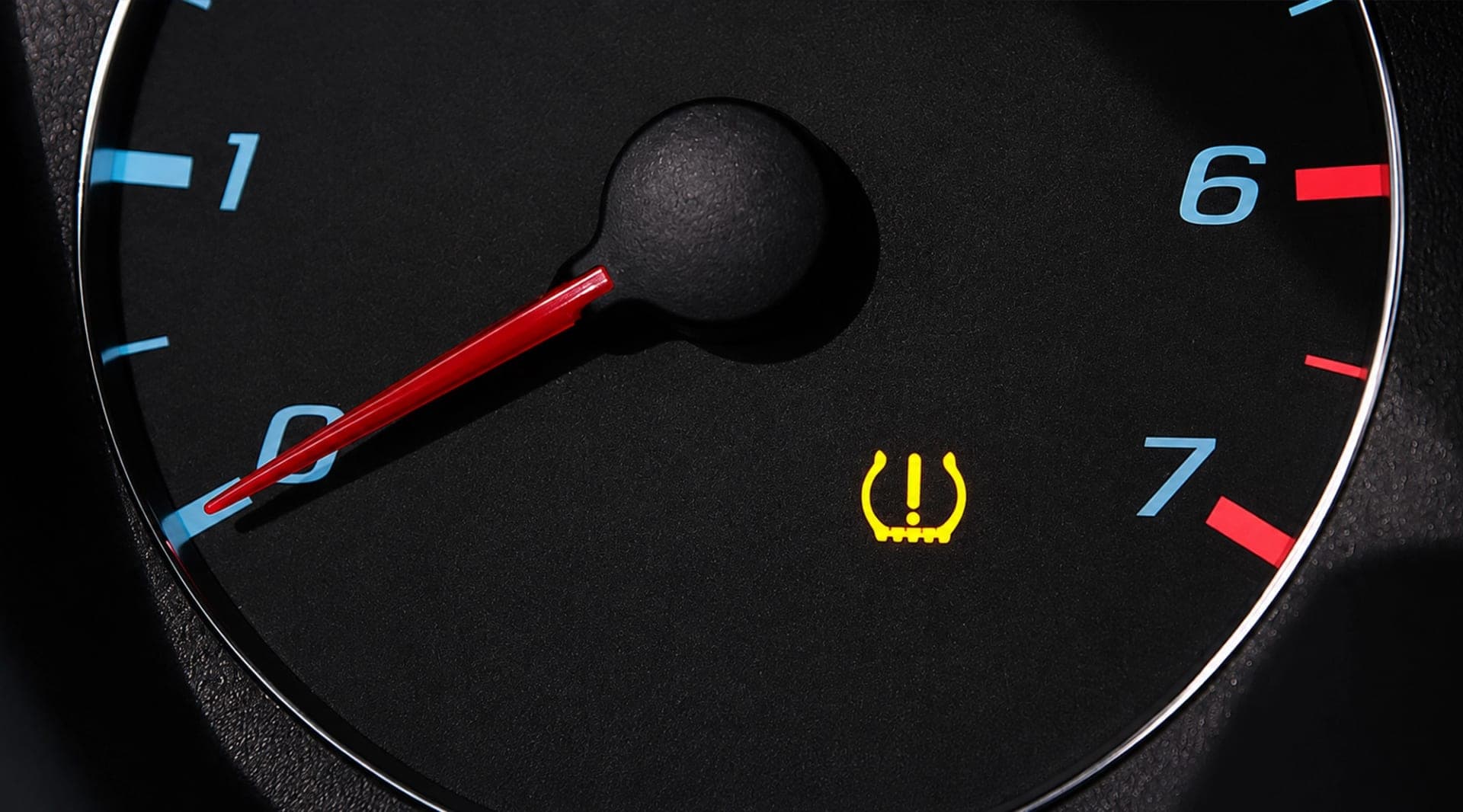
Swap your two front wheels side to side, then drive the same stretch of road again. If the pull reverses direction, the fault is inside one of the tyres rather than in the car, and no alignment rack on earth will cure it. The cause is conicity, a belt package that has cured very slightly off centre inside the casing, which makes the tyre behave like a shallow cone and steer gently towards one side. That tyre belongs on the rear axle or back with the supplier under warranty. If the pull stubbornly stays in the same direction after the swap, the fault is the car and the alignment is worth paying for. Two things to rule out before either. Check the cold pressures, because an underinflated front tyre pulls and wears its shoulders in a way that mimics geometry, and the light on your dashboard is not a pressure gauge. Then judge the pull on a flat surface rather than a normal road, because European roads are deliberately crowned to shed water and a gentle drift towards the kerb is the camber of the tarmac doing its job. Keep the symptoms separate too: a pull is a geometry complaint, but a steady shake through the steering wheel at 110 km/h with your foot nowhere near the brake is almost always a balancing problem, and an alignment will not touch it.
Adjusting toe moves where your car believes straight ahead is
On anything built in the last decade, an alignment is no longer purely mechanical work. The steering angle sensor has to be zeroed afterwards, because the car has just been given a new definition of straight and the old one is still stored. That matters more than it sounds, since lane keeping, lane centring and adaptive cruise all reference the vehicle's thrust line and the sensor's idea of zero when they decide where the middle of the lane is and whether you are drifting out of it. A car that has spent two years with its steering wheel held slightly off centre to compensate for a skewed rear axle has been feeding its assistance systems a false straight-ahead the whole time, which is one of the quieter explanations for lane keeping that nags on one side only. Many manufacturers also require the forward-facing camera or radar to be recalibrated after geometry work, which is a separate procedure on separate equipment. Worth one question before you book: ask whether the workshop resets the steering angle sensor and can recalibrate the driver assistance cameras, because a tyre shop with an excellent alignment rack and no calibration gear can hand you back a car set perfectly straight and still referenced to the old geometry.
What to actually do
Almost all of the value here is in diagnosing before you buy, because an alignment sold as a routine service is the easiest unnecessary invoice in the workshop.
Check cold tyre pressures before you blame anything else. An underinflated front tyre pulls and wears its shoulders exactly like a geometry fault, and ruling it out is free.
Run the flat of your hand across each front tread, inner edge to outer. Sharp sawtooth ridges that catch one way and feel smooth the other are toe. Even, smooth wear on one shoulder with no ridges is camber.
If the car pulls, swap the two front wheels side to side first. A pull that changes direction with them is a faulty tyre, not the alignment.
Ask for a four-wheel alignment rather than front tracking, even on a car with a non-adjustable torsion beam rear axle. The rear is the reference the front gets set against.
Insist on a printout with before and after figures for all four wheels and a thrust angle. No before column means no evidence anything needed doing.
If camber or caster reads out of specification on a strut-front car, ask which part is bent before agreeing to anything. On most cars those angles are not adjustable, so that reading is a damage report.
Have the geometry checked before new tyres are fitted, not after. Putting a fresh set on a car that is out of alignment simply buys the fault a new victim.
Get it checked after any pothole or kerb strike hard enough to make you wince, and after any steering or suspension component is replaced.
Ask whether the workshop resets the steering angle sensor and can recalibrate the forward camera. On a car with lane centring that is part of the job, not an extra.
Frequently asked questions
Does the roadworthiness test check my wheel alignment?
Not necessarily, and this surprises people. Annex I of the European roadworthiness directive does list wheel alignment, as item 2.4, with the method given as checking the alignment of the steered wheels with suitable equipment and the failure reason given as misalignment affecting straight-line running and directional stability. But it carries the marking the directive reserves for items that relate to the condition of the vehicle and its suitability for the road while not being considered essential in the context of a roadworthiness test. Member states handle it differently as a result, and some inspection lanes run a sideslip plate as a quick screen rather than a measurement. The practical consequence is worth internalising: a valid roadworthiness certificate in your glovebox is not evidence that your geometry is right, and a car can chew through a set of tyres in 15,000 km while holding one.
How often should alignment be checked?
It belongs to events rather than to dates, in the same way balancing does. The events are a hard impact, replacement of any steering or suspension part, a new set of tyres about to go on, or a symptom you can actually name: a pull, an off-centre steering wheel, or feathered wear you can feel with your hand. A car that has not been hit and has not had parts changed does not wander out of geometry by the calendar. What does change slowly is the rubber in the bushes, which softens over many years, so a well-used ten-year-old car can genuinely measure differently from the day it was built without anything dramatic having happened to it. Anyone selling you an annual alignment on an undamaged, symptom-free car is selling a habit.
My steering wheel sits off centre but the car drives straight. Is that alignment?
Usually yes, and usually the inexpensive version of it. Two things produce it. Either the total front toe is correct but was split unevenly between the left and right tie rods, so the wheels are right and the wheel in your hands is not, or the front was set to the body centreline while the rear axle points somewhere fractionally different. Both are corrected on the rack in the same visit. What you should not do is pull the steering wheel off the column and refit it straight, which is the traditional shortcut. On a modern car the steering angle sensor zero, the stability control and the lane keeping all take their reference from that position, so straightening the wheel by hand hides the symptom and quietly feeds every assistance system a lie.
What does it cost, and when is it actually worth paying for?
Across Western Europe a four-wheel alignment lands roughly between 60 and 120 euro, with German workshops commonly quoting 70 to 120 euro and British ones around 70 pounds for the four-wheel job, and city-centre premises at the top of whatever the local range is. Set that against a set of four tyres, which starts in the low hundreds and climbs steeply on larger wheels, and the case makes itself whenever there is a real reason to book. The trap is the other direction: paying for it on a schedule, or paying to have angles adjusted that your car does not allow to be adjusted. A workshop that measures, prints, shows you that everything is inside tolerance and charges you for the measurement has done you a service. One that adjusts camber on a strut car without mentioning why it moved has not.
Can I check it myself with a tape measure?
You can get a rough read on toe and nothing else. Mark the same point on the inside face of each front tyre at hub height, measure between the marks in front of the axle, roll the car forward half a turn so the marks sit behind the axle, and measure again. A smaller figure at the front means toe-in, a larger one means toe-out, and a big difference tells you something is genuinely wrong after a kerb strike. That is where it stops. The method cannot see camber, cannot see caster, cannot see the thrust angle of the rear axle, and cannot hold the car at the ride height and loading the manufacturer specified the figures for. Treat it as a free way to confirm a suspicion before you spend anything, not as an alternative to the rack.