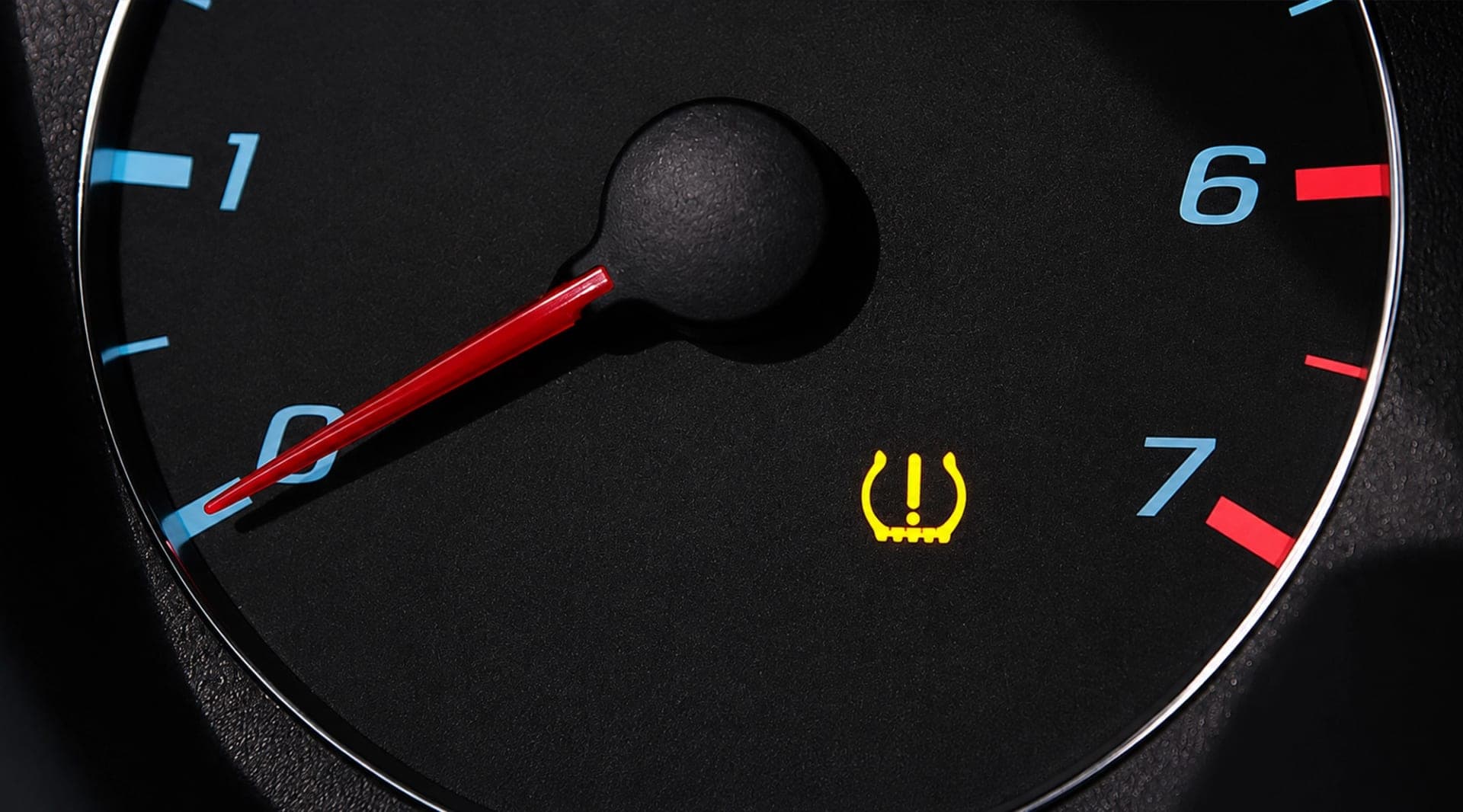
Your tyre pressure light is not a pressure gauge
The symbol on your dashboard knows less than you think
Every new passenger car registered in the EU since 1 November 2014 has had to monitor its tyre pressures and warn the driver. What nobody explains at handover is that two completely different technologies satisfy that rule, they behave nothing alike, and one of them has a blind spot big enough to drive a summer holiday through. Which one is fitted to your car decides how much you should trust that little horseshoe symbol, and how often you should still be reaching for a gauge yourself.
The short version
Since 1 November 2014 every new EU car must monitor tyre pressure, but two very different systems do it.
Direct systems use a real sensor in each wheel and show live pressures; the sensors last 5 to 10 years.
Indirect systems infer pressure from wheel speed, and can miss a slow loss spread evenly across all four tyres.
Whichever you have, still check your pressures with a gauge yourself, especially before a long trip.
Direct systems: a real sensor in every wheel
A direct system puts a small battery-powered sensor inside each wheel, usually built into the valve, measuring the actual air pressure and temperature and transmitting it by radio to the car. This is the system that shows you four live pressure readings on the infotainment screen, and it is precise enough to tell you which corner is going soft while you are still on the driveway. The trade-offs are physical ones. Those sensors run on sealed batteries that typically last somewhere between five and ten years and cannot be replaced on their own, so an ageing car eventually needs new sensors rather than a repair. They also have to be recognised by the car, which matters if you run a separate set of winter wheels, since that second set needs sensors of its own and, on many cars, a relearn procedure after every swap. And if you ever use the sealant can from the boot to get home, tell whoever repairs the tyre, because sealant sloshing around inside the wheel can finish off the sensor.
Indirect systems: clever arithmetic, not measurement
An indirect system has no pressure sensors at all. It borrows the ABS wheel speed sensors and watches for one wheel turning slightly faster than the others, which is what happens when a tyre goes soft, loses a fraction of its rolling radius and therefore has to spin a little more often to cover the same ground. Newer versions also analyse the vibration frequency of each wheel, which sharpens the picture. It is cheap, there is no battery to go flat, and nothing needs relearning when you fit your winter set. For one tyre picking up a nail, it works. The catch is hiding in the word comparison: the system knows that one wheel is behaving differently from the rest, but it has no idea what any of them actually contains.
The blind spot: all four soft at once
Because an indirect system reasons by comparison, a car whose four tyres have all drifted down together looks perfectly healthy to it. That is not some rare edge case, it is the normal way tyres lose air. A tyre gives up roughly a tenth of a bar a month simply through permeation of air out of the rubber, and pressure falls by about the same amount again for every ten degrees the ambient temperature drops. Leave a car unchecked from a warm spring through to a cold autumn morning and all four corners can easily be half a bar down, evenly, with no warning light at all. The car is not faulty. It is doing exactly what it was designed to do, which is spot a difference between wheels, and there is no difference to spot.
Even a direct system waits longer than you would
The regulation behind these systems sets the alarm deliberately late. A compliant monitoring system has to warn the driver once a tyre has fallen twenty per cent below its in-service pressure or reached 150 kPa, whichever of the two is the higher figure, and it is allowed up to ten minutes of cumulative driving to get around to it. In everyday terms, a tyre specified at 2.4 bar can sit at roughly 1.9 bar without a single light coming on. That is entirely legal, and it is also a tyre that is running hot, scrubbing its shoulders away, costing you fuel or range through extra rolling resistance, and responding worse than it should in an emergency lane change. The warning light is a last line of defence against a failure, not a maintenance reminder.
Why a loaded holiday car is the worst case
Summer touring stacks every risk factor on top of the others. A car carrying four people, a full boot and a roof box is running close to its maximum axle loads, on hot tarmac, at sustained motorway speed, quite possibly in a country whose limit is higher than the one you learned to drive under. Under-inflation plus heat plus load is the exact recipe that turns a tyre into a blowout. Look at the placard in the driver's door jamb or inside the fuel flap and you will usually find two columns of figures, one for normal load and one for full load. That second column is not a suggestion, and it is often 0.3 to 0.5 bar higher at the rear. Set those pressures on your driveway before you leave, not at the first service station after the border, because by then the tyres are hot and any reading you take will flatter them.
Heavier cars, and the damage a gauge cannot see
Weight makes all of this less forgiving, which is why battery-powered cars deserve a shorter interval between checks than the calendar in the handbook suggests, and why EVs tend to work through a set of tyres faster. While you are crouched at the valve, spend ten seconds looking at the tyre itself rather than only the pressure. A gauge tells you nothing about a bulge in the sidewall, a cut, or the flattened inner shoulder that comes from kerbing, and parking half on a kerb is harder on a car than it looks. Those are the faults that actually end a tyre's life, and they are the ones a monitoring system will never mention.
What to actually do
Five habits cover everything the car cannot do for you.
Check all four with your own gauge once a month and before any long trip. Cold means the car has stood for a few hours or driven less than about two kilometres, because driving warms the air and inflates the reading by a couple of tenths.
Use the full load column from the door placard when the car is packed, and set them back to the normal figures once the holiday is over.
After adjusting pressures on a car with an indirect system, run the reset or calibration routine in the menu. Skip it and the car keeps comparing against the old, wrong baseline it learned when the tyres were soft.
Include the spare if your car still carries one. A space saver at 1.0 bar is not a spare, it is a decoration, and it is monitored by nothing.
Read a light that flashes for a minute or so and then stays on as a fault in the monitoring system itself, usually a flat sensor battery or a wheel the car has not learned, rather than as a soft tyre.
A decent pencil or digital gauge costs less than a tank of fuel and is more accurate than most forecourt machines, which lead hard lives and are rarely calibrated. If the numbers you find are wildly out on one corner month after month, that is a slow leak or a corroded rim rather than bad luck, and it is worth a garage visit before it becomes a roadside one. It is also the sort of thing that quietly turns into a defect at your next inspection, so it belongs on the same list as the pre-inspection checks you can do at home. And if a set of sensors plus four tyres starts to look like real money on an old car, it is fair to check what that budget buys on AutoNext before you commit.
Frequently asked questions
How do I know whether my car has a direct or an indirect system?
If the car can display an actual pressure for each wheel, it is direct. If all you ever get is a warning symbol plus a reset or calibration function buried in the menu, it is almost certainly indirect, since direct systems rarely need resetting. The owner's manual settles it in a line.
The light came on during a cold snap and went out later. Is something wrong?
Probably not a leak, but the tyres were marginal to begin with. Pressure falls by roughly a tenth of a bar per ten degrees of cooling, so a car set correctly in mild weather can dip under the threshold on the first frosty morning and recover once the tyres warm up. Reset them properly, cold, to the placard figure.
Can I ignore the light if the tyres look fine?
No. A modern low profile radial can be a quarter under-inflated and still look completely normal from standing height, which is the whole reason these systems were made compulsory. Put a gauge on it before you decide anything.
Does a monitoring system replace checking pressures myself?
No, and that misunderstanding is the reason so many cars drive around soft. It is designed to catch a tyre losing air, not to keep your pressures where they perform best. The monthly check with a gauge is still your job.
Will a TPMS fault count against me at the periodic inspection?
In many European countries a monitoring warning that stays lit is recorded as a defect at the roadworthiness test, in the same family as an ABS or airbag light. A dead sensor is cheap to replace next time the tyre is off the rim, and far cheaper than a retest.
