2,362 miles in 22 hours, the new coast-to-coast record that shouldn’t exist
Impressive, yes. But also a reminder of a disappearing era.
Let’s get one thing straight: driving from one side of the United States to the other in under 23 hours is not normal. It’s not practical. It’s not legal. And yet, it keeps happening. A new unofficial coast-to-coast record has just been set, with two drivers covering roughly 3,800 kilometres from Jacksonville, Florida to San Diego, California in just 22 hours and 38 minutes. That’s an average speed of about 167 km/h, sustained across an entire country.

The numbers are absurd and that’s exactly the point
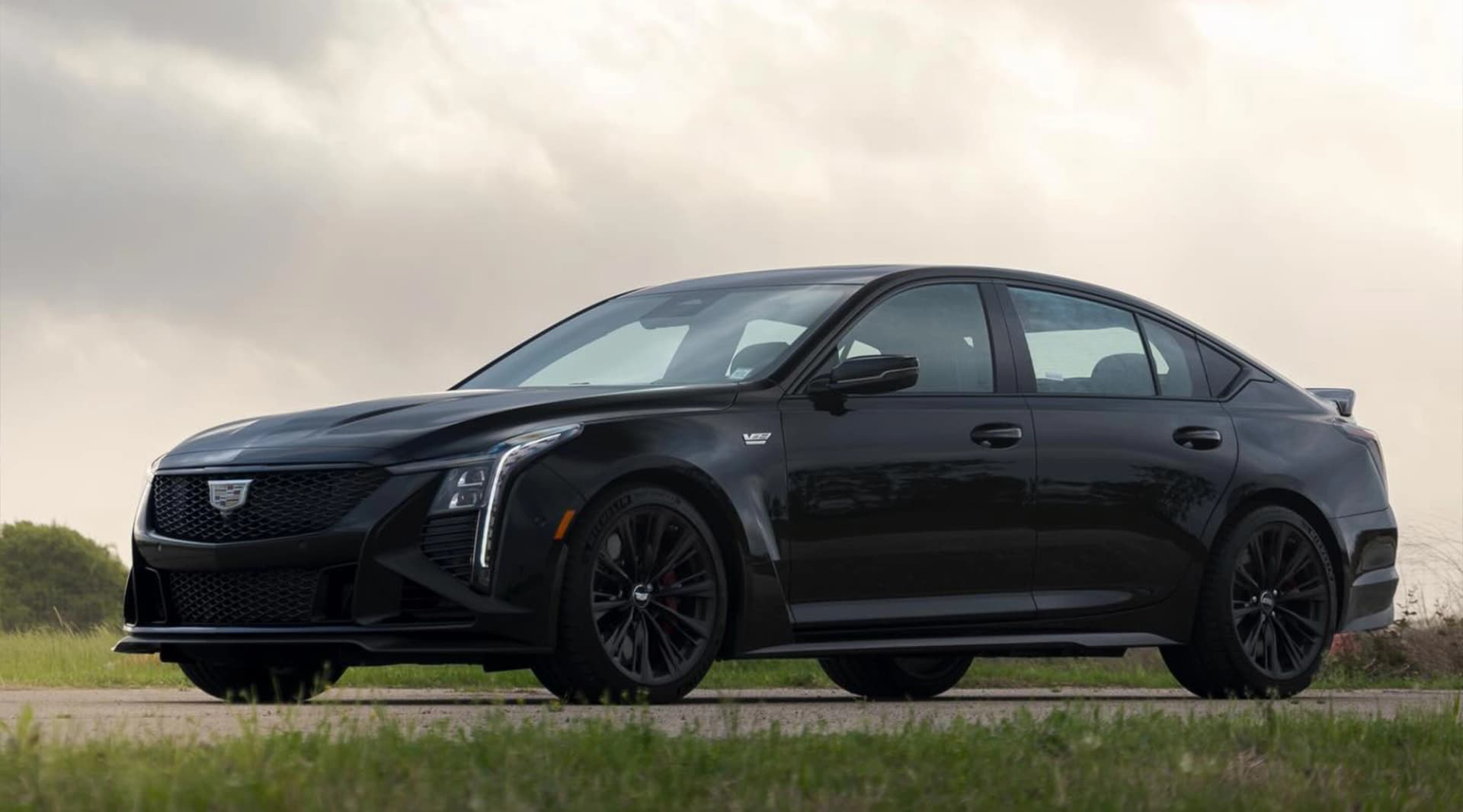
They used a Cadillac CT4-V Blackwing, already one of the last true driver’s sedans left in a world moving rapidly toward electrification and automation. But stock? Not quite. The car was modified with an extended fuel system, pushing capacity to over 200 litres. The result: fewer stops, less wasted time, and a relentless push forward. And it worked.
Distance: ~3,800 km
Total time: 22h38
Average speed: ~167 km/h
Top speed: ~290 km/h
Total stopped time: just over 20 minutes
Read that again. Twenty minutes. Across an entire continent. It’s the kind of stat that makes you question whether this is still driving… or something closer to endurance aviation on wheels.
This isn’t the Cannonball but it’s the same mentality
Purists will point out that this isn’t an official Cannonball Run record. That legendary benchmark still runs from New York to California, with its own fixed start and finish points. But let’s not pretend this is something else entirely.
Same philosophy. Same mindset. Same obsession with beating time across impossible distances. The only difference? The route. And maybe the willingness to push just a little bit further.
Why this kind of record still fascinates people
Because in a world where cars are becoming quieter, safer, more digital… this feels raw. There’s no algorithm here. No driver assist doing the work. No “hands-off” moment.
Just two people, a machine, and a very simple idea: go as fast as possible, for as long as possible. It’s the opposite of everything the industry is moving toward. And maybe that’s exactly why people can’t look away.
AutoNext Take
There’s something undeniably fascinating about this. Not because you’d want to do it. Not because it makes sense. But because it represents a type of driving that’s slowly disappearing. Internal combustion. Long-distance endurance. Human focus over software assistance.
At the same time, it also highlights how disconnected this kind of achievement is from the future of mobility. While the industry is moving toward autonomy, electrification, and regulation… this is the complete opposite. A last glimpse of something raw, imperfect, and slightly reckless.