China-developed Audis are trickling into Europe, just not the way Audi planned
Globalisation just came full circle, and Audi is not fully in control of it
For years the story was European brands rushing to build cars in and for China. Now the current is flowing back. A pair of electric cars that Audi developed specifically for Chinese buyers, and never intended to sell here, have started appearing in Europe. The twist is that Audi itself is not the one bringing them, and that changes everything about how you should read this.
The AUDI brand, without the rings
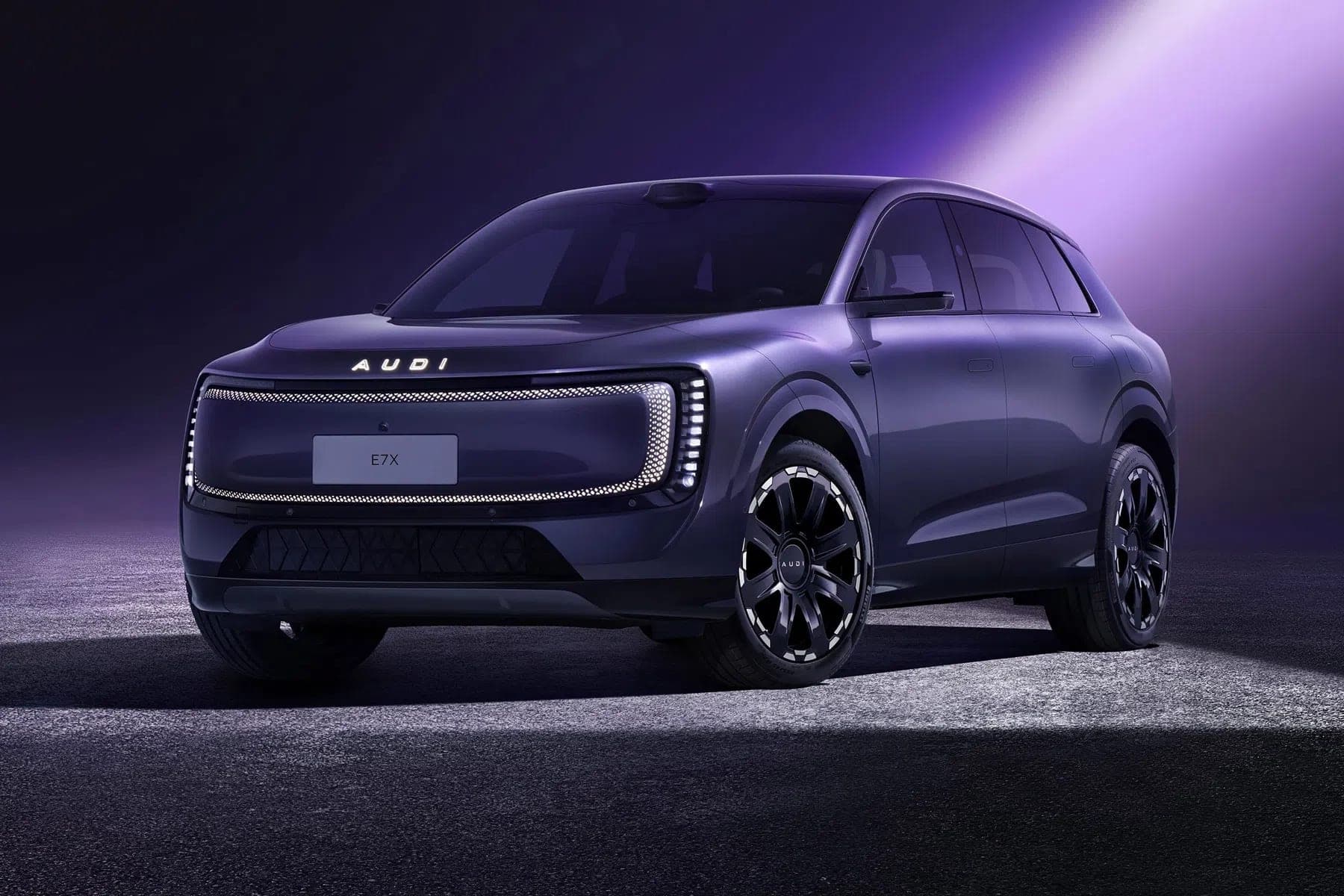
The cars come from AUDI, spelled in capitals and, unusually, wearing no four-ring badge. Launched in 2024, this is a China-only sub-brand co-developed with the Chinese group SAIC on a completely different platform to Audi's European models. It was designed from the outset to fight local Chinese EV makers on their own terms, with the technology and pace of development that implies, rather than to slot into Audi's familiar global range.
Fast, high-tech and China-Car-of-the-Year good
On paper the pair are seriously impressive. The E5 Sportback packs 787 hp and rides on an 800-volt system, with a pillar-to-pillar interior screen and a driver-assistance suite using Lidar and eleven cameras; it was even named 2026 China Car of the Year. The larger E7X SUV runs a 900-volt system, produces 680 hp and stretches to 5.05 metres, putting it on par with a Q7 for size. This is genuinely cutting-edge kit, the product of Chinese development speed that Europe has struggled to match.
How they reach Europe, and the catch
Here is the important detail. A third-party importer, Auto China, is bringing both models to Europe with European type approval, at around 72,488 euros for the E5 and 88,209 euros for the E7X, and will even let you pick a different colour or wheels at no extra cost. But this is a grey import, not an official Audi launch, and the numbers deserve scrutiny. The headline ranges of 647 km for the E5 and 660 km for the E7X are quoted on China's CLTC cycle, which is far more generous than Europe's WLTP, so the real figures will be lower. And buying outside Audi's own network raises obvious questions about warranty, servicing and long-term parts support.
AutoNext Take
The temptation is obvious. A 787 hp, tech-laden Audi that reviewers in China have called the best car the brand has built in decades, available in Europe for Audi money, sounds like a bargain and a flex rolled into one. But strip away the excitement and the maths gets harder. Once you translate that CLTC range into real WLTP terms, and set the price against an official European Audi electric estate that comes with a proper warranty and dealer network, the imported car's main advantage narrows to raw horsepower, which is not worth much when resale value and support are uncertain.
The more interesting story is what this signals. Audi built something in China, with a Chinese partner, that is good enough that European buyers now want it badly enough to import it privately, and that is a small but telling humiliation for the old order. Whether or not these particular grey imports make sense, the pressure they represent is real: the centre of gravity for fast, affordable, high-tech electric cars has shifted east, and even a brand as proud as Audi is now feeling the pull back home. Expect this to be an early example of a much bigger trend, not a one-off curiosity.