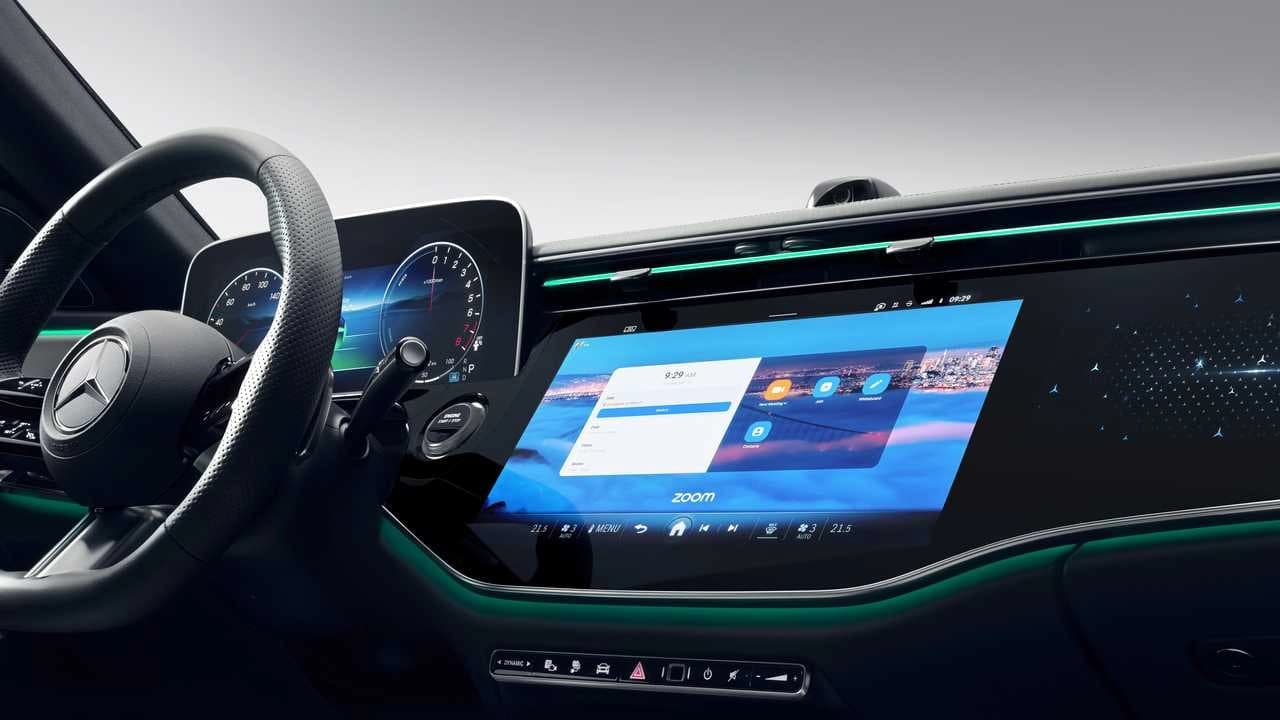
Europe and China push back against touchscreen overload in cars: the return of physical buttons
For years, the evolution of car interiors seemed to follow a single direction: larger screens, fewer buttons, and almost everything controlled through a touchscreen.
But that trend is now facing a serious correction. Both Europe and China are introducing new rules and safety guidelines that encourage (or even require) car manufacturers to bring back physical buttons in vehicle interiors. The objective is clear: reduce driver distraction and ensure that essential functions remain instantly accessible. It marks a significant shift for an industry that, over the past decade, aggressively pursued fully digital cockpits.
Europe adjusts through Euro NCAP
In Europe, Euro NCAP is playing a key role in this shift. Since January 2026, updated Euro NCAP safety protocols have been introduced. Automakers aiming for the coveted five-star safety rating must now ensure that several essential vehicle functions are controlled via physical switches rather than touchscreen menus. These functions include:
turn signals
windshield wipers
hazard lights
the horn
emergency calling systems
If these systems are operated exclusively through a touchscreen interface, vehicles risk losing valuable points in their safety rating. While Euro NCAP guidelines are not legally binding, their influence is enormous. A five-star rating remains one of the most powerful marketing tools in the automotive industry.
China prepares even stricter rules
Perhaps even more striking is that China, the market that most aggressively embraced screen-dominated interiors, is now moving in a similar direction.
The Ministry of Industry and Information Technology has proposed draft regulations requiring that key vehicle functions must be operated through tactile controls. According to the proposal, systems such as:
turn signals
hazard lights
gear selection
emergency calling
must be accessible through physical controls with a minimum surface area of 10×10 millimeters. The reasoning is straightforward: drivers should be able to operate critical systems without taking their eyes off the road.
Automakers admit the touchscreen era went too far
Interestingly, several manufacturers are now openly acknowledging that the industry may have pushed the touchscreen concept too far.
At Volkswagen, executives recently admitted that relying too heavily on touch interfaces in some models was “a mistake.” Future vehicles will reintroduce physical buttons for key functions.
Meanwhile, Mercedes-Benz maintains that traditional buttons remain the most intuitive solution for certain operations.
Other manufacturers, such as Hyundai, are pursuing a hybrid approach by combining touchscreens with physical knobs and switches for frequently used controls.
Even Tesla, long considered the poster child of the all-touch interior philosophy, is reportedly considering bringing back traditional turn-signal stalks in some future models.
Why touchscreens can become a safety problem
The main criticism of touchscreen-heavy interiors revolves around driver distraction. When drivers must navigate multiple menus just to perform simple tasks, their eyes remain off the road for longer periods. In emergency situations or fast-changing traffic conditions, even a few seconds of distraction can significantly increase accident risk.
Digital interfaces can also suffer from software lag or system freezes, whereas a physical button always provides immediate feedback. For safety organizations, the conclusion is increasingly clear: vehicle digitalization must not compromise ergonomics or safety.
AutoNext Take: technology should simplify driving, not complicate it
The return of physical buttons actually feels like a logical correction. In recent years, many vehicles (from electric cars to luxury SUVs) started to resemble “tablets on wheels.” While large screens look futuristic, they are often less intuitive in daily use.
A simple rotary knob for climate control or a dedicated hazard-light button remains faster and more intuitive than navigating a digital menu. This doesn’t mean screens should disappear. Touch interfaces work extremely well for infotainment systems, navigation, and vehicle settings. But for critical functions, physical controls still offer the most immediate and reliable interaction.
The next generation of vehicle interiors will likely adopt a balanced approach: large digital displays combined with thoughtfully placed physical controls. In other words, the future of automotive interiors may end up being less radically digital than many expected just a few years ago.
