Geely says this is its most efficient EV motor, but that's not the interesting part
The real headline is what Geely deleted, not what it improved
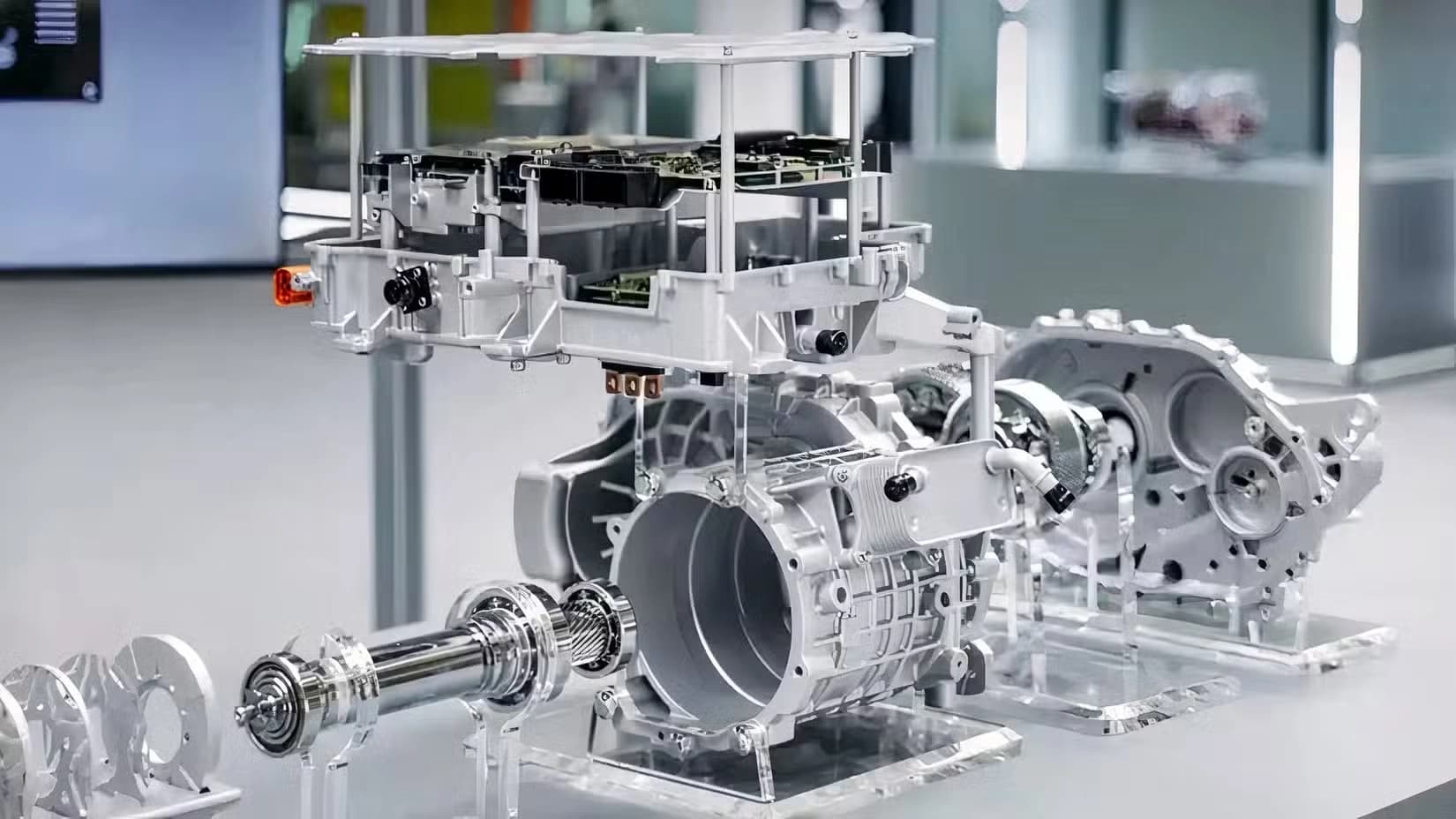
Geely has unveiled Thunder, a new 16-in-1 electric drive unit, and Geely wants the story to be its 93.8% efficiency rating, badged as a production record. That number is real, but it is not far ahead of what rivals already do. The more interesting part is what Geely's engineers physically removed to get there: over 180 components, folded into a single 75 kilogram unit built by Geely Holding subsidiary InfiMotion.
What actually got smaller
Thunder integrates 12 hardware functions, the motor, controller, reducer, DC converter, onboard charger and battery management among them, plus four software layers for energy, charging, motion and health management, into one housing under 325 millimetres tall. Geely says that cuts high voltage wiring by 30% and low voltage wiring by 15%, and when mounted on the rear axle it frees up roughly 28 litres of extra boot space. A new 54 channel directional cooling design also cuts peak motor temperature by up to 15 degrees Celsius, which matters more for long term durability than any single spec sheet number. That is a genuine packaging win, not a marketing number.
The efficiency claim, and why it's not the whole picture
The headline 93.8% efficiency figure sounds impressive, until you notice most competing electric drive units already sit in the 90 to 95% range. Geely's own numbers add a second wrinkle: Thunder is rated at 8.2 kWh per 100 km on the run that earned it a Guinness World Record for the lowest energy consumption ever recorded circumnavigating Qinghai Lake in a production electric sedan, but 10.7 kWh per 100 km on the official CLTC test cycle, a gap wide enough to make the marketing figure look more like a best case than a baseline.
The maths that doesn't quite add up yet
Geely also quotes a power density of 15.8 hp per kilogram for Thunder. Applied to the full 75 kilogram unit, that would put output at roughly 1,200 hp, far beyond the 570 hp dual motor Galaxy TT that actually carries it. Geely has not explained whether that figure describes the motor core alone or the complete integrated unit, and until it does, it is a spec worth treating with a raised eyebrow rather than a straight quote.
Two Geely brands, two different launch stories
The Geely Galaxy TT sports sedan was first to show off Thunder, backed by a second Guinness World Record for the longest continuous twin vehicle drift on a wet surface, but it has not gone on sale in China yet. Lynk & Co got there first instead: its updated 02, sold domestically as the Z20, will reach the market in the third quarter of 2026 with a 329 hp motor. Geely Auto Group's brands also include Zeekr, alongside Geely Holding's Volvo, Polestar and Lotus, though none of those have confirmed Thunder for their own cars yet.
A different kind of Chinese engineering flex
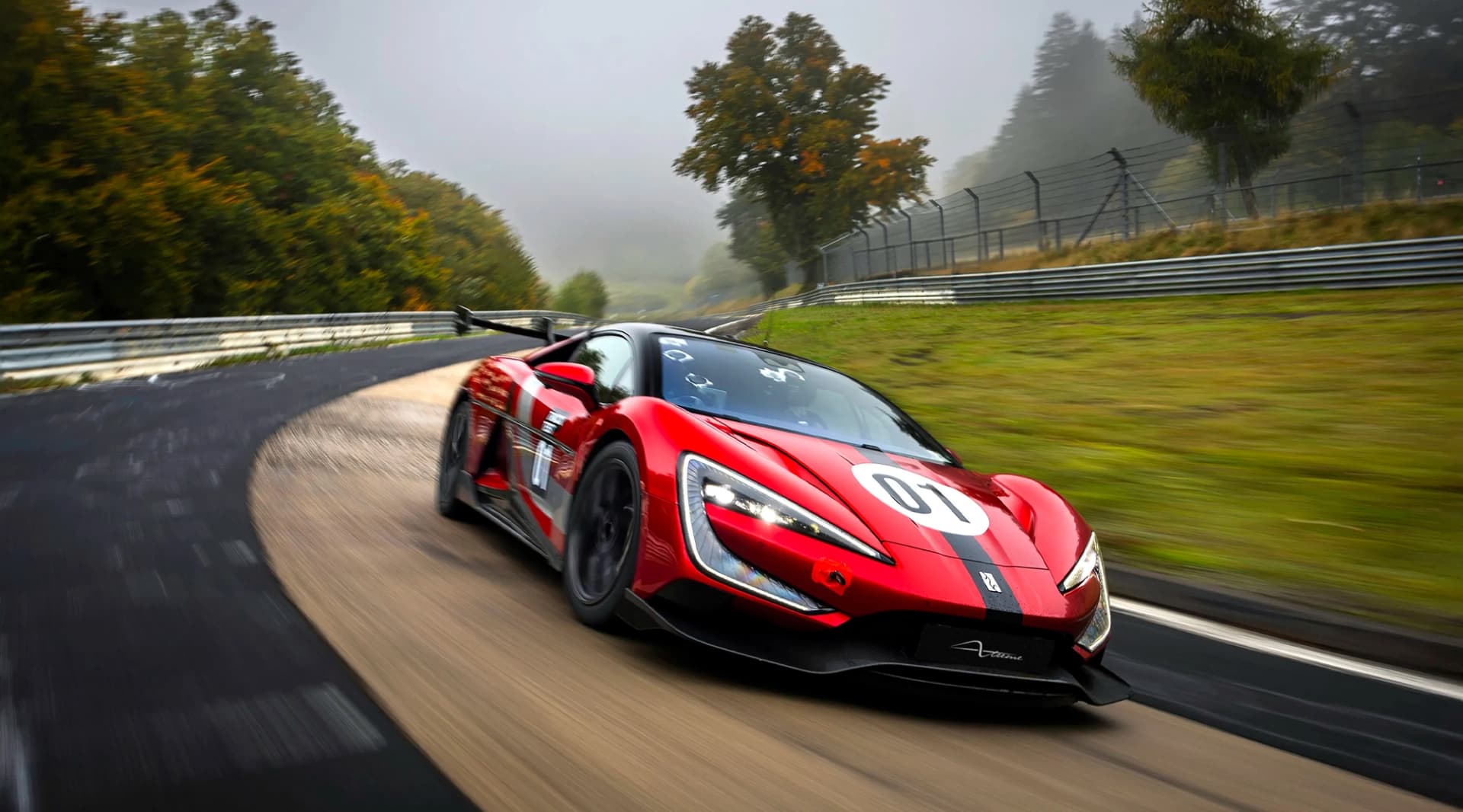
This is a quieter kind of statement than BYD chasing a 500 km/h record with the Yangwang U9 Xtreme, but it points at the same shift: Chinese manufacturers competing on engineering depth, not just price. With Chinese brands still only around a fifth of the EU's electric car sales, packaging and efficiency claims like Thunder's are exactly the kind of technical credibility a brand needs to be taken seriously outside its home market.
AutoNext Take
Thunder's efficiency number is fine, but it was never going to be the headline that mattered. Deleting 180 parts and 30% of the wiring in a mass production electric drive unit is the kind of unglamorous engineering that actually moves the industry forward, more than another single decimal point on an efficiency spec sheet.
The unanswered maths around that power density figure is the one thing Geely should clear up quickly. A company confident enough to claim two Guinness World Records should also be confident enough to explain a number that, as stated, does not match the car it is supposedly powering.