Lancia brings back the manual and quietly makes one of the smartest moves of 2026
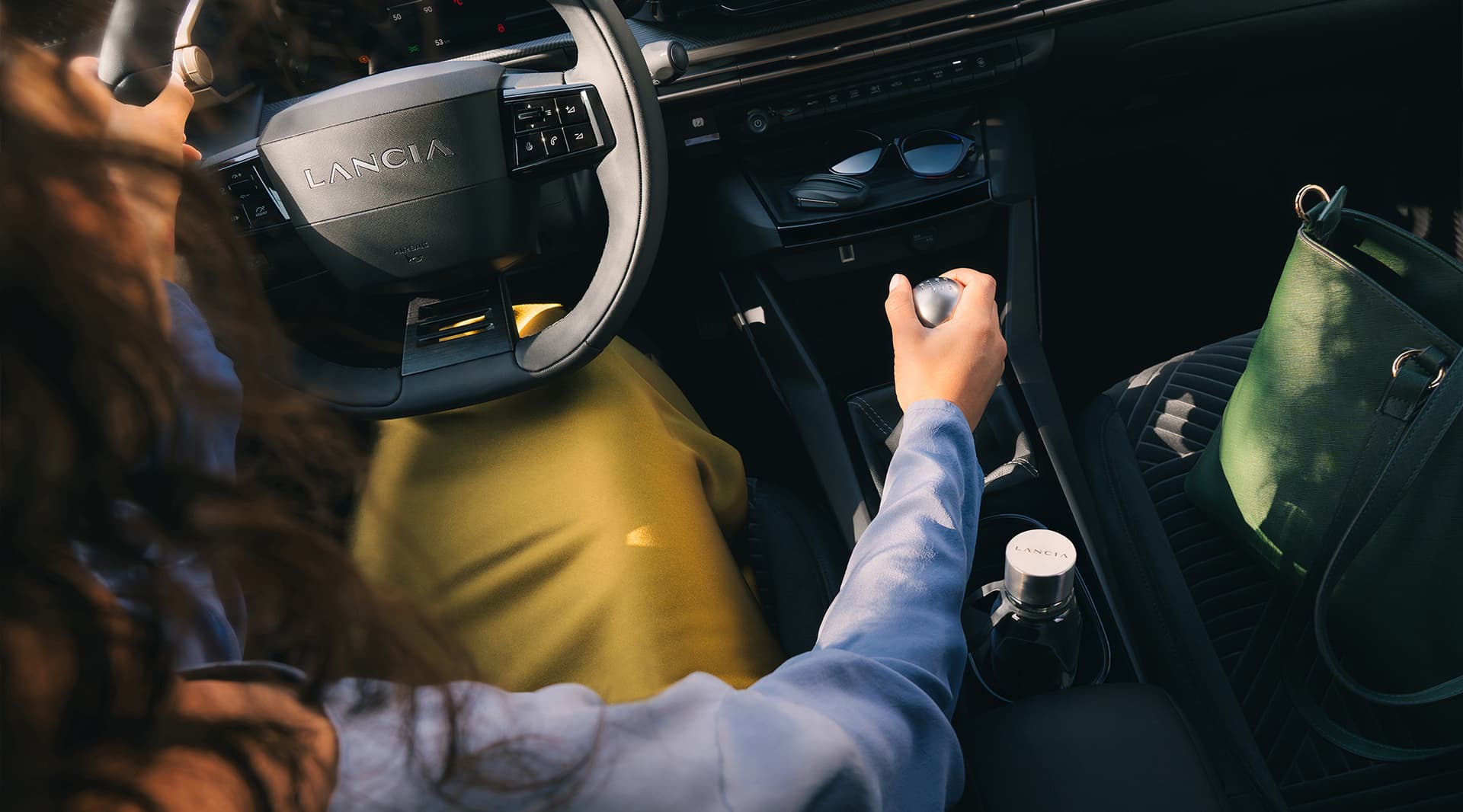
No hybrid system. No electrification. Just a driver, an engine, and a six-speed manual.
In a world where everything is going electric, automated and… slightly predictable, Lancia just did something unexpected. It went backwards. And for once, that might actually be the smartest move forward.
Because with the introduction of the Lancia Ypsilon Turbo 100, the Italian brand is bringing back something the industry has been quietly abandoning: a pure petrol engine, paired with a manual gearbox.

Not a step back, a reality check
On paper, this looks almost too simple. A 1.2-litre three-cylinder turbo, producing 101 hp and 205 Nm, good for 0–100 km/h in just over 10 seconds and a top speed of 194 km/h. Efficient enough too, with consumption figures around 5.2–5.4 l/100 km.
Nothing groundbreaking. And that’s exactly the point. Because while most brands are busy pushing complexity (bigger batteries, heavier platforms, more software layers) Lancia is doing something else entirely here. It’s listening. Not to trends, but to actual customers.
The return of control
There’s a reason this engine exists. A large part of the European market (especially in countries like Italy) never really left manual gearboxes behind. Not because of nostalgia, but because of control, simplicity and cost. And that’s where the Ypsilon Turbo 100 lands perfectly.
It offers something increasingly rare: a direct, mechanical connection between driver and machine. No filters, no artificial layers, no overcomplication. In many ways, it feels like the automotive equivalent of choosing a mechanical watch over a smartwatch, or vinyl over streaming. Not better on paper. But better in experience.
A strategic move disguised as a simple engine
What makes this launch interesting isn’t the engine itself, it’s what it represents for Lancia. With the new Ypsilon, the brand is clearly building a multi-energy strategy:
electric for urban, future-focused buyers
hybrid for efficiency-driven users
and now petrol for those who want simplicity
Instead of forcing everyone into one direction, Lancia is doing something far more intelligent:
it’s meeting people where they are. And in today’s fragmented market, that’s a competitive advantage.
Engineered for the real world
Underneath its simplicity, the Turbo 100 isn’t basic. The engine runs on a Miller cycle, features a variable geometry turbo and high-pressure direct injection at 350 bar. It’s been tested for over 30,000 hours and more than 3 million kilometres.
But again, that’s not what matters most. What matters is what it delivers in daily use:
predictability, low running costs, and longer service intervals. This is not a car designed to impress on paper. It’s designed to work, every single day.
AutoNext Take
At first glance, this might be one of the least exciting launches of the month. No crazy performance figures. No futuristic tech headlines. Just a small petrol engine and a manual gearbox.
But look again, and it becomes one of the most relevant. Because while the industry keeps pushing forward at full speed, Lancia just proved something important:
progress doesn’t always mean complexity
innovation doesn’t always mean electrification