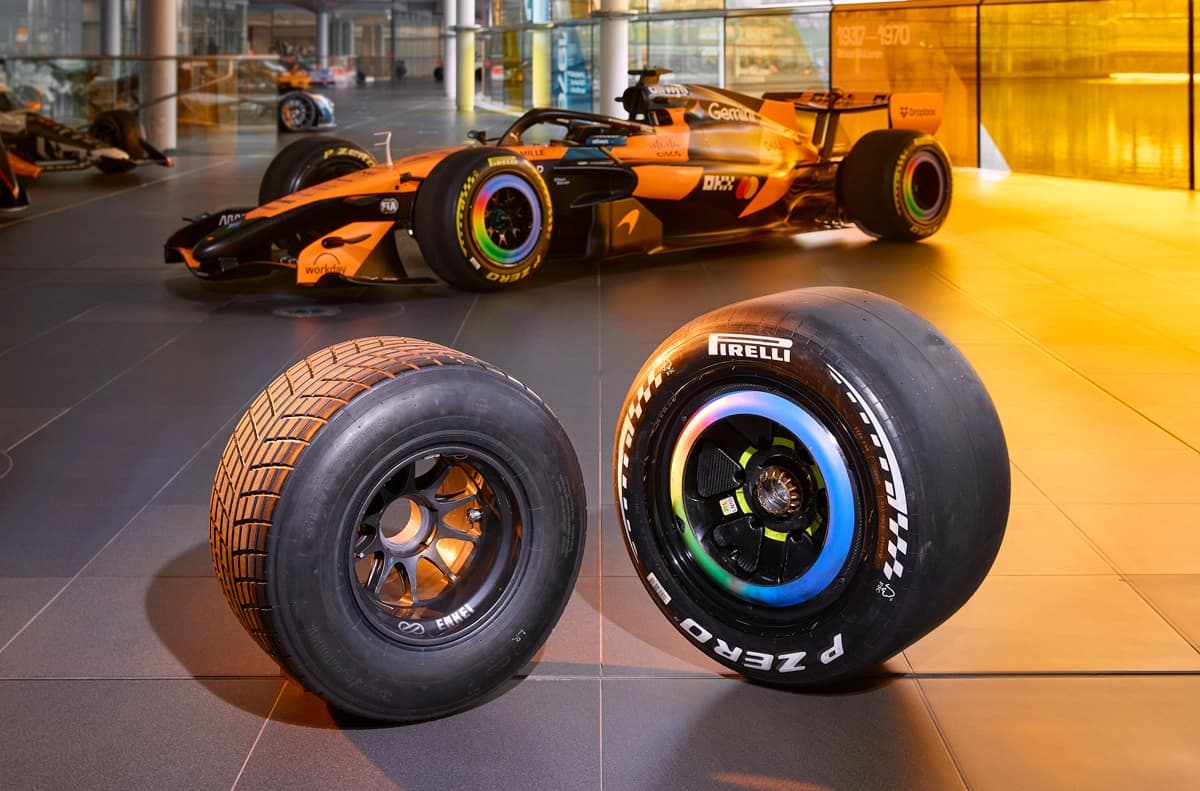
McLaren Formula 1 Team reunites with Enkei for the 2026 Formula 1 season
In Formula 1, performance often comes down to the smallest details.
Sometimes the difference between victory and defeat is hidden in something as seemingly simple as a wheel. That is why the renewed partnership between the McLaren Formula 1 Team and Enkei for the 2026 Formula 1 season is far more significant than it might initially appear.
The Japanese manufacturer returns as an official supplier of forged magnesium racing wheels for McLaren, reviving a technical collaboration that spans more than two decades of Formula 1 history.
A partnership built over 26 years
The relationship between McLaren and Enkei originally began in 1995 and continued until 2021. During that time, Enkei supplied lightweight magnesium wheels for multiple generations of McLaren Formula 1 cars.
Those wheels played a crucial role in the development of McLaren’s race machinery, where weight reduction, structural stiffness and thermal management are key to extracting maximum performance.
When Formula 1 introduced standardized wheel suppliers, the collaboration naturally came to a pause. The FIA moved toward a uniform solution in order to control costs and maintain competitive balance across the grid. But the 2026 technical regulations change that again.
2026 regulations reopen wheel development
Starting in 2026, teams will once again gain greater freedom in wheel design. While that might sound like a minor detail, wheels are actually an important engineering component. They influence several critical aspects of car performance:
heat transfer between brake systems and tires
tire temperature and pressure management
unsprung mass
steering response and chassis balance
In other words, a well-engineered wheel can directly translate into lap time.
According to tire supplier Pirelli, heat management between the rim and the tire historically played a crucial role in optimizing tire performance under varying track conditions. With the new regulations, teams are once again able to design wheels specifically tailored to their car’s needs.
Magnesium technology returns to the spotlight
For the 2026 season, Enkei will develop and manufacture advanced forged magnesium wheels for McLaren. Magnesium has long been favored in motorsport because it offers:
extremely low weight
high structural rigidity
excellent heat dissipation
This combination helps reduce unsprung mass while maintaining the durability required for the extreme loads experienced in Formula 1 racing. For modern ground-effect cars, where aerodynamic efficiency and mechanical grip must work in perfect harmony, this engineering detail becomes critically important.
A technical collaboration, not just sponsorship
McLaren has emphasized that the renewed relationship with Enkei is not simply a branding exercise. According to McLaren Technical Director Neil Houldey, the partnership is a genuine engineering collaboration designed to extract every possible performance advantage from the team’s next Formula 1 car.
Enkei shares a similar perspective. The company regards its previous 26-year partnership with McLaren as one of the most significant chapters in its motorsport history. Returning to Formula 1 with McLaren represents the continuation of that legacy.
AutoNext Take: small components can shape championships
To casual observers, wheels might seem like a minor element of a Formula 1 car. In reality, they can be one of the most influential components in overall vehicle performance. Whenever teams regain the freedom to innovate in areas like this, the technical competition immediately intensifies.
History has shown that subtle innovations in areas such as wheel design, brake cooling and tire temperature management can produce measurable performance gains. The reunion between McLaren and Enkei therefore represents more than just nostalgia. It is a sign that engineering creativity in Formula 1 is expanding again.
