Someone just paid €184,000 for McLaren P1 body panels with no car attached
When the spare parts cost as much as a new sports car
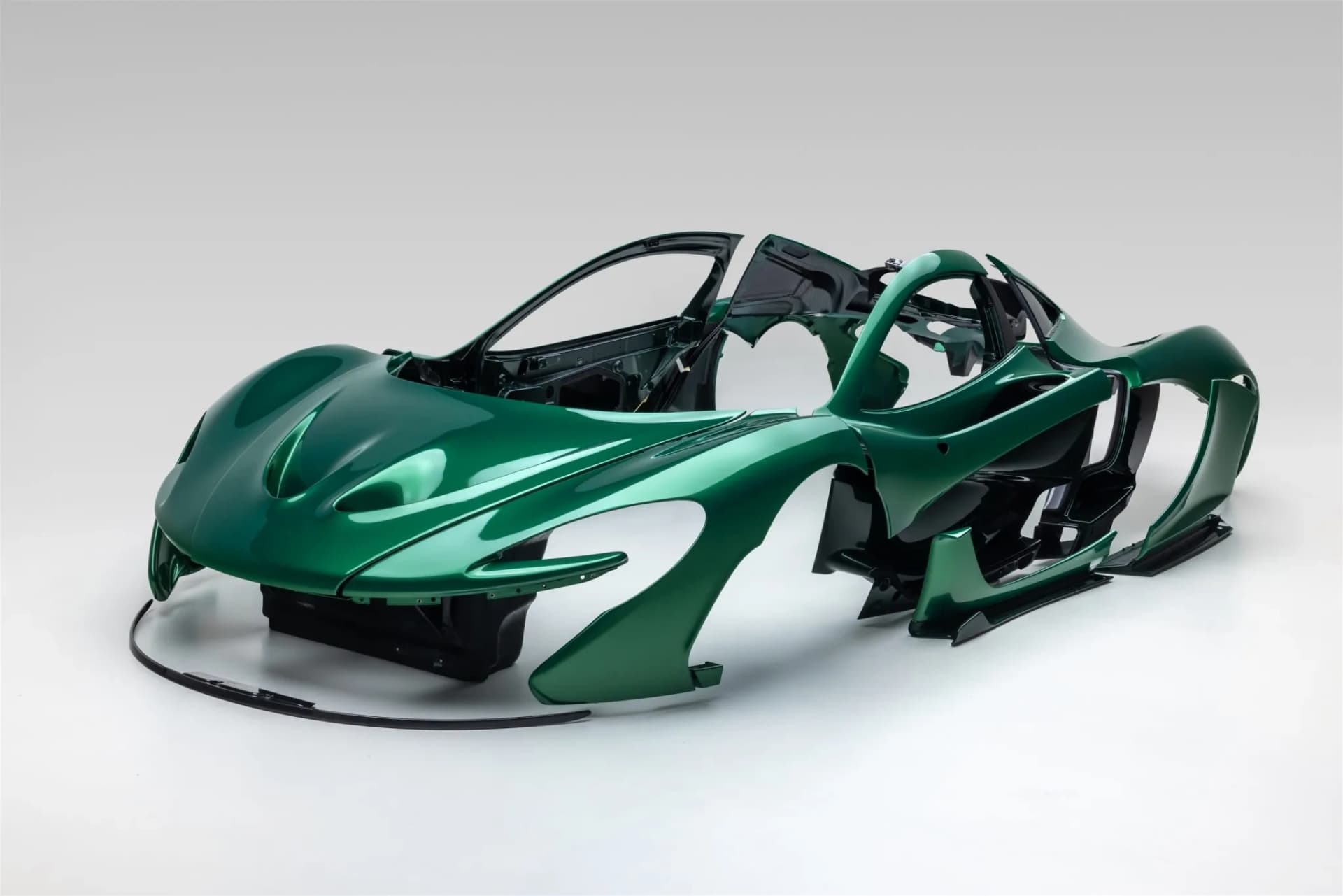
Someone has spent around €184,000, roughly $213,000, on a set of McLaren P1 body panels. Not a P1. Just the panels. No engine, no chassis, no interior, only the green bodywork that once wrapped collector Michael Fux's hypercar. It is one of the strangest hypercar transactions of the year, and it says a lot about where the P1 sits in collector culture right now.
What was actually sold
The lot consists of the main green metal body along with separate components including the doors and the front panel. There are carbon fibre elements among the parts, and they carry genuine McLaren branding. In other words, this is a real, documented set of P1 bodywork, not a replica or a display mock-up. For the right buyer, that provenance is the entire value.
The Michael Fux connection
These panels were originally part of Michael Fux's McLaren P1 back in 2014. Fux is one of the best-known hypercar collectors in the world, famous for commissioning cars in bold, personalised colours. He had these panels removed from his car, and they eventually made their way to California, where they have now changed hands at auction. The link to a named, high-profile collection is a large part of why the parts commanded the price they did.
Who buys body panels for hypercar money
The McLaren P1 was one of the famous hybrid hypercar holy trinity alongside the Ferrari LaFerrari and Porsche 918 Spyder. Only 375 were built, and values have climbed steadily. For an existing P1 owner, original factory bodywork is a genuinely useful insurance policy: panels for a car like this are extraordinarily hard to source, and a crash without spares can leave a multi-million-euro car off the road. For a collector, a set of original panels from a documented car is simply a piece worth owning.
AutoNext Take
Paying €184,000 for body panels sounds absurd until you remember what they are attached to, or rather, what they could be attached to. For a P1 owner who has damaged their car, this is not a novelty purchase, it is a lifeline, and the price reflects pure scarcity rather than vanity. The more interesting signal is what it says about the P1 itself: when the spare parts alone trade for the price of a new Porsche 911, the car they came from has clearly crossed from depreciating supercar into blue-chip collectible. The trinity hypercars are no longer just fast cars. They are assets, right down to the panels.