Michelin's new Le Mans slick has a tread pattern, and it disappears after three laps
The pattern is not there for grip. It is there to be seen.
The tyres on a Le Mans Hypercar are slicks. No grooves, no tread, no pattern. That is the point. So when Michelin showed up for the 2026 season with a tyre that visibly carries a tread pattern, people noticed. The explanation is more interesting than the visual.
The new Michelin Pilot Sport Endurance 2026 is the French manufacturer's latest Hypercar tyre for the FIA World Endurance Championship and the 24 Hours of Le Mans. It is made from 50% recycled and renewable materials: carbon black from old tyres, biowaste-derived oil and resins, recycled steel, biowaste-derived silica, and natural rubber. That is a significant milestone for endurance racing. And Michelin wanted it visible. So they put the evidence on the surface.
What the pattern actually is
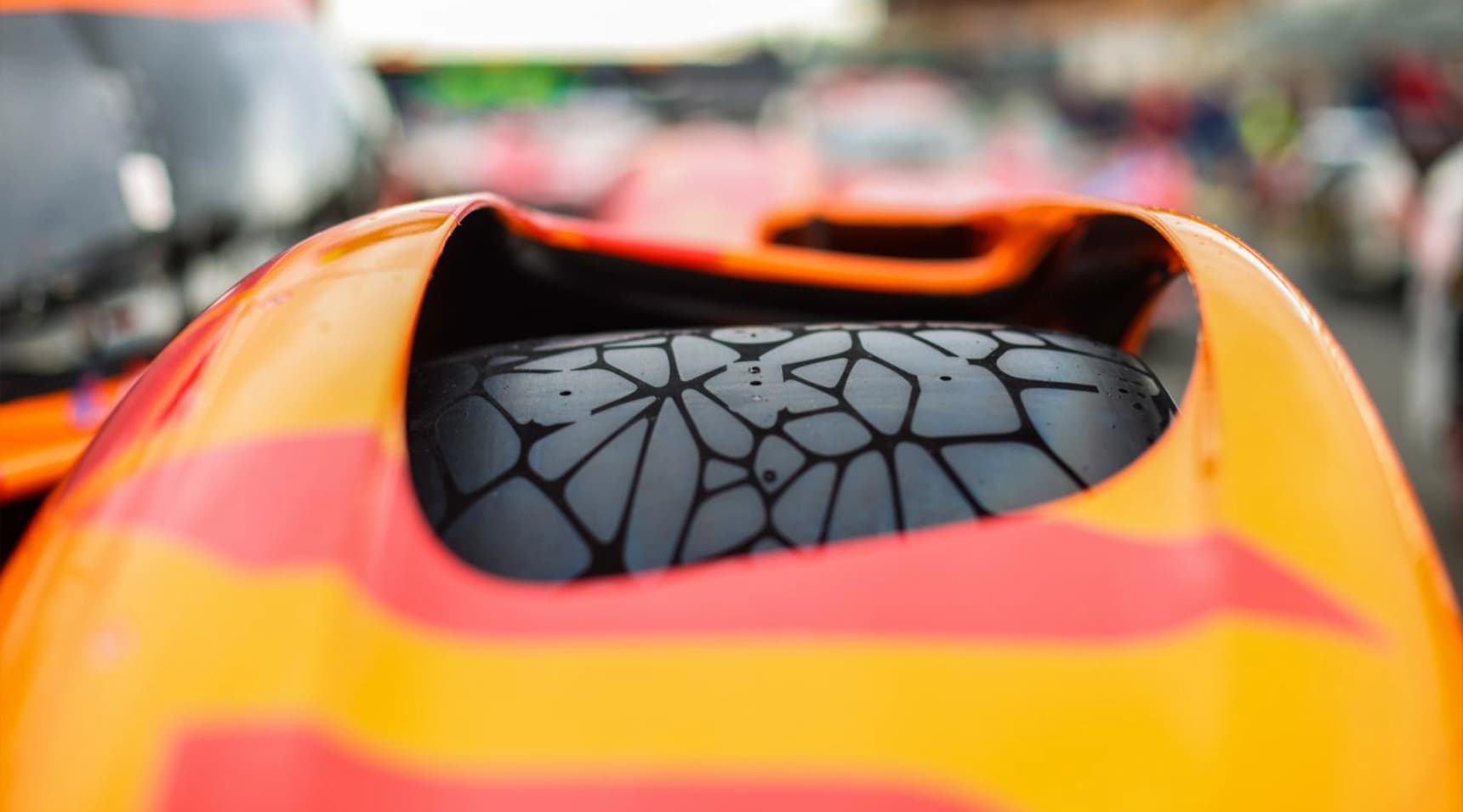
The tread pattern on the Pilot Sport Endurance is not grooved. It is not raised. It is flush with the racing surface, moulded in the same compound as the tyre itself. Michelin describes it as a patented micro-velvet finish: a thin layer of special coating just a few hundredths of a micron thick. The visual effect comes from how light reflects differently off the treated surface versus the standard rubber.
At Le Mans, on the Circuit de la Sarthe, it disappears after three laps including one qualifying lap. The lateral loads generated by a Hypercar at racing speed simply wear it away. At circuits with different loading profiles, it lasts longer or shorter. According to Michelin's Corporate Racing Manager for IMSA, Hans Emmel, the longevity depends entirely on the circuit, the loading and the conditions. Once it is gone, it is a slick. The performance beneath it remains unchanged throughout.
Making sustainability visible
Michelin's decision to mark the tyre this way is deliberate. The company stated its intention to make technological innovation visible. A tyre is a black rubber object. There is nothing about looking at one that tells you what it is made of or how it was built. The pattern changes that, briefly, in front of cameras and crowds at one of the most-watched motorsport events in the world.
The timing is strategic. Le Mans is not just a race. For manufacturers and suppliers, it is a global communications platform. Michelin has won the overall race 34 times, matching Dunlop's all-time record. As the exclusive tyre supplier to the Hypercar class, they are guaranteed to break that tie at the 2026 edition. That is already a headline. Adding a sustainability story to it extends the narrative well beyond the racing result.
Performance first, philosophy second
What matters most in a racing tyre is that it works. Michelin reports the Pilot Sport Endurance 2026 delivers improved warm-up, improved consistency and better tyre wear compared with its predecessor. Those claims were validated through testing at Sebring and Watkins Glen before the Le Mans round.
The 50% renewable and recycled content does not come at a performance cost, according to Michelin. That is the more important claim. A tyre that is sustainable but slower would not survive in this category. A tyre that is sustainable and faster changes the conversation about what green materials can do at the highest level of competition.
Le Mans as a laboratory
Michelin has long used Le Mans as a testing ground for road-relevant technology. The 24-hour format is uniquely demanding: it requires a tyre that performs in heat and cold, in wet and dry conditions, over sustained high-speed stints and through the unpredictable loads of traffic and varying fuel loads. What survives 24 hours at La Sarthe is proof of concept for road applications.
The Pilot Sport Endurance 2026 fits into Michelin's longer-term goal: developing a tyre that is airless, connected, rechargeable and fully sustainable by 2050. The 50% recycled and renewable content in this race tyre is a step on that road, validated in the most visible arena available to them.
AutoNext Take
There is something genuinely clever about what Michelin has done here. The tread pattern is ephemeral. It lasts three laps at Le Mans, then it is gone. But those three laps happen during qualifying, when cameras are close, coverage is live, and the cars are moving slowly enough for a pattern to be legible. By the time it disappears, the image has already been broadcast.
Michelin is about to break their own Le Mans record. They are doing it on a tyre that will not look the same after the first stint. That combination of performance and purpose is exactly what endurance racing should be about.