Audi’s big SUV refuses to become another electric experiment
Audi is not trying to reinvent the Q7. It is trying to make it better at being a Q7.
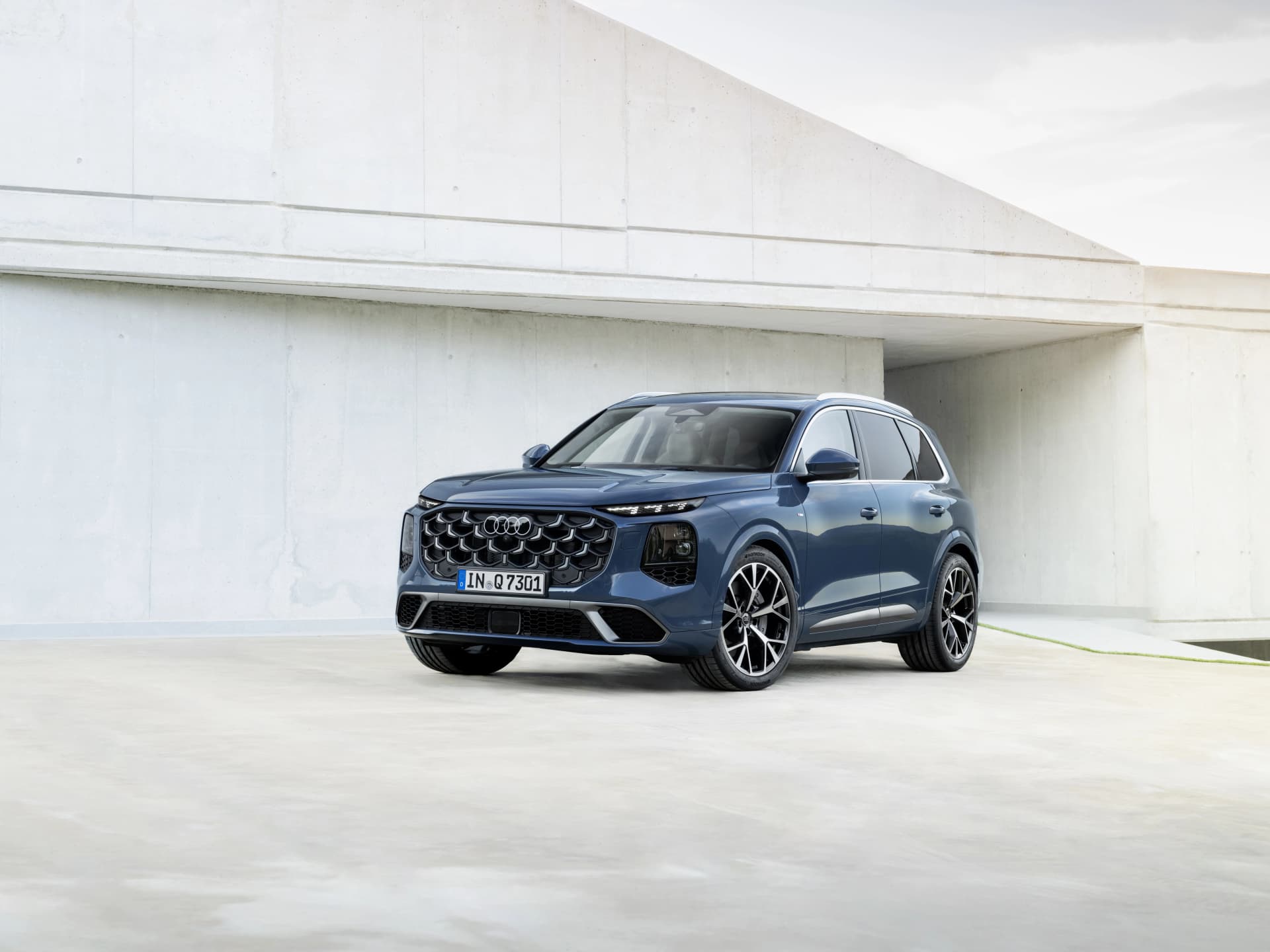
The new Audi Q7 is here. And in a market where almost every big SUV is trying to become an electric statement, Audi has done something surprisingly grounded.cIt has built a new Q7 that still understands the original brief. This is the third generation of the Audi Q7, more than 20 years after the original model gave Audi a proper seat at the large premium SUV table.
A proper premium SUV, not a design stunt
The new Q7 remains a big, serious and confident Audi SUV. The front end is more upright, the Singleframe grille sits proudly, the shoulders are stronger and the overall stance is more muscular. It looks cleaner and more technical than flashy, which is exactly where a Q7 should live.
It is a car designed for business trips, family holidays, long motorway drives and daily life with far too much luggage. That may sound less exciting than a 1,000 hp halo car. But it is far more relevant to actual buyers.
Five, six or seven seats
Audi will offer it with five, six or seven seats. Five seats come as standard, while the classic seven-seat layout remains available. New for this generation is the option of two individual seats in the second row, creating a more business-class six-seat layout when combined with the third row.
The second row can also fit three child seats side by side, which is one of those details that sounds boring until you actually need it. Then it becomes more important than almost every design line on the outside.
The luggage numbers are equally serious. The five-seater offers up to 806 litres of boot space, expanding to 2,075 litres with the second row folded. The seven-seater offers up to 722 litres behind the second row and a maximum of 1,980 litres behind the first row.
A panoramic roof that does more than look expensive
Audi has put serious focus on the new panoramic sunroof. It can switch from transparent to opaque in nine individual segments, giving passengers more light or more shade depending on the situation. When the car is parked, the roof automatically turns opaque to reduce visibility from outside.
The roof also integrates illumination through 78 LEDs, with colour linked to the ambient lighting. This could easily have become a gimmick. But in a large SUV with three rows of seating, light and space matter. The roof helps the cabin feel more open, especially for passengers sitting further back.
V6 TDI: diesel still makes sense here
At launch, Audi is offering the new Q7 with a 3.0-litre V6 TDI in two power outputs. The entry version produces 245 hp and 500 Nm. The stronger version delivers 299 hp and 630 Nm. Both use MHEV plus technology, an electric-powered compressor and standard quattro all-wheel drive. The mild-hybrid system can temporarily add up to 24 hp of support, while the electric compressor improves response and low-speed performance.
In 2026, diesel is no longer fashionable. But for a large SUV that needs to carry people, luggage, trailers and long-distance expectations across Europe, diesel still makes a lot of sense. Audi is not pretending the Q7 is a futuristic EV flagship. It is giving the car the kind of drivetrain many real Q7 customers will actually want: efficient enough, strong enough and built for distance.
Quattro becomes sharper
All versions get an eight-speed tiptronic and permanent quattro all-wheel drive. Audi has also added a new limited-slip centre differential with preload, designed to improve traction, steering response and stability during fast load changes.
Optional adaptive air suspension and adaptive air suspension sport add more flexibility. The sport version lowers the ride height by 30 mm, while air suspension also brings comfort benefits and easier access.
Lighting becomes part of the safety system
The SUV can be fitted with digital Matrix LED headlights with micro-LED technology and third-generation digital OLED rear lights. There are up to eight digital light signatures, allowing owners to change the visual identity of the car.
But the more interesting part is safety. The Q7 can project lane guidance and orientation information directly into the driver’s field of view on the road. It can highlight pedestrians near the roadway, warn about icy surfaces and support the driver through complex road situations.
The most striking feature is the new advanced turn signal. At night, the Q7 projects a stylised indicator onto the ground, synchronised with the dynamic turn signals at the front and rear. That should make lane changes and turns clearer to cyclists, pedestrians and other road users.
More screens, but still with purpose
Inside, the new Q7 uses Audi’s latest digital layout with a curved MMI panoramic display, OLED technology and a standard passenger display.
The infotainment system includes the Audi Application Store, while the Audi assistant can control vehicle functions, search for destinations and answer general questions. When the system cannot handle a broader query, it can forward it to ChatGPT.
There is also wireless charging for two smartphones, Qi2.2 support, USB-C fast charging up to 100 watts in the rear rows and a more practical centre console with larger cup holders.
Price and availability
The new Audi Q7 will once again be built in Bratislava, like the two previous generations. In Germany, ordering begins in June 2026, with deliveries starting in September 2026.
The 245 hp Q7 starts at €87,900, while the 299 hp version starts at €90,500. That is not cheap. But the Q7 has never been about being cheap. It is about being one of the most complete premium SUVs in Europe. And that is clearly still the target.
AutoNext Take
Audi has resisted the temptation to turn the Q7 into an overdesigned electric flagship or a confused lifestyle object. Instead, it has built a serious premium SUV with diesel power, real space, up to seven seats, quattro all-wheel drive and technology that mostly seems useful rather than decorative.
Of course, the question is whether a large diesel SUV can still feel relevant in Europe in 2026. For some buyers, probably not. But for others, especially those who drive long distances, tow, carry families or simply want one car that can do almost everything, the answer is still yes.