Porsche Taycan déjà vu? SAIC unveils the Z7 and the resemblance is impossible to ignore
This time the spotlight falls on SAIC Motor.
Known in Europe as the parent brand behind MG and notably also a long-standing partner of Volkswagen Group. At a recent technology event hosted by the Harmony Intelligent Mobility Alliance, SAIC unveiled two new electric models aimed at China’s upper-midrange EV market: the Z7 fastback sedan and the Z7T shooting brake.
A design that strongly echoes the Porsche Taycan
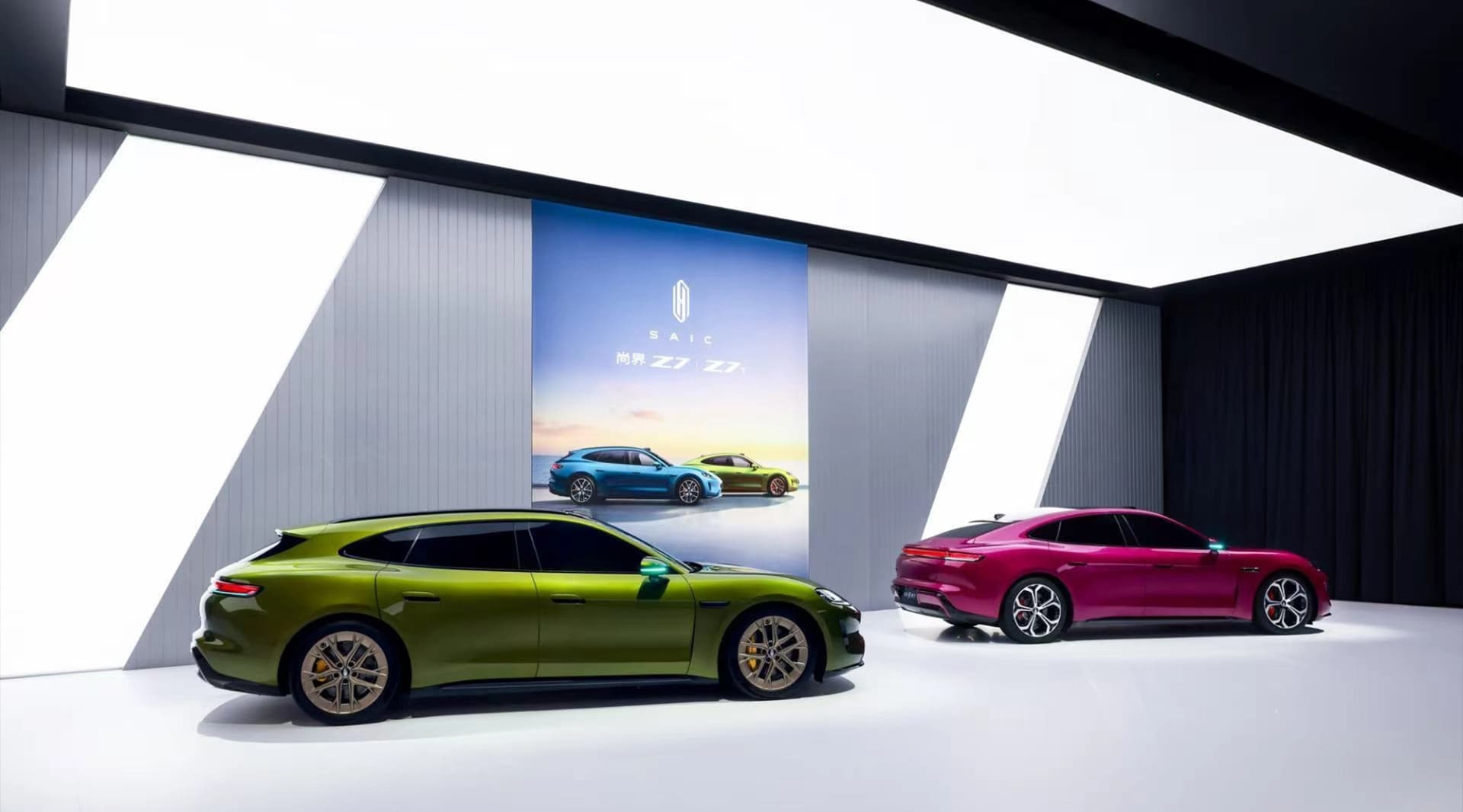
The moment you look at the SAIC Z7, comparisons with the Porsche Taycan become almost unavoidable. The proportions tell the story first: a wide stance, low roofline, and coupe-like fastback rear. Then come the details.
The side window graphic, the rear hatch shape, the slim rear light bar and even the aerodynamic elements around the front wheels bear striking similarities to Porsche’s electric flagship.
SAIC even appears to have drawn inspiration from the Taycan’s Mission E-style wheel design, a signature element of Porsche’s EV. And just when you think the resemblance stops there, SAIC goes a step further. Because alongside the sedan, the brand also unveiled the SAIC Z7T, a wagon variant that inevitably reminds many enthusiasts of the Porsche Taycan Sport Turismo.
Huawei technology meets SAIC manufacturing
Design controversy aside, the technical package behind the Z7 is undeniably modern. The model is developed within the HIMA ecosystem, combining Huawei’s digital technology with SAIC’s manufacturing expertise. Inside the cabin, the car introduces a futuristic interaction concept centered around a movable multi-directional display that can rotate and adjust position depending on driver or passenger needs.
The Z7 integrates Huawei’s Qiankun ADS 4.0 driver assistance system, while the chassis relies on the Tuling platform, which includes air suspension and advanced vehicle dynamics systems. Under the skin, the car runs on an 800-volt electrical architecture, enabling ultra-fast charging capabilities. According to the manufacturer, the system can add around 200 kilometers of driving range in roughly five minutes under optimal conditions.
The all-wheel-drive version reportedly accelerates from 0 to 100 km/h in approximately 3.9 seconds, while the total range exceeds 700 kilometers under the CLTC test cycle. In other words, the Z7 is not just about design, it is clearly positioned as a technology-focused EV aimed at younger premium buyers.
A shooting brake for a lifestyle audience
Alongside the Z7 sedan, SAIC revealed the Z7T, positioned as the first shooting-brake model within the HIMA ecosystem. The wagon variant retains much of the design language of the sedan but introduces a longer roofline and a larger cargo area, targeting customers who want a blend of sportiness and practicality.
Technically, the Z7T shares the same underlying platform, including the Huawei driver-assistance system and battery technology. Full specifications will be revealed during the models’ official market debut later this year.
AutoNext Take
The Z7 raises an interesting question. Is this still inspiration, or has it crossed the line into imitation? Historically, the Chinese automotive industry was frequently criticized for copying Western designs. Over the past decade however, brands like BYD, NIO, and XPeng have increasingly developed strong original identities.
That makes the Z7 story somewhat surprising. Because technologically, the car appears highly competitive. But visually, the shadow of the Taycan is impossible to ignore.
And perhaps that is the most fascinating paradox of today’s EV industry: China is rapidly becoming a technological leader, yet some designs still seem to be chasing European icons.