Singer let Louis Vuitton design two 911s, and it started with just a clock
A dashboard clock request turned into two entire reimagined Porsche 911s.
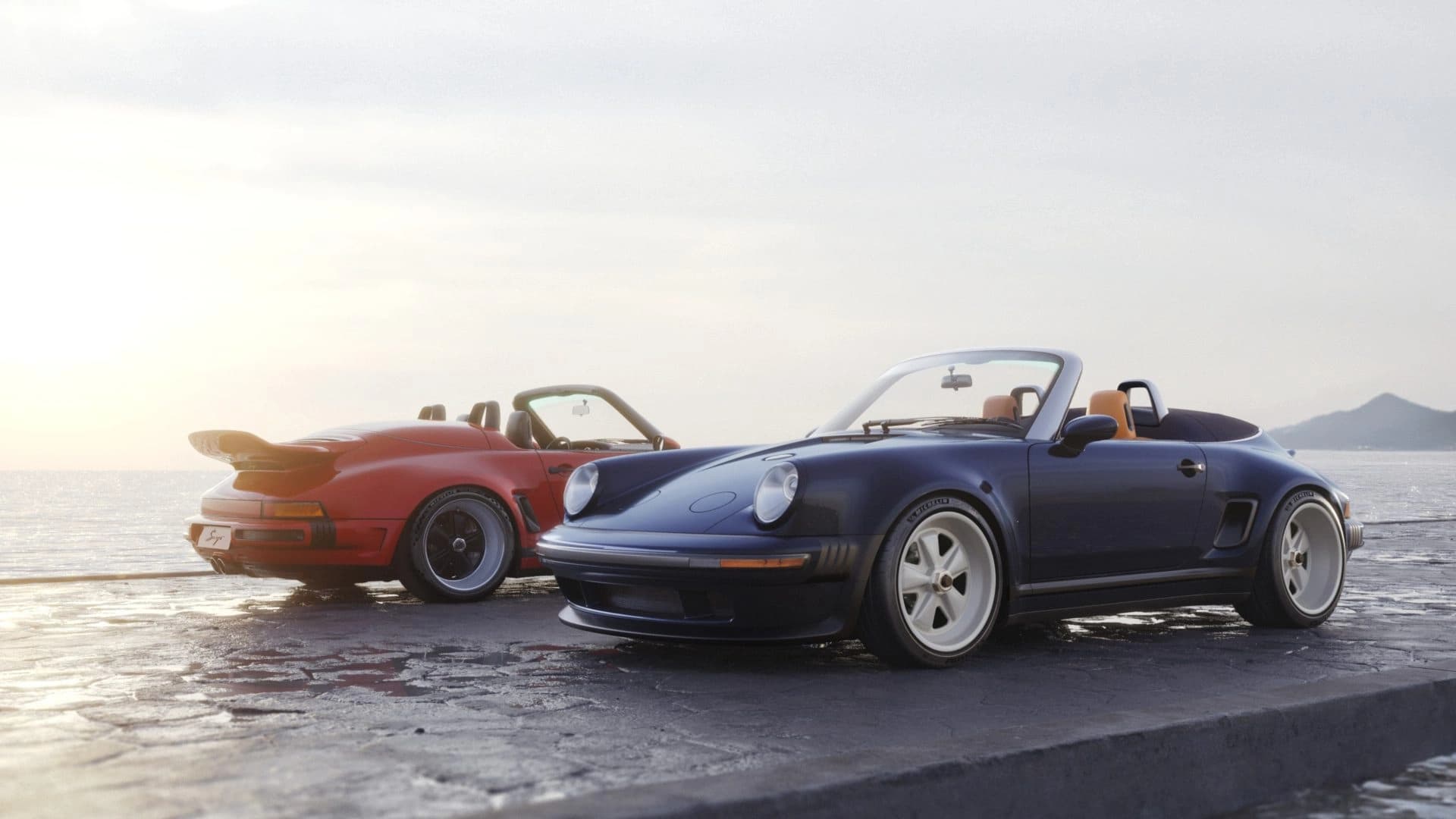
Singer and Louis Vuitton have built two one-off 911s, a Classic and a Classic Turbo Cabriolet, both debuting during Monterey Car Week. Neither car has a published price, and Singer says it will not repeat the collaboration.
How a clock became two cars
The whole project started small: a request for a dashboard clock for a Singer-reimagined car, made by La Fabrique du Temps Louis Vuitton, the house's watchmaking workshop in Switzerland. From there it grew into something much larger. Jean Arnault, Louis Vuitton's watch director, explained the shift: “In addition to the design and production of this clock, it quickly became apparent to us that this collaboration with Singer could extend the personalisation of every functional element of the vehicle, enhancing them through our expertise in leather craftsmanship and watchmaking.”
The Classic leans into Louis Vuitton's travel roots
Louis Vuitton the man started out making luggage in 19th-century France, and his grandsons Pierre and Jean designed their own car in 1909. The Classic plays on that history directly, complete with a bespoke roof rack suited to a trunk, a surfboard or a pair of skis. A saffron and cobalt blue colour scheme runs across the carbon bodywork and even onto the tyres, and a geometric L and V motif appears on the engine air intake grille. Power comes from a 4.0-litre air-cooled flat-six paired with a six-speed manual, though Singer has not quoted an output for this particular car; Top Gear estimated it at around 400hp based on similar builds.
The interior is where the obsession really shows
Inside, the treatment draws on Louis Vuitton's VVT leather, with yellow thread stitching in the door trim, ventilation eyelets worked into the seats, and an embossed diamond pattern throughout. There is no plastic switchgear anywhere in the cabin; every knob, switch and lock is metal, mostly rhodium-plated. The detachable clock that started it all takes its design from Louis Vuitton's Tambour watch, with 12 polished and engraved letters spelling the house's name around the bezel, and the whole instrument cluster was redesigned to follow the same graphic language across the speedometer, rev counter and auxiliary gauges. The project reportedly took a year to finish. Octave Chany, Singer's project lead designer, put it plainly: “Every transition between materials, every metallic reflection, every knurled surface, every mechanical interaction and graphic element has been meticulously considered, often at an almost microscopic level.”
The Classic Turbo carries Nicolas Ghesquière's signature
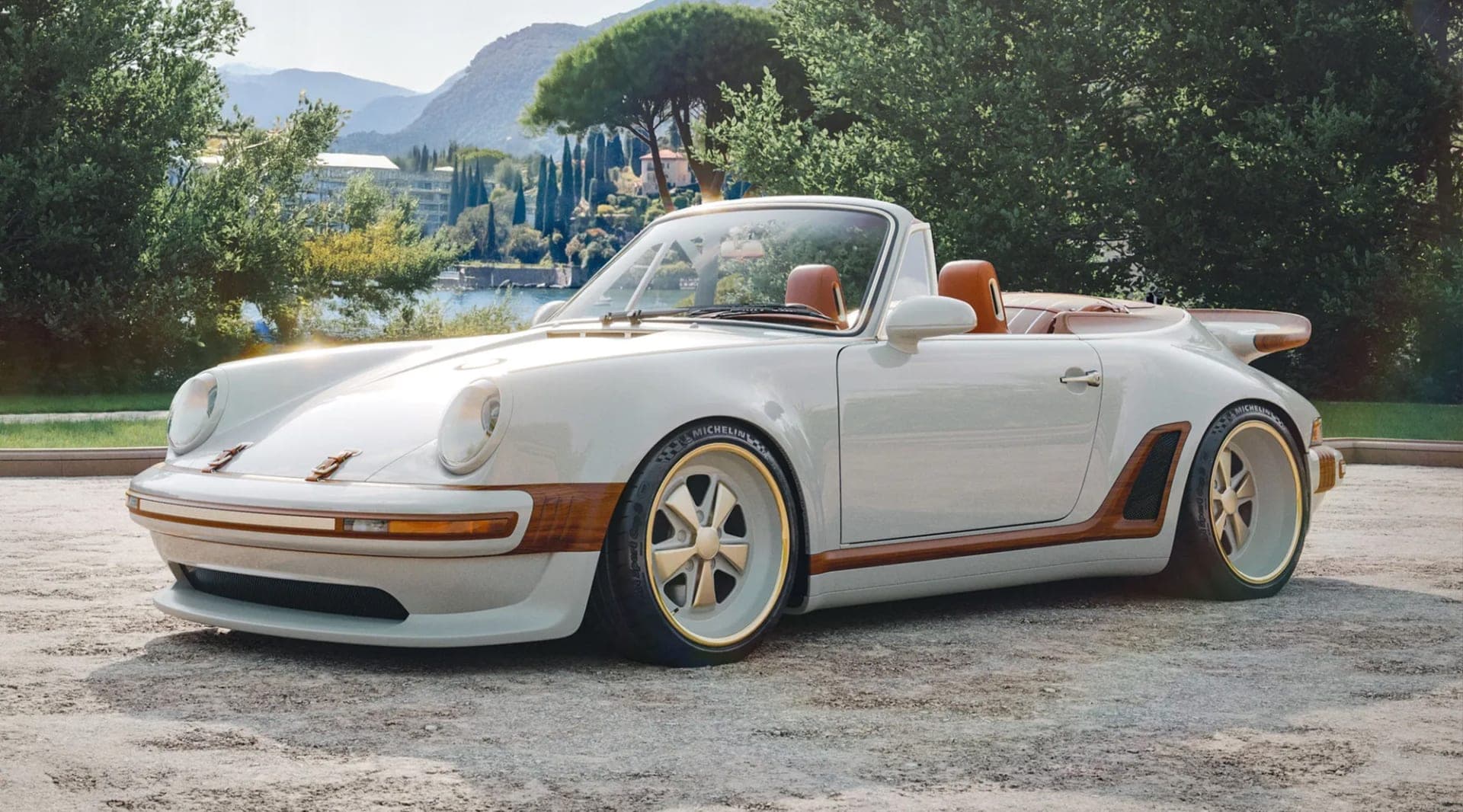
The second car was overseen by Nicolas Ghesquière, artistic director of Louis Vuitton's women's collections, and it shows in different ways. Nautical wood fills a specially designed luggage compartment and front boot built to house a three-piece luggage set, with leather fastening straps front and rear. There is a clock here too, with dials that echo the exterior colour scheme, and the gearshift leather is a clear nod to Louis Vuitton's Noé bag. Underneath, it runs a 3.8-litre twin-turbo flat-six with roughly 510hp, a six-speed manual and selectable drive modes.
The collaboration does not stop at the cars
Ghesquière also built a capsule collection tied to the Classic Turbo: a Tambour Automatic wristwatch, a made-to-measure suit in parachute silk, a garment bag, and a Heritage necklace that doubles as a case for the car's key.
Neither car has a price, and that is the point
Singer has not disclosed pricing for either build, and Top Gear reported plainly that the client involved has long since stopped thinking about what things cost. For scale, Singer's regular restomods do not come cheap either: the standard Carrera Cabriolet reimagining and the Classic Turbo line have both traded in the seven-figure range, so these two sit somewhere well beyond that. Singer has also indicated this is a one-time collaboration rather than the start of an ongoing line.
AutoNext Take
What makes this one work is the restraint at the start. Louis Vuitton did not arrive wanting a fashion-branded 911; it arrived wanting a clock, and only expanded once it became clear how far Singer's obsession with detail could actually go. That is a very different starting point from most luxury car collaborations, which tend to begin with a logo and work backwards.
Whether either of these ever turns a wheel outside a private garage is beside the point. This was never really about two cars. It was about proving that two very different crafts, watchmaking and restomodding, can share the same standard for how much detail is too much, and land on the same answer: no such thing.