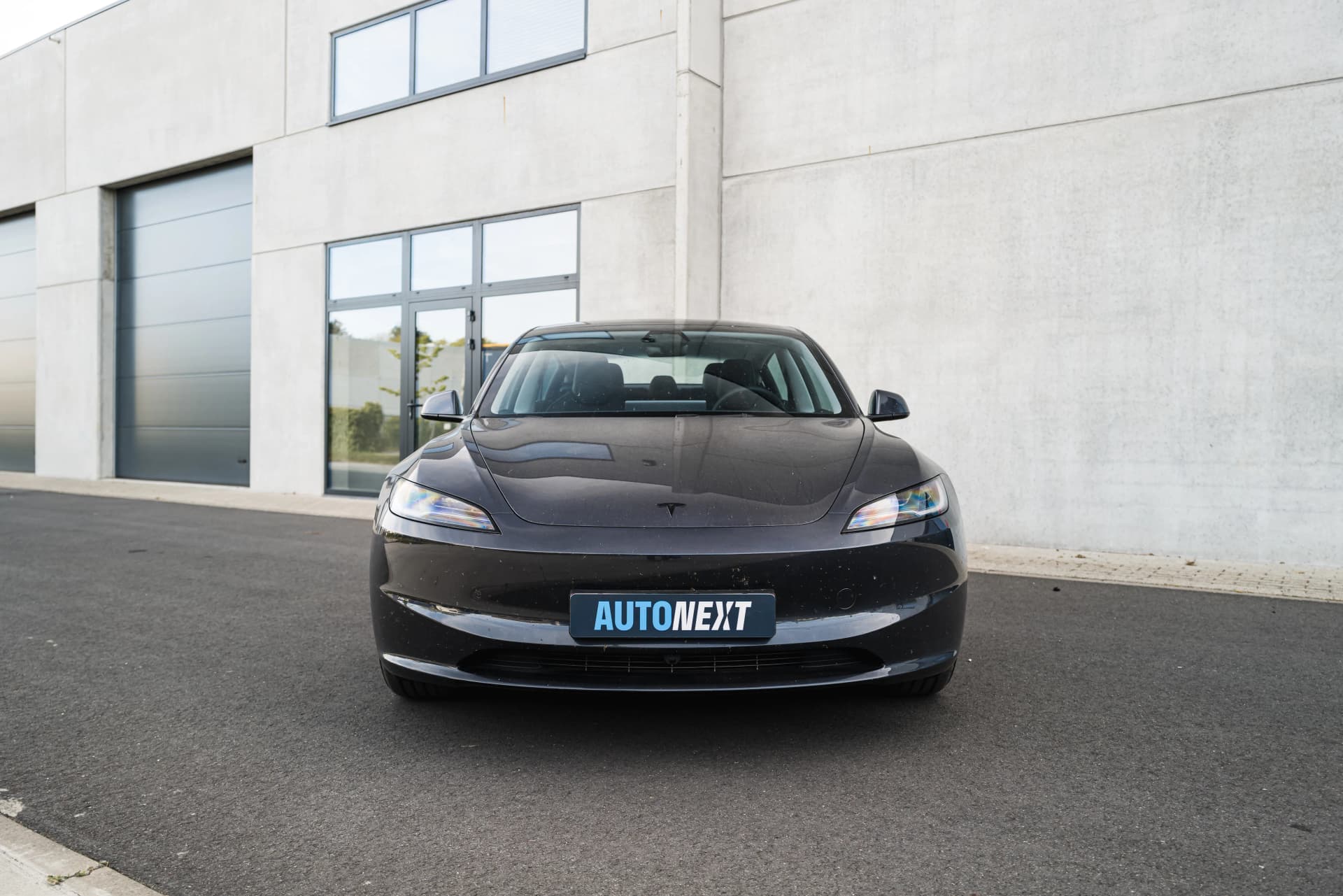
2026 Tesla Model 3 RWD
The cheapest Tesla might quietly be the smartest EV you can buy.
In a market where electric cars are getting heavier, more complex and significantly more expensive, Tesla strips things back. Less power than the Performance versions, fewer features, a simpler setup and yet, after spending serious time with it, one conclusion keeps coming back:
This might be the most rational electric car you can buy right now. Starting at just €36,990, it undercuts a large part of the competition. But what makes it interesting isn’t just the price, it’s how little you feel like you’re missing.
Design: evolution done right
With the Highland update, Tesla didn’t try to reinvent the Model 3. Instead, they refined it and that shows. The front end is cleaner and sharper, the lighting slimmer, and the overall design feels more mature than before. It’s still unmistakably a Model 3, but one that has grown up. Less playful, more confident.
The RWD version keeps things simple. You get 18-inch aero wheels, a limited selection of exterior colours and no unnecessary visual drama. And honestly, that suits the car perfectly. This was never meant to be a show-off, it’s designed to be efficient, and that philosophy carries through every detail.
Interior: minimalism, but usable
Inside, Tesla continues to do its own thing. Everything is controlled via the central screen. Seats, mirrors, climate settings, it all lives in the interface. At first, that’s not ideal. Adjusting your seat through a touchscreen will never be better than a physical button.
But once everything is set, you quickly stop thinking about it. What stands out is how well the system works. It’s fast, logical, and incredibly easy to navigate. Compared to many competitors (especially newer brands trying to impress with endless menus) Tesla keeps things simple. You find what you need almost instantly.
There’s no Apple CarPlay, which feels like a miss in the beginning. But Tesla’s own system is so well integrated that after a short time, you stop missing it altogether.
Build quality: better than expected
Tesla hasn’t always had the best reputation when it comes to build quality. Panel gaps, rattles, inconsistent finishes, we’ve all heard the stories. But this Model 3 tells a different story.
Everything feels solid. Materials are well assembled, nothing squeaks, nothing feels unfinished. It’s a noticeable step forward, and one that removes a lot of the hesitation people used to have about Tesla. It simply feels like a well-built car now. And that matters.
Performance: exactly what you need
On paper, the numbers are modest compared to the higher-end versions. Around 283 horsepower and 420 Nm of torque. In reality, it’s more than enough. Acceleration is instant, smooth, and perfectly usable in daily driving. It doesn’t try to overwhelm you, but it never feels slow either.
The rear-wheel-drive setup adds a layer of balance that makes the car feel natural and predictable. This isn’t about chasing performance figures. It’s about delivering just the right amount of power, exactly when you need it.
Efficiency: this is where it wins
If there’s one area where the Model 3 RWD truly stands out, it’s efficiency. Tesla claims a WLTP range of just over 500 kilometres with a consumption figure around 13 to 14 kWh per 100 kilometres. Normally, you take those numbers with a grain of salt.
Here, you don’t have to. Over more than 1,500 kilometres of driving (including a significant amount of highway) we ended up at around 14.5 kWh/100 km. That’s seriously impressive.
Even at higher speeds, the car remains efficient. And that changes everything. Fewer charging stops, lower costs, and most importantly, less stress when driving longer distances. Tesla still sets the benchmark here.
Comfort and driving: simple, but effective
Unlike the more expensive Model 3 versions, this one doesn’t get adaptive or advanced suspension systems. It keeps things simple with a more traditional setup. And yet, it works.
The ride is slightly firmer over rougher surfaces, but never uncomfortable. The 18-inch wheels help absorb imperfections, and overall the car feels composed and stable.
It’s not trying to be sporty, but it’s not boring either. The rear-wheel drive gives it just enough character to make it enjoyable on a twisty road, without ever becoming demanding. Exactly what most people actually want.
Everyday usability: still one of the best
As a daily car, the Model 3 continues to make a strong case for itself. The seating position works well, even for taller drivers. Rear passengers have enough space, and the combination of rear trunk and front storage makes it more practical than you might expect from a sedan.
It’s not trying to be an SUV and that’s part of its strength. It stays efficient, low, and well balanced.
Tesla’s biggest advantage isn’t just the tech itself, it’s how easy it is to use. Everything feels immediate and logical. Navigation is fast, settings are easy to access, and even small things (like disabling warning sounds) can be done in seconds.
Where other brands often overcomplicate things, Tesla simplifies them. And that makes a huge difference in daily use.
Price: the real game changer
At €36,990, the Model 3 RWD sits in a space where competition becomes difficult. Because when you combine: efficiency, range, technology and overall usability, there’s simply not much that matches it at this price point. And that’s what makes it so strong.
AutoNext Verdict
The Tesla Model 3 RWD (2026) isn’t the most exciting electric car. It’s not the fastest, not the most luxurious, and not the most emotional. But it might be the smartest.
It focuses on what actually matters and executes it exceptionally well. The efficiency is outstanding, the range is realistic, the build quality has improved, and the technology remains one of the easiest to live with.
Yes, there are compromises. The lack of physical controls, the absence of CarPlay, the more basic equipment level, you notice them. But they fade quickly once you start living with the car. Because the bigger picture is simply too strong. For this price, this might be the best all-round electric car you can buy today.
Discover more
Dive deeper into the world behind every car.
On every detail page you will find a complete and transparent presentation of the vehicle: from technical specifications and option lists to service history, features and unique highlights.
Search cars
Discover our premium selection, compare the different models with ease and find the car that perfectly matches your style and expectations.
Your next exceptional driving experience starts here.
Expert reviews
Our experienced car experts put every car under the microscope and share honest, in-depth insights that go beyond the standard brochure information.
From ride comfort and technology to build quality and performance. We analyse every detail so you can make the right choice with confidence.
