Your door mirrors are aimed at your own car, and that is where the blind spot comes from
The gap beside your car is not a property of the bodywork, it is a consequence of where you pointed the glass.
Almost every driver sets the door mirrors the same way, and almost every driver was taught to. You get in, turn the glass until a strip of your own rear wing appears at the inner edge, and stop there, because that sliver of bodywork feels like a reference point that tells you where the car ends. The trouble is that the reference point costs you the only view the mirror exists to give you. Your interior mirror already covers the lane directly behind you. A door mirror turned inward far enough to include your own flank spends a large part of a small piece of glass showing a narrower version of that same lane, and what it stops showing is precisely the traffic sitting alongside your rear bumper. George Platzer set this out in a 1995 paper for SAE called The Geometry of Automotive Rearview Mirrors, which explained why the blind zones exist and offered a way out of them: turn both door mirrors outward far enough that your own car disappears, and the three views stop being three copies of the same picture and start behaving like a relay. He named it the Blind Zone and Glare Elimination setting. Three decades later it is still not how most cars on a European motorway are set up.
Your own rear wing is the one object in the mirror that never moves
Three mirrors are supposed to divide the road behind you between them, not compete for the same slice of it. The interior mirror handles the lane you are in and a little either side of it. The door mirrors are there for the two lanes you cannot see through the back window, and their whole value sits at the outer edge of what they can reach. Every degree you spend on your own bodywork is a degree taken off that outer edge, and because the panel is bolted to the car it never tells you anything new. It is a still photograph occupying part of a moving picture. The overlap this creates in the middle feels reassuring, because the same car appears in two mirrors at once and you feel well covered, but the redundancy is bought entirely at the cost of the far side, which is where an overtaking car spends the few seconds during which you might decide to change lanes.
The adjustment takes about thirty seconds, and the seat comes first
Do this parked, with the seat, steering wheel and head restraint already where you want them, because the whole setting is defined relative to where your eyes actually sit. For the driver's side, lean your head to the left until it rests against the side window, then turn the mirror outward until the flank of your own car has just disappeared from view. For the passenger side, lean your head the other way until it is roughly over the centre of the car, and do exactly the same thing. Then sit up normally. Both mirrors will now look strangely empty, showing lanes rather than car, and that emptiness is the point rather than a mistake. On a car with memory seats, save the position, and redo the whole thing after anyone else has driven it, because a mirror set for a taller driver's eye height is no longer set for yours.
The handover is how you know it worked
Test it deliberately on a quiet dual carriageway rather than discovering it in traffic. Let a car overtake you and watch the sequence: it should leave the interior mirror at the moment it enters the door mirror, and leave the door mirror at the moment it enters your peripheral vision through the side window. Done properly there is no instant at which that car is in none of the three. If it drops out of the interior mirror and then reappears a beat later in the door mirror, that mirror is still turned too far inward and wants another few degrees outward. The second half of Platzer's name for the setting is the part nobody expects to like: with the glass turned out, the headlights of the car behind no longer sit on the reflective surface pointing at your eyes, so night driving in a queue stops being a slow ache.
European mirrors are already built for this in a way American ones are not
UN Regulation 46, the European rule that governs rear-view mirrors, allows the reflecting surface to be either flat or spherically convex, and in practice European cars use convex glass on both sides. American cars do not: the rule there requires the driver's mirror to be flat, which is why so much advice written for that market has to fight the hardware. Your car may also carry an aspherical outer segment, the sliver beyond the fine vertical line, which the regulation permits as an addition to the main mirror with its own minimum curvature. It widens the view further, but it compresses everything in it, so treat that strip as a detector of presence and judge speed and gaps on the main part of the glass. One thing the outward setting does not disturb is the passenger mirror's habit of dipping when you select reverse to show you the kerb, which stays useful given what mounting a kerb does to a tyre and its sidewall.
Blind spot monitoring warns you, it does not show you
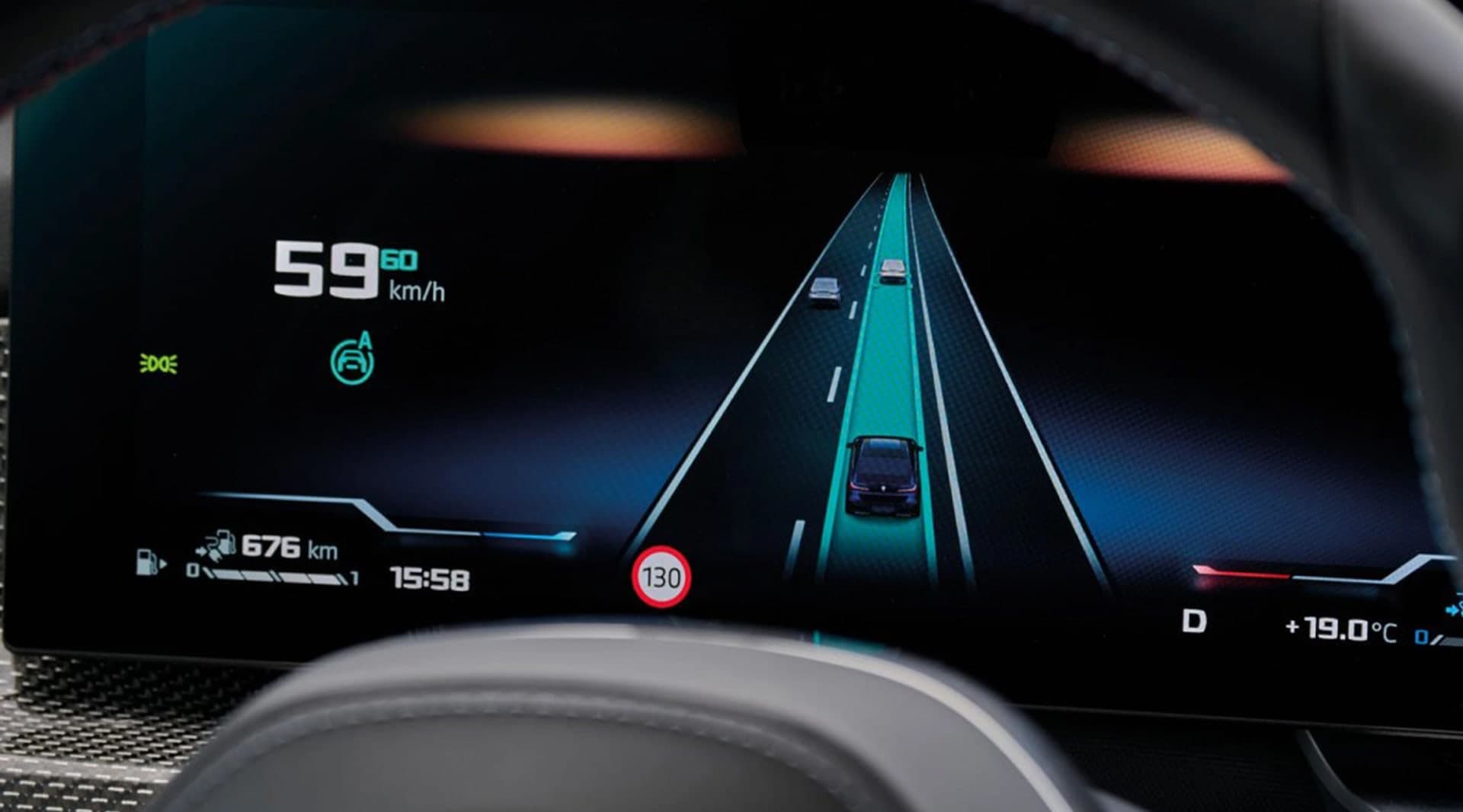
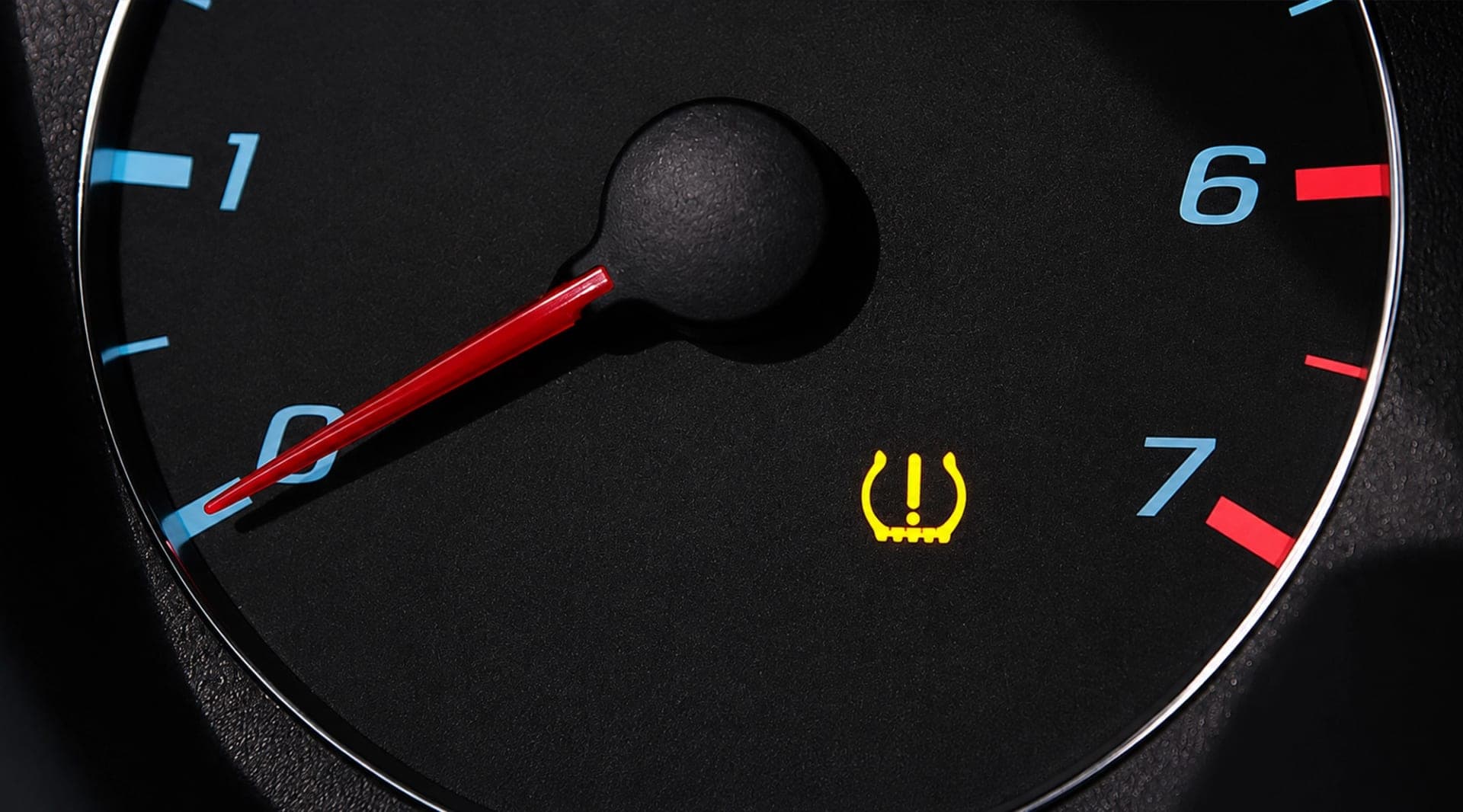
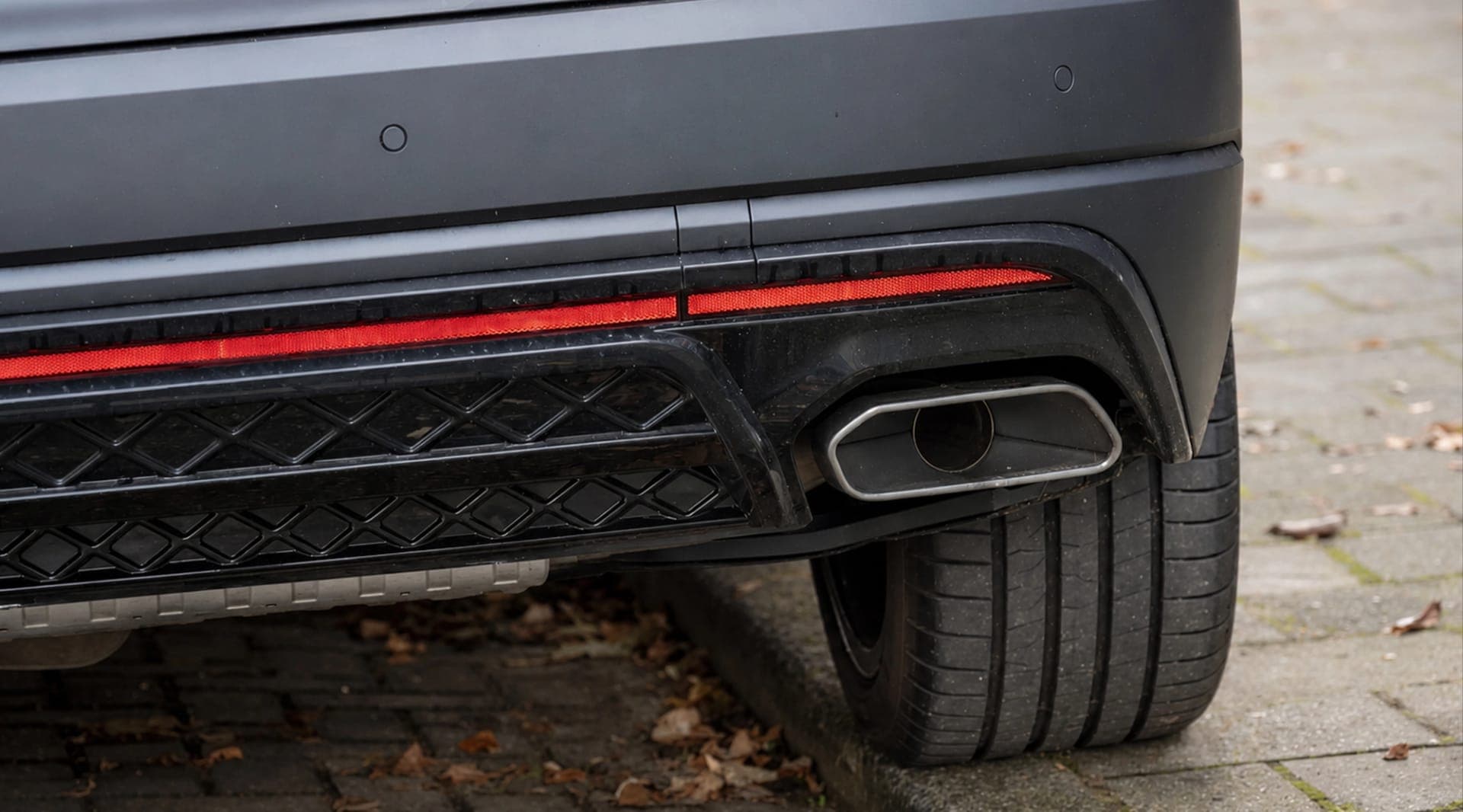
A radar-based blind spot monitor is a genuine safety net and a poor substitute for a view. It lights a symbol to tell you something is there, which is a different kind of information from seeing what it is, how fast it is closing and whether the lane beyond it is free. Its sensors sit behind the rear bumper skin and lose reliability under road film, snow and heavy spray, and it is at its weakest with exactly the road users who need it most: a motorbike filtering at speed can cross the monitored zone faster than the system is designed to react to. Think of it the way you think of the tyre pressure warning light, as an alert rather than an instrument. It also belongs to the growing set of systems in every new European car that talk back at you, and like the speed assistance that beeps at you, it works best when the driver is not relying on it to do the looking.
What to actually do
The whole job happens on a driveway and costs nothing. The only difficult part is the first week, when the mirrors will look emptier than you are used to.
Set the seat, steering wheel and head restraint first. The mirror setting is only valid for the eye position you built it around.
Driver's side: rest your head against the side window, then turn the mirror outward until your own rear wing has just disappeared.
Passenger side: lean your head to roughly the centre of the car and do the same thing with that mirror.
Sit up normally and expect both mirrors to look empty, showing road rather than car. That is the correct result.
Verify it on a quiet dual carriageway: an overtaking car should never be absent from all three views at once.
If a car does vanish between the interior mirror and the door mirror, that mirror is still turned too far inward. Move it out a few more degrees.
Keep the shoulder check. It is now for the things that move faster than the mirrors can hand over: motorbikes, scooters and cyclists.
Redo the setting after anyone else drives the car, or store it on the memory seat if you have one.
Clean the mirror glass properly going into autumn. A convex surface with a film on it turns a low sun into a wall of glare.
Frequently asked questions
Do I still need to look over my shoulder?
Yes, but for a different reason than before. The outward setting removes the large blind zone that could hide a car, and it does not remove the smaller residual zones near the rear corners, which are still big enough for a motorbike or a cyclist arriving quickly. What changes is the character of the check: it becomes a quick confirmation of a picture your mirrors have already given you, instead of the only way to find out what is beside you. That is worth having, because a long look over the shoulder is time spent not looking at the car in front.
It feels wrong not to see my own car. Will I misjudge lane changes?
The discomfort is real and it lasts a few days. What survives it is the realisation that you were never actually using that strip of bodywork to judge anything, because a fixed panel at a fixed distance tells you nothing about where the white line is. Your sense of the car's width comes from the road ahead and from the interior mirror, both of which are unchanged. If you want a bridge, leave the mirrors a touch less far out for the first week and move them the rest of the way once the handover starts to feel normal.
Does this help at night?
That is the half of the setting people notice first. A door mirror angled inward is angled towards your face, so the headlights of the car behind land on the glass and bounce straight at you, which is why night driving in traffic is so tiring. Turn the glass outward and those beams reflect away from your eyes instead. The interior mirror still has its own dimming function for what is directly behind, whether that is a manual tab or the automatic version, and between the two the queue stops shining in your face.
My car has blind spot monitoring. Is this still worth doing?
It is worth more, not less, because the two cover different failures. The monitor is good at the case you were not thinking about and poor at telling you anything about it beyond its existence, while a correctly aimed mirror gives you the closing speed and the space beyond. The monitor also degrades quietly: a bumper packed with winter road salt or a sensor sitting under road film may simply stop warning, with no fault message to tell you it has. Mirrors do not fail that way.
Does the same setting work in a van, or when towing?
No, and this is the one important exception. A panel van has no useful interior mirror, so its door mirrors are carrying the entire load and cannot be set as a relay from a view that does not exist. There you want a deliberate small overlap towards the body, with the wide-angle section doing the outer work. Towing follows the same logic: the mirrors have to see past the trailer rather than past the car, and in most European countries you are required to fit extension mirrors once the caravan or load is wider than the towing vehicle.