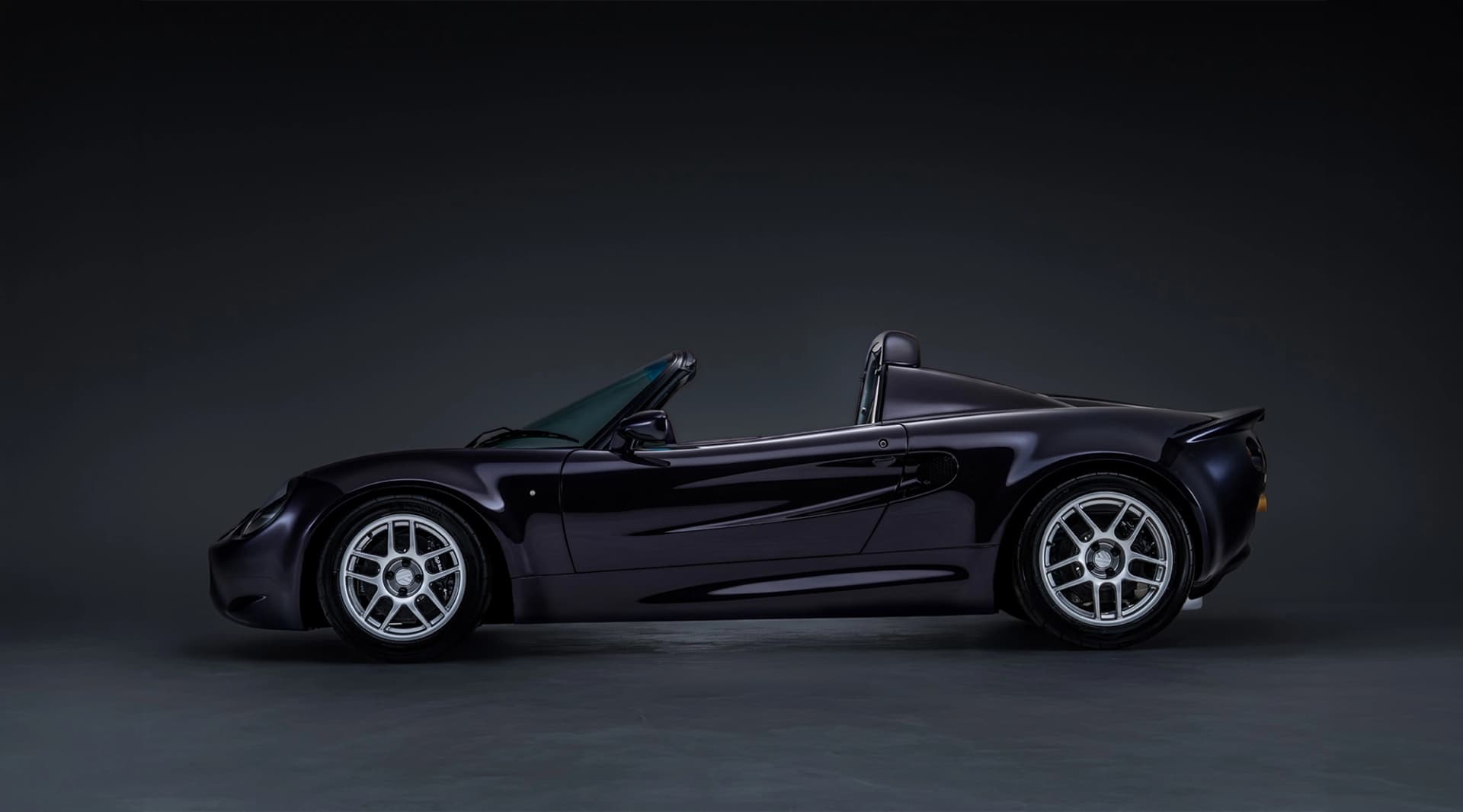
The Analogue Automotive VHPK is a 600 kg Lotus Elise with a central driving position
This is not another restomod trying to become a supercar. It is something much more focused.
Some cars chase more power. The Analogue Automotive VHPK chases less weight. A lot less. Based on a fully restored and lightened Series 1 Lotus Elise chassis, the VHPK is an extreme, limited-production reinterpretation of one of the greatest lightweight driver’s cars ever made. The headline number is almost difficult to believe. Less than 600 kg wet.
That gives the VHPK a claimed power-to-weight ratio of around 400 hp per tonne, delivered not by a giant turbocharged engine or electric boost, but by a reworked 1.9-litre TwinCam 16-valve K-Series engine producing around 250 hp.
The ultimate K-Series Elise, but not as Lotus built it
The original Lotus Elise was already a masterpiece of restraint. It became a benchmark because it proved that driving pleasure does not need enormous power, weight or complexity. The Elise did not win by overwhelming the driver. It won by connecting the driver to the road with almost nothing in between.
The VHPK clearly understands that. Analogue Automotive describes it as the ultimate, no-holds-barred K-Series Elise. A ground-up reworking of the definitive lightweight driver’s car, built around the original spirit but using modern materials, motorsport-grade thinking and a far more radical execution.
A central single-seat layout
The VHPK places the driver in the middle. That changes everything. A central seating position immediately brings one unavoidable comparison: the McLaren F1. But the VHPK is not trying to be a budget F1. It is something much smaller, lighter and more analogue.
By placing the driver front and centre, the VHPK turns the Elise into something even more singular. The cabin is no longer shared space. It becomes a driving cell, built around one person and one purpose.
Less than 600 kg wet
The most impressive achievement is the weight. Analogue Automotive claims the VHPK weighs less than 600 kg wet, which is almost absurd by modern standards. For context, many modern performance cars are now fighting to stay below 1,600 kg. Electric performance cars often go far beyond that. Even lightweight sports cars have become heavier due to safety systems, electronics, comfort equipment and market expectations.
The body panels are made entirely from F1-grade carbon fibre, produced using moulds from CNC-milled patterns for finish, strength and weight reduction. Unsprung mass is attacked with forged wheels, carbon ceramic brakes and custom ultralight hubs.
K-Series power, properly intensified
At the heart of the VHPK sits a reworked 1.9-litre K-Series engine. Analogue Automotive could have gone for a modern turbo engine, a larger swap or even electric power. Instead, it kept the emotional link to the Elise’s original character.
The engine uses bespoke billet and forged internals and produces around 250 hp. On its own, that number may not shock anyone in 2026. But in a 600 kg car, it becomes very serious. The result is around 400 hp per tonne, which is exactly the kind of figure that makes modern performance cars look slightly overcomplicated.
Power goes through a Quaife close-ratio gearbox with a limited-slip differential. There is a lightweight stainless steel exhaust, Motec ECU and PCM, and a mil-spec wiring loom.
AutoNext Take
A sub-600 kg wet weight, 250 hp K-Series engine, carbon fibre bodywork, passive dampers, proper gearbox, carbon ceramic brakes and a central driving position. That is not a spec sheet designed for social media. That is a philosophy turned into hardware.
The “poor man’s McLaren F1” comparison is obvious. But also slightly wrong. This will probably not be poor-man anything. With only 35 examples planned and that level of engineering, it will almost certainly be expensive.