Audi's five-cylinder engine turns 50, and it is getting its own museum exhibition
A configuration nobody expected to last became one of Audi's most recognisable trademarks. Fifty years on, the brand is giving it a dedicated exhibition telling that story end to end
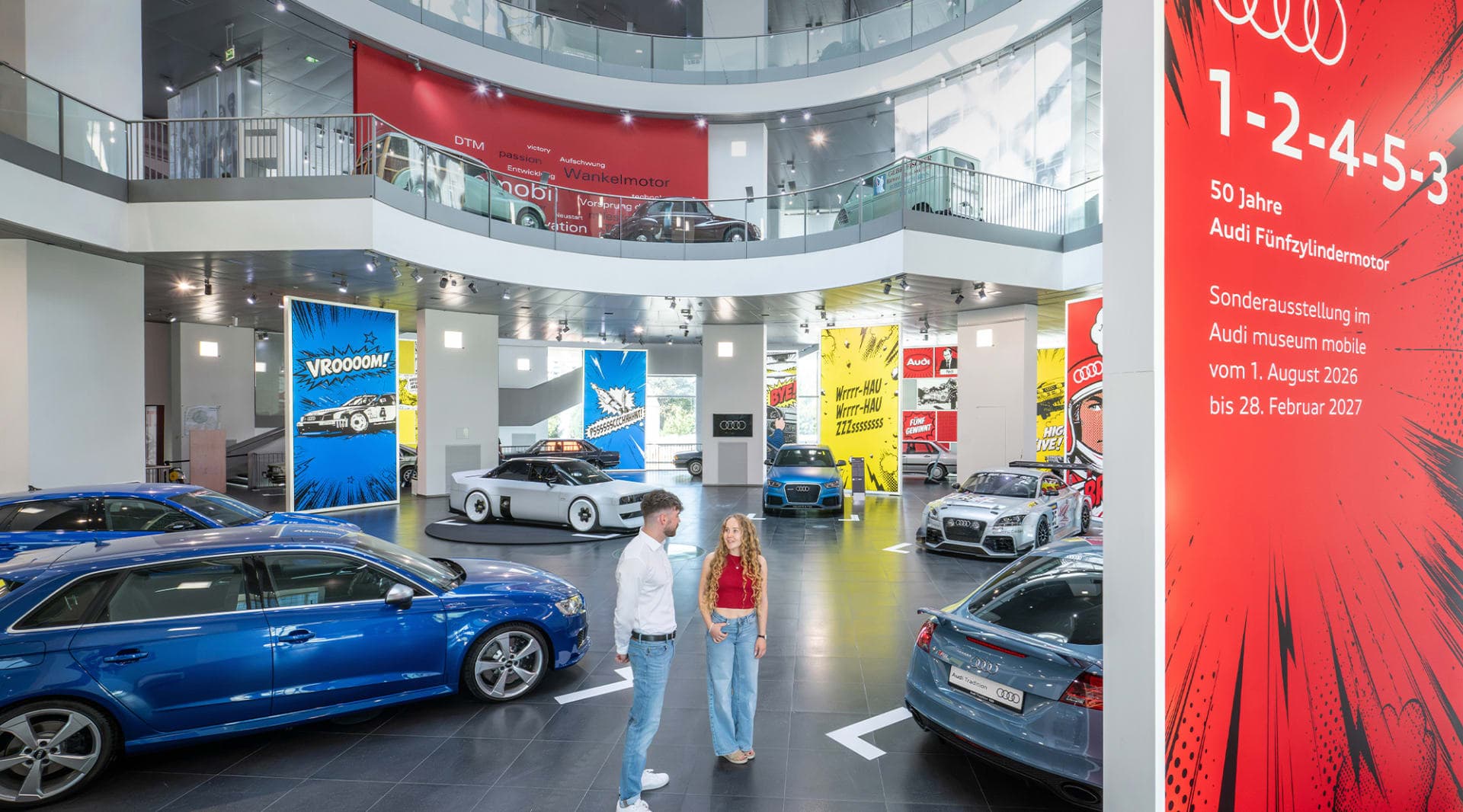
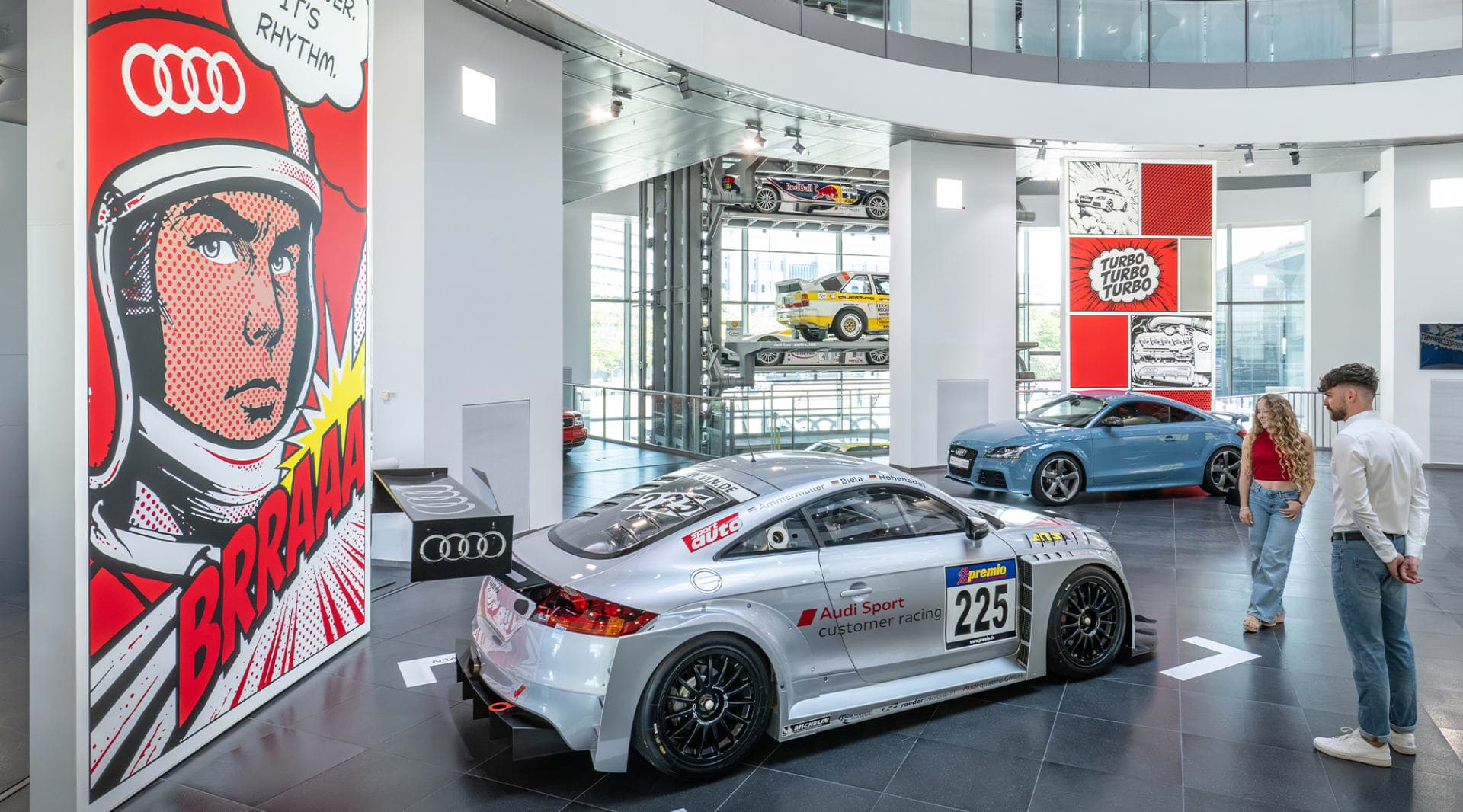
Audi Tradition is opening "1-2-4-5-3: 50 years of Audi five-cylinder engines" at the Audi museum mobile in Ingolstadt, running from 1 August 2026 to 28 February 2027. The show brings together 14 vehicles and seven engines spanning half a century, from the second-generation Audi 100 that introduced the five-cylinder engine in August 1976 through to the TT RS, S6, RS3 and Group B rally cars that carried it forward. Curator Stefan Felber built the exhibition around a simple observation: few technologies have shaped Audi's image, or its sound, quite like this one.
A firing order that genuinely sounds different
The five-cylinder's signature note comes from its unusual 1-2-4-5-3 firing order, which alternates between adjacent and distant cylinders at 144-degree crankshaft intervals, a layout chosen specifically to keep the engine smooth despite the odd cylinder count. The original EA828 petrol unit borrowed heavily from the EA827 four-cylinder that powered the Audi 80 from 1972, sharing its overhead camshaft, 88mm cylinder spacing and cylinder bore. Getting from four cylinders to five meant a longer crankshaft, a larger main bearing diameter and a stroke stretched to 86.4mm, the mechanical price of the sound that would go on to define the brand.
Why five beat six in 1976
Audi wanted the second-generation Audi 100 to sit higher in its lineup than the car it replaced, and its engineers weighed up five-cylinder and six-cylinder inline layouts to do it. The six-cylinder lost out on installation space and weight distribution, so Audi went with a configuration that, while not new in principle, had barely appeared in mass-produced cars before. The first version, at 2,144cc, produced 100 kW (136 hp), enough for 0 to 100 km/h in 9.5 seconds and a 190 km/h top speed. A diesel followed in 1978 with 51 kW (70 hp), and the first turbocharged five-cylinder petrol engine arrived a year later in the Audi 200 5T with 125 kW (170 hp), since boosting the engine's output meant turbocharging rather than adding displacement.
The quattro turned it into a rally legend
The five-cylinder's biggest moment for public perception came in March 1980, when Audi unveiled the quattro at the Geneva Motor Show with a turbocharged version producing 147 kW (200 hp). Paired with intercooling and Audi's permanent quattro all-wheel drive, it delivered two manufacturers' and two drivers' World Rally Championship titles, cementing what Audi now calls its five-cylinder legend. The later Group B cars, running four-valve heads, pushed well past 500 hp, and the Audi IMSA GTO that shook up American touring car racing in 1989 produced 530 kW (720 hp) from the same basic architecture.
A record-breaking wagon, then a quiet exit
Audi kept pushing the road-going versions too. The 1994 Avant RS2, built with Porsche and squeezing 232 kW (315 hp) from a modest 2.2 litres, became the world's most powerful production station wagon at the time and effectively started Audi's RS bloodline. The timing was almost poetic, since the five-cylinder began leaving the B-segment that same year as the V6-powered Audi A4 (B5) arrived. The last examples of the original engine family, the 2.5 TDI in the Audi A6 and the 2.2-litre 20V turbo in the Audi S6, were phased out in 1997.
Twelve years of silence, then the TT RS brought it back
Five-cylinder fans waited over a decade for a comeback. It arrived in 2009 in the Audi TT RS, with a transverse 2.5 TFSI built on the Group's EA855 architecture and a reinforced block producing 250 kW (340 hp). Since Audi Sport took over RS development in 2016, the engine has kept its cult status alive across the range, earning "Engine of the Year" honours nine years running.
Fourteen cars and a Megola motorcycle under one roof
The exhibition itself spans more than Audi's own history. Alongside the Audi 100 5E and 5D, the Audi 200 5T, the 90 quattro, the 100 TDI, the S2 Coupe, the Avant RS2, the S6, the TT RS, a TT Motorsport racer, the RS Q3 Concept, the RS3 and the GT50 Concept, Felber has included a Megola motorcycle, a 1920s machine with a rotary five-cylinder engine mounted in its front wheel, as a reminder that the layout existed long before Audi made it famous. Seven engines on display trace the mechanical side of that same story, from the original EA828 through to the modern EA855-based unit.
Audi has already marked this anniversary on the road, too. Earlier this year it built 750 examples of the [Audi RS 3 Competition Limited](), a special edition whose matrix LED headlights blink out the 1-2-4-5-3 firing order when the car locks or unlocks.
AutoNext Take
Fifty years is a long time to keep a single engine configuration relevant, and the fact that Audi still finds new places to put a five-cylinder, in a concept car as recently as the GT50, says the layout earned its cult status rather than simply outlived its usefulness. Most of that comes down to the sound, which is genuinely difficult to replicate with four or six cylinders and became a recognisable part of Audi's identity almost by accident, born out of a packaging decision rather than a marketing brief.
The Megola motorcycle in the lineup is a smart curatorial choice, because it undercuts any temptation to tell this as a story where Audi invented the five-cylinder engine outright. What Audi actually did was take a niche configuration nobody had made work at scale and turn it into two rally world championships, the world's fastest production wagon of its era, and an engine so beloved that customers kept asking for a museum show to celebrate it. That is a better story than invention, and a harder one to manufacture on purpose.