Audi Q9 interior first look, Ingolstadt finally enters the GLS and X7 territory
Audi has finally decided to think bigger.
For years, the Q7 carried Audi’s three-row SUV ambitions, while Mercedes-Benz had the GLS and BMW had the X7. But now Ingolstadt is preparing something larger, more luxurious and more clearly aimed at the full-size premium SUV segment: the new Audi Q9.
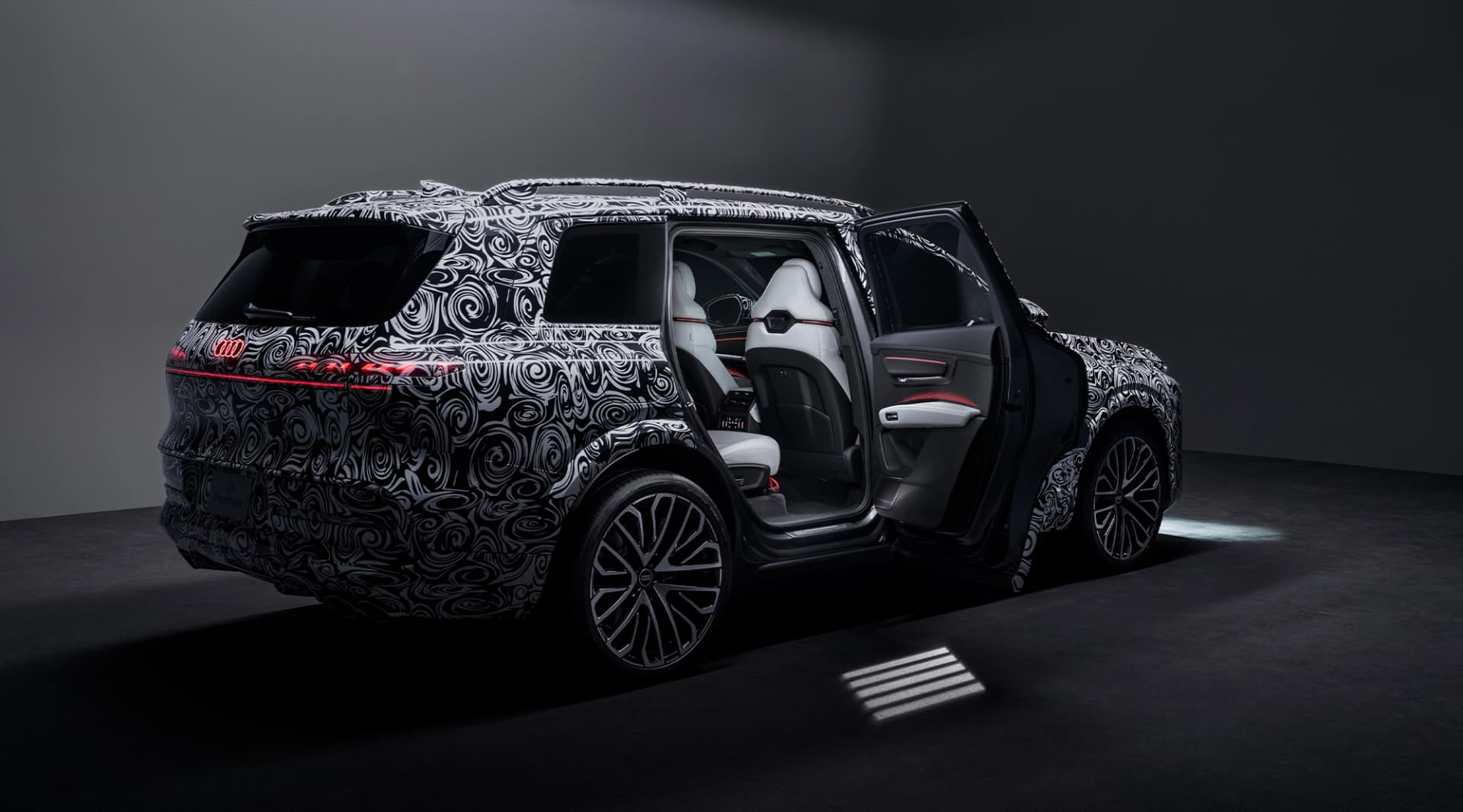
Audi has not shown the full exterior yet, but it has opened the doors to the interior. And honestly, that tells us almost everything about what this car is supposed to be.
Audi’s biggest SUV is all about the cabin
Audi CEO Gernot Döllner says that with the Q9, “Vorsprung durch Technik” is increasingly defined by the in-car experience. That is a telling line. Audi clearly knows that in this segment, technology is not only about performance or screens. It is about how the car makes passengers feel over long journeys. That is why the Q9 gets a cabin built around space, silence, materials and flexibility.
There will be a standard three-row layout, with the choice between six or seven seats. The six-seat version turns the second row into a business-class setup, with two electrically adjustable individual seats and active ventilation in the cushion and backrest. The seven-seat version is more family-focused, with three second-row seats that can all accommodate child seats.
Automatic doors, because flagship means theatre
For the first time in an Audi, the Q9 will offer electrically operated doors. They can be opened or closed using the key, the myAudi app, the MMI, the brake pedal or even the seatbelt buckle. Surround sensors with obstacle detection can stop the doors if there is not enough space, and the system can help detect approaching cyclists or other road users.
Is this necessary? Not really. But in this segment, necessity is not the point. Automatic doors turn entry into an event. And for a flagship SUV, that matters. Mercedes and BMW have been very good at making big SUVs feel ceremonial. Audi now seems ready to play that game properly.
The roof might be the most impressive detail
The panoramic sunroof is another strong statement. Audi says the standard roof measures around 1.5 square metres and can open wide. It also uses laminated glass with switchable transparency, allowing one or more of nine individual segments to turn opaque at the press of a button.
The glass blocks more than 99.5% of UV radiation, while the top trim adds 84 LEDs and 30 colours to sync the roof with the ambient lighting. That sounds like a detail, but it is exactly the kind of detail that defines modern luxury.
4D sound and lighting as part of the experience
Audi is also leaning hard into sound and light. The updated Bang & Olufsen premium sound system introduces 4D sound, using headrest speakers and actuators in the front seats to make music something you can physically feel. At the same time, the dynamic interaction light spans the cabin and can sync with music, using colour schemes linked to the track’s cover art.
This could easily become gimmicky. But in a large luxury SUV, it makes sense if done well. These cars are increasingly used as mobile business lounges, family transporters and long-distance comfort machines. The entertainment experience matters, especially for passengers.
AutoNext Take
The Audi Q9 is late. Mercedes has had the GLS for years. BMW has the X7. Range Rover has owned the luxury SUV image for decades. Audi, strangely, never had a true full-size flagship SUV above the Q7. That always felt like a gap in the portfolio, especially in markets where large luxury SUVs are not just popular, but essential.
What is interesting is that Audi is not leading with power or aggressive design. It is leading with the cabin. Automatic doors, six-seat luxury, seven-seat practicality, a huge smart glass roof, advanced lighting, 4D sound and richer materials all point in one direction: Audi wants the Q9 to feel expensive from the moment you get in. The Q9 has one job: make Audi feel properly premium again at the very top of its SUV range.