Hyundai's Ioniq 5 kept 93% of its battery after 150,000 km
Aviloo pooled 500,000 battery tests and found no genuinely bad pack
Austrian diagnostics firm Aviloo has published its EV Battery Report, built from more than 500,000 individual battery tests carried out between 2022 and 2026 across Europe, the Americas, Asia and Australia. It covers 20 common electric models. Across all of them, the median state of health after 50,000 km is 94.74 percent, and after 150,000 km it is still around 91 percent.
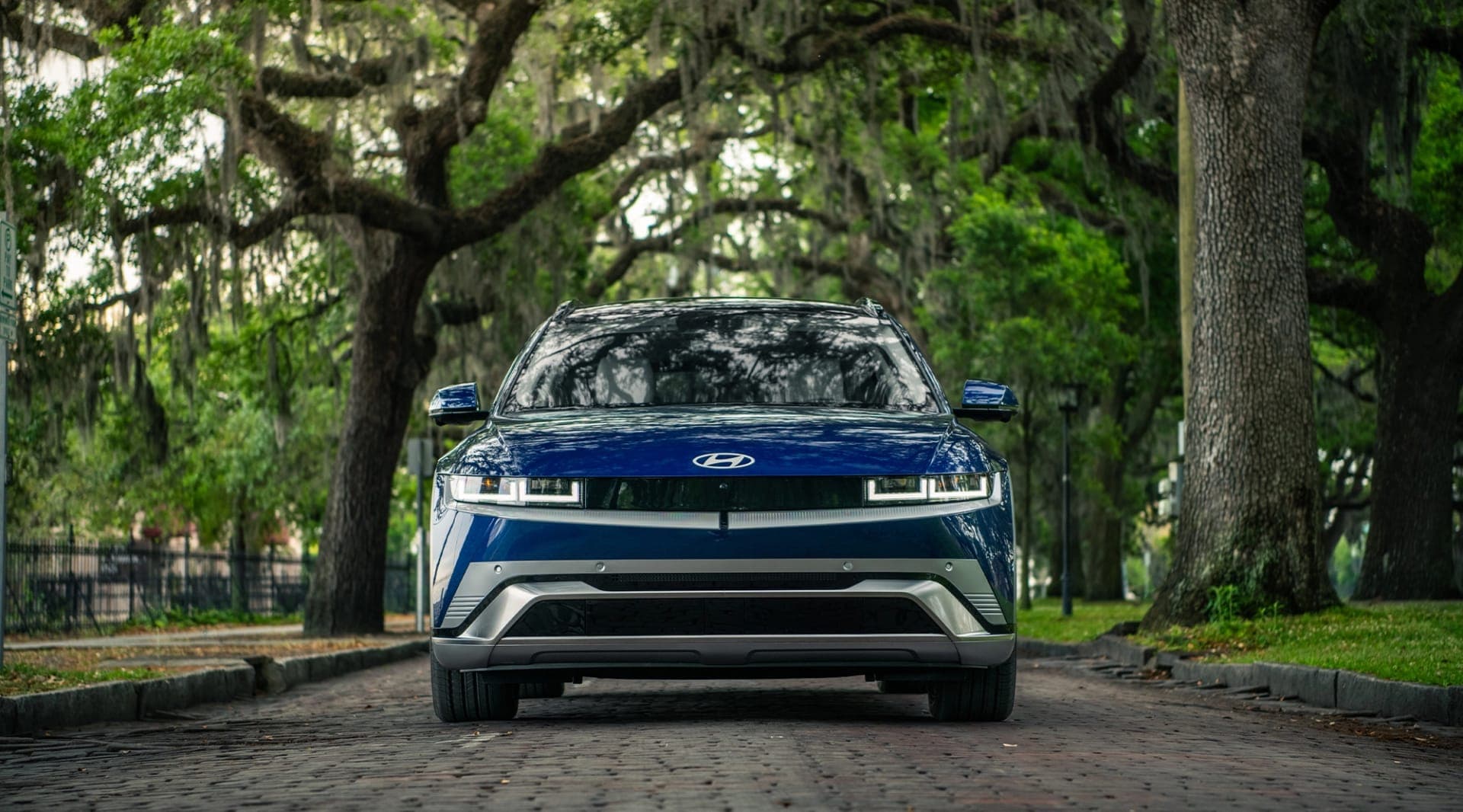
The Ioniq 5's 72.7 kWh pack still held 93.37% at 150,000 km
The best result in the report belongs to Hyundai. Alongside the headline table, Aviloo ran a like-for-like analysis on four models, restricting each one to a single battery size so the figures describe a pack rather than an average of several. The Ioniq 5 with the 72.7 kWh battery, sold only in 2021 and 2022, showed a median state of health of 97.26 percent at 50,000 km, 95.14 percent at 100,000 km and 93.37 percent at 150,000 km. In range terms that is a median of 335 km at 50,000 km, falling by eight kilometres over the next 50,000.
Volkswagen's ID.4 and Tesla's Model Y both finish near 90%
The two big-selling crossovers in that same like-for-like group land within a rounding error of each other. The ID.4 with the 77 kWh pack sits at 95.41 percent after 50,000 km and 90.09 percent after 150,000 km, its usable capacity down 7.27 percent by the 100,000 km mark and its median range down from roughly 400 to 373 km. The Model Y Long Range with the 78.8 kWh pack, built from 2021 to 2025, records 94.54 percent at 50,000 km and 90.05 percent at 150,000 km. Different cells, different continents of assembly, four hundredths of a point apart.
The Nissan Leaf's air-cooled 40 kWh pack is the one real outlier, at 85%
The Leaf of the ZE1 generation is the weakest car in the study, at roughly 90 percent after 50,000 km and 85 percent after 150,000 km. Two things explain it. The pack is air-cooled rather than liquid-cooled, and at 40 kWh it is small enough that covering the same distance demands far more full charge cycles. Median range drops from 196 to 185 km. The Renault Zoe, whose replacement the Renault 5 E-Tech uses a much larger liquid-cooled battery, and the Mini Cooper SE finish alongside it, all three older cars with small packs.
Cupra's Born tracks the VW ID.3, because the badge is not what ages
The most useful finding for a used buyer is the least dramatic one: sister models land on nearly identical scores. The Cupra Born sits beside the VW ID.3, the ID.4 clusters with the Audi Q4 e-tron and the Skoda Enyaq, and the Opel Corsa-e matches the Peugeot e-208. What you are buying is a cell chemistry and a thermal management system, not a brand. Across the full 20, the Hyundai Kona Electric and Ioniq 5 lead, the Mercedes EQA is level with them by 150,000 km, and the BMW i4 and Audi Q8 e-tron follow, with everything else in a tight band that ends near 90 percent. That lines up with the 2,500 Belgian battery tests published last week.
Euro 7's 72% floor arrives on 29 November 2026
Europe is about to regulate exactly this. Under Euro 7, Regulation (EU) 2024/1257, a car must keep at least 80 percent of its battery capacity at five years or 100,000 km and 72 percent at eight years or 160,000 km, with 75 and 67 percent for vans. The rules apply to new M1 and N1 type approvals from 29 November 2026 and to every new car sold from 29 November 2027, and they arrive with the same digital vehicle passport that will carry a battery's state of health in a QR code. Manufacturer warranties typically promise 70 percent at that same 160,000 km point.
AutoNext Take
Not one of Aviloo's 20 models would come close to failing that law. The worst car in the study, the air-cooled Leaf, sits 13 points above the 72 percent threshold at a distance 10,000 km shorter than the one the rule measures. A typical model clears it by about 19. Euro 7's durability floor is not a standard the industry has to reach for, it is a description of where the industry already was in 2022. The genuinely valuable half of the regulation is the other one: from late 2026 every new electric car has to report its own state of health, and that number becomes readable without a diagnostic appointment.
Averages are also the wrong tool for the person actually standing in front of a used car. Aviloo measured a spread of up to 13.5 percentage points between the best and worst examples of a single Leaf variant, worth as much as 29 km of range, and the pattern repeats across the range. A fleet median tells you the technology works. It tells you nothing about the specific car whose keys you are being handed, which is why the 40 euros or so a state-of-health test costs remains the cheapest due diligence in the used market.