Belgium hit its road safety target years ago, and the camera network never stopped growing
Belgian roads have never been this safe, and the camera network keeps expanding as if they were not.
Belgium recorded 464 road deaths in 2025, according to Statbel, the lowest figure in the country's history and a fraction of the roughly 3,000 annual deaths of the 1970s. The original national target, fewer than 1,000 road deaths a year, was met long ago. And yet Belgium keeps adding speed cameras faster than any country in Europe, and the government is about to switch on thousands more that have sat dormant until now. At some point a safety policy that keeps expanding after its own target has been hit stops being only about safety.
The numbers put Belgium in a category of its own
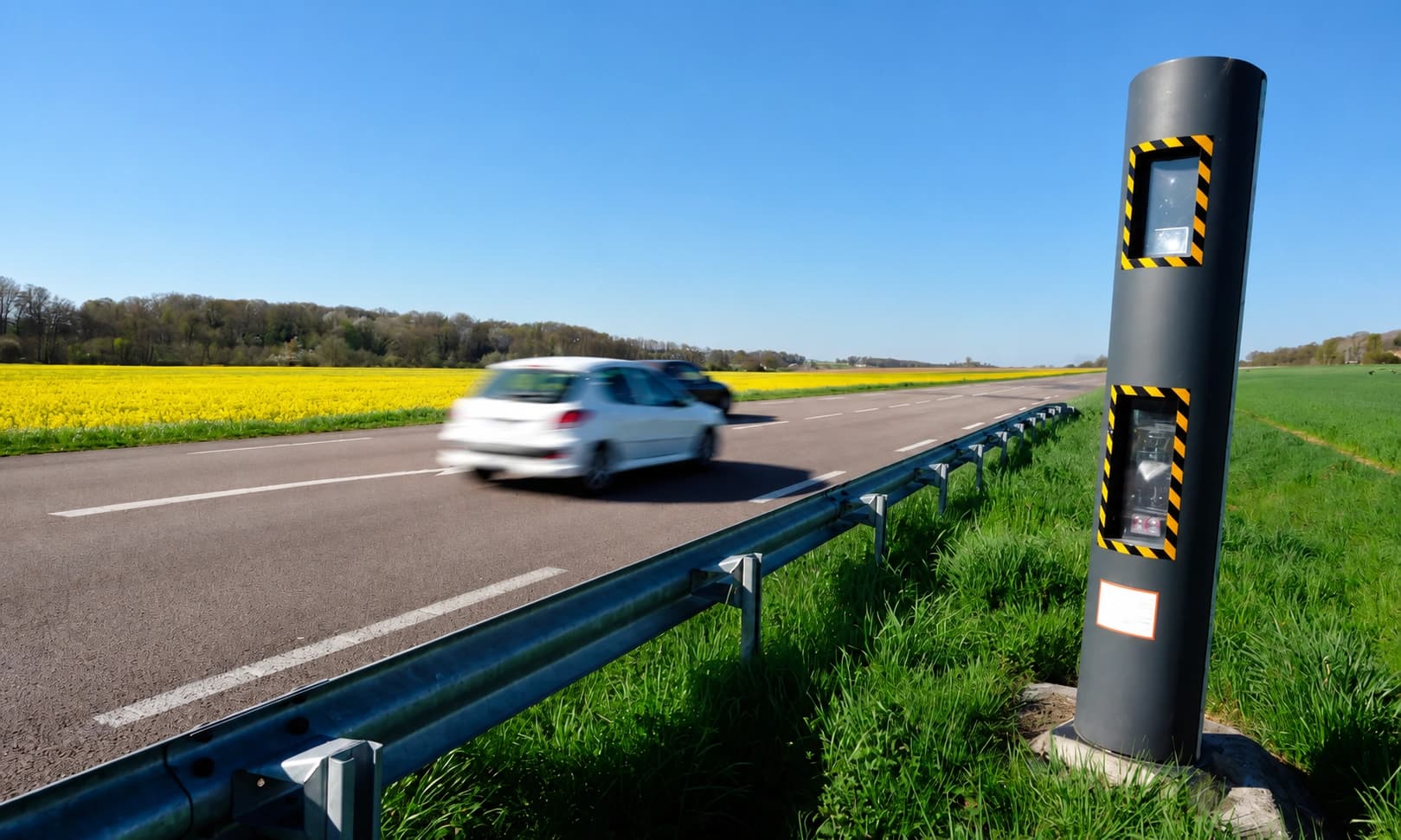
According to the SCDB database, Belgium operates 4,677 fixed enforcement points, which works out to roughly 393 per million inhabitants, comfortably the highest rate in Europe. Italy, which has far more cameras in absolute terms, sits at around 185 per million. The Netherlands manages with about 50 per million, Germany 53, France 39 and Spain 49. Narrow the view to Flanders alone, home to most of Belgium's cameras and 6.85 million people, and the rate climbs to roughly 683 per million, nearly fourteen times the Dutch figure and well over three and a half times Italy's. That is not a rounding difference. That is a different category of enforcement entirely.
Cameras almost certainly helped, and that is not in question
It would be dishonest to argue the cameras did nothing. The collapse from roughly 3,000 annual road deaths in the 1970s to 464 in 2025 has multiple causes: safer cars, stricter drink driving enforcement, better infrastructure, a genuine shift in driver attitudes, and yes, a wall of speed cameras that changed behaviour on the roads most likely to kill someone. None of that is in dispute. The question is not whether cameras worked. The question is why a network built to hit a specific target keeps growing years after that target was met.
The target was met, and the expansion continued anyway
Belgium is not slowing down its enforcement build out, it is accelerating it. Authorities recently decided to fully activate the many previously dormant ANPR cameras that were already installed but not switched on, adding thousands of active enforcement points at a stroke. No human activity is entirely risk free, and trying to eliminate every last road death through ever more cameras, checks and fines eventually runs into a proportionality problem. Every layer of enforcement carries its own cost too, in privacy, in administrative overhead, in the sense among drivers that they are being treated primarily as a revenue source rather than road users.
That suspicion gets harder to dismiss once you add up the bill
Belgian traffic fines bring in a rough order of 1 billion euros a year once every income stream is counted, and that base line only grew larger after a nationwide fine schedule increase took effect on 1 July. Based on official budget documents, the federal justice department collects around 500 million euros annually from fines. The Flemish government's 2025 budget projects roughly 212 million euros in fine revenue, split between the regional road safety fund and general resources. Wallonia and Brussels take a smaller regional share each, and municipalities and police zones add at least another 100 to 200 million euros through local administrative sanctions and parking fines that are never centrally tallied. That is layered on top of an already heavy stack: fuel excise duty and VAT, annual road tax, registration tax, the benefit in kind on company cars, low emission zone fines, whose actual safety impact a recent large scale study has openly questioned, toll sections, parking levies, and Belgium's planned road vignette from 2027. Against that backdrop, it gets hard to blame drivers for wondering whether a growing camera network is still primarily about safety.
AutoNext Take
Road safety is a genuinely worthwhile goal, and nobody sensible is arguing Belgium should tear out its speed cameras. But a safety policy is supposed to look for the specific dangerous spots and fix those, not keep adding enforcement everywhere because the revenue is welcome. Once a network keeps growing after its own stated target has already been hit, the burden of proof shifts, and vague reassurances about safety stop being enough.
Road safety should never be allowed to quietly become a permanent revenue model for government. Belgium is closer to that line than it wants to admit.