BYD Atto 3 EVO ad challenged over ultra-fast charging claim
Charging speed is now a selling point. But it also needs to become a transparent one.
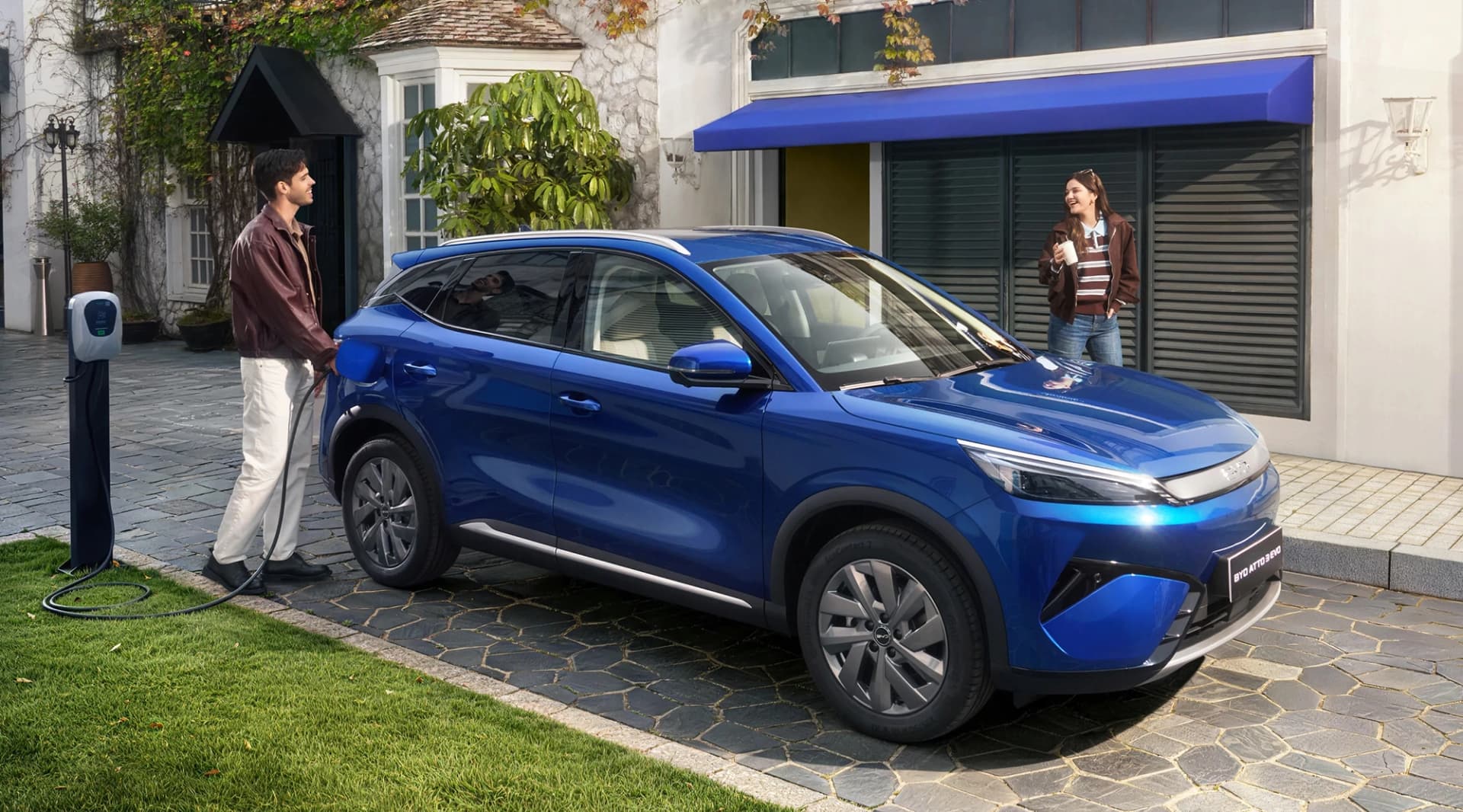
The Belgian Jury for Ethical Practices in Advertising, known as the JEP, reviewed the advertisement after a consumer complained that the term “ultra-fast charging” could mislead buyers. The poster promoted the new BYD Atto 3 EVO with the message: “BYD. Ultra-fast charging.”
BYD argued that the car can indeed charge very quickly, with a maximum DC charging power of 220 kW and a 10 to 80 percent charging time of around 20 to 30 minutes. The JEP accepted that the Atto 3 EVO can charge fast. But it also found that the advertisement needed more context.
The problem is not the speed, it is the wording
The JEP did not say BYD can never use the term “ultra-fast charging”. In fact, it explicitly allows the term, provided the brand adds a clear explanation of the conditions required to achieve that charging speed. That distinction is important.
Because most EV charging claims live in a grey zone between technical truth and real-world expectation. A car may be capable of a certain charging peak, but that does not mean every owner will experience it every time they plug in.
Charging speed depends on the charger, battery temperature, state of charge, battery preconditioning, outside temperature, charging curve and software. For experienced EV drivers, that is obvious. For the average consumer, it often is not. And that is exactly why the JEP stepped in.
Why this ruling matters for EV marketing
Electric cars have already made the industry rethink how it communicates range. Now charging speed is becoming the next battlefield. Brands love headline numbers. Consumers love simple promises. Reality is more complicated.
“10 to 80 percent in 25 minutes” sounds clear, but it depends on the right charger, battery state and conditions. “Ultra-fast charging” sounds even stronger, but without context, it can create the impression that the car will always charge at that speed.
It will not. And that is not a BYD-only issue. Every carmaker using peak DC charging figures faces the same challenge. A maximum charging number is not the same as the real-world charging experience across a full charging session. That difference needs to be communicated better.
The Atto 3 EVO itself is not the villain here
It would be too easy to turn this into a simple anti-BYD story. That would also be unfair. A maximum DC charging power of 220 kW is genuinely strong for a car in this category. A 10 to 80 percent charging window in roughly 20 to 30 minutes is competitive, especially for mainstream EV buyers.
So the point is not that the Atto 3 EVO charges slowly. It does not. The point is that the word “ultra-fast” carries a promise. And in advertising, that promise needs to be clear enough for people who are not EV specialists. That is the real lesson.
AutoNext Take
This is a fair ruling. BYD is not wrong to highlight fast charging if the Atto 3 EVO can genuinely reach high DC charging speeds. A 220 kW peak is strong, and the car deserves credit for that.
But “ultra-fast charging” without explanation is too easy. EV marketing needs to grow up. The industry cannot keep throwing peak numbers at consumers and expecting them to understand all the hidden conditions behind them. Especially not when charging speed is one of the biggest concerns for people switching from petrol or diesel.